You have probably been told a long face cannot wear long hair. That is only half true. Long, flat, straight hair parted down the middle really does stretch the face further, but add waves, face-framing layers, and a side part, and the same length turns flattering. The whole game with a long face is simple, move the eye across, not up. That means width at the cheeks and jaw, a broken-up forehead, and no height stacked on the crown. Bangs are your fastest tool, waves your most reliable one. Every look here follows that one rule, at lengths from a chin bob to past the shoulders.
Curtain Bangs
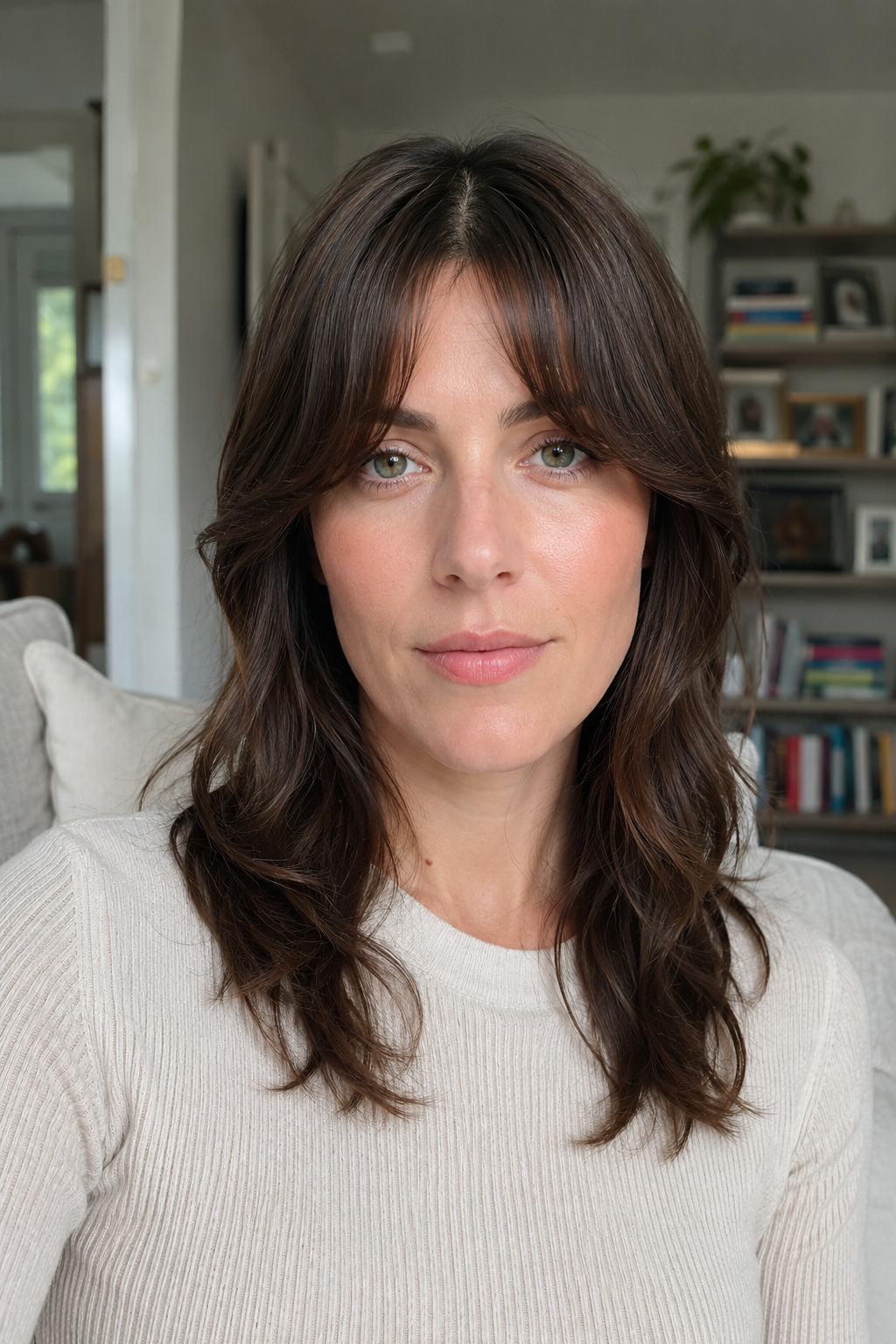
The single most useful move for a long face is a set of curtain bangs. Split down the middle and swept out to each side, they draw a soft horizontal line across the forehead that cuts the length short. They work at any hair length, from a bob to long layers. Round-brush each side away from the center so they curve toward the cheekbones. Keep them long enough to reach the cheekbone, where they widen the face most.
Wavy Collarbone Lob

A lob that hits the collarbone puts weight at the widest part of the face, and waves push that width out even further. The horizontal movement pulls the eye across instead of down the length. Use a one-and-a-quarter-inch iron and bend the waves away from your face. Break them apart with your fingers so they fall soft, not tight. Keep the ends full rather than tapered so the bottom does not thin out and drop.
French Bob with Blunt Bangs
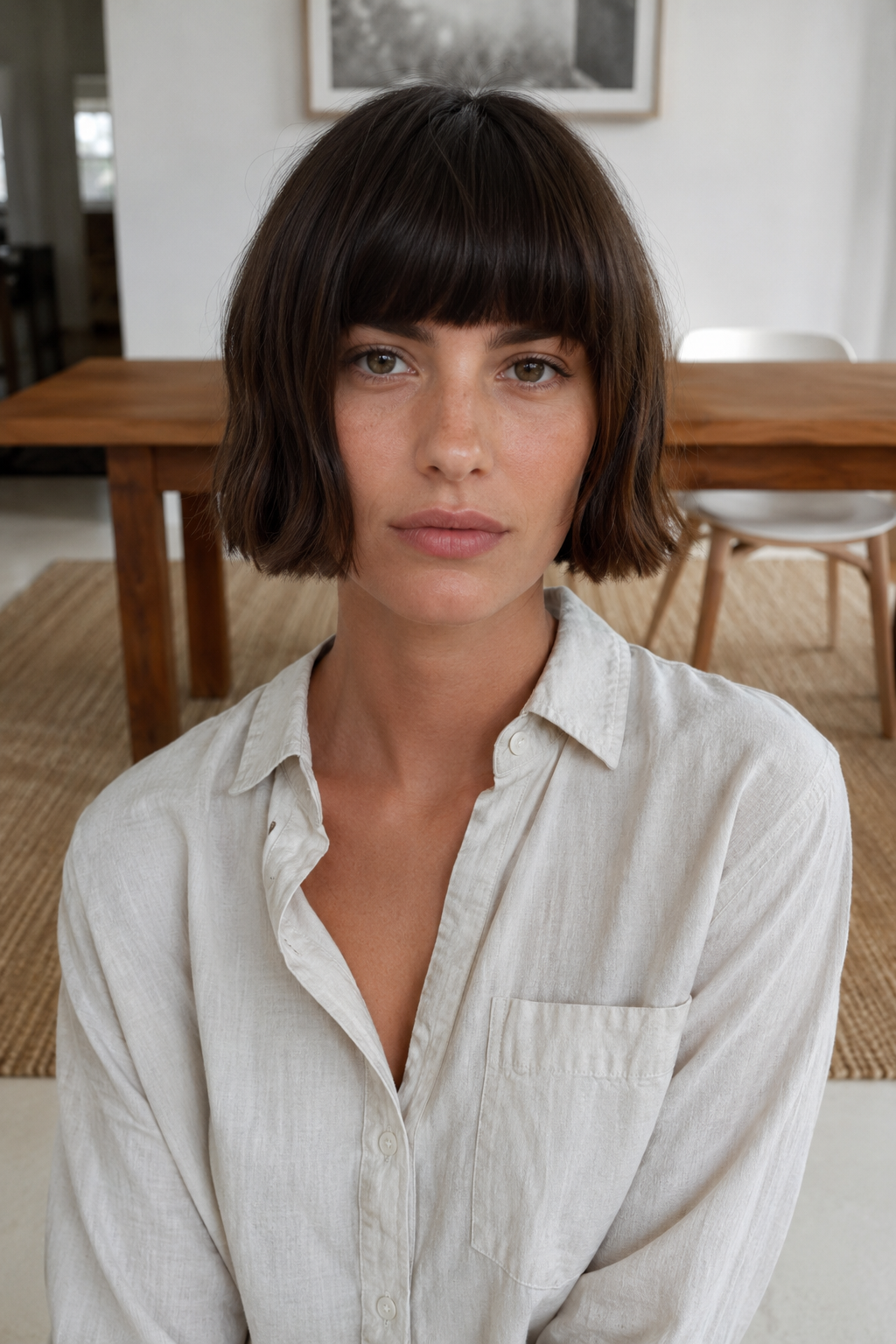
Jaw-grazing and finished with a heavy straight fringe, the French bob tackles a long face from two directions. The short length adds width at the jaw while the blunt bangs shorten the forehead in one clean line. Blow the fringe flat, moving side to side while it is damp, so it sits full across the brows. Add soft waves through the lengths for extra width at the cheeks. Keep the fringe trimmed just above the brows.
Side-Swept Bangs
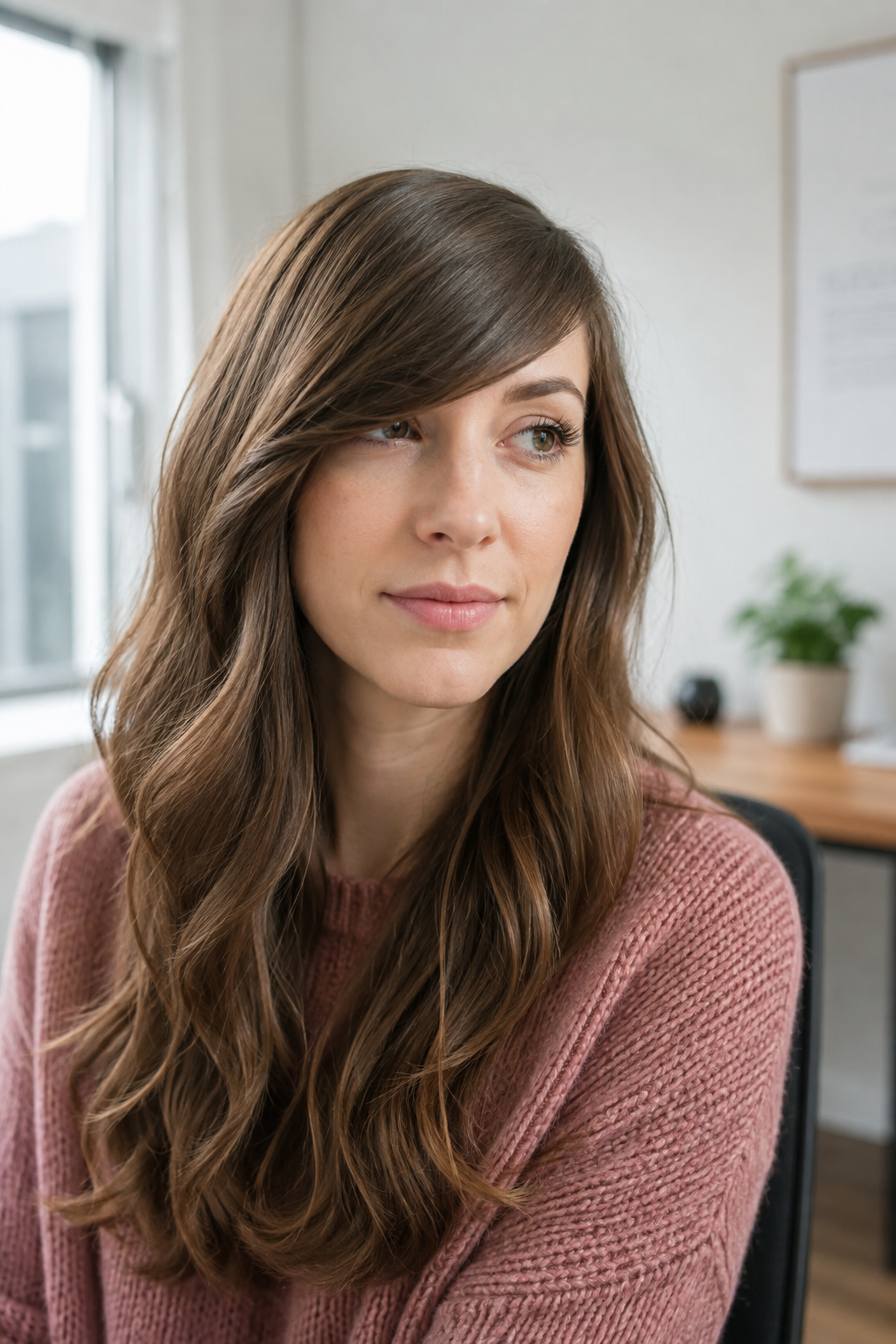
For the lowest-upkeep way to shorten a long forehead, sweep a long fringe diagonally across it. The slanted line breaks the straight vertical drop and softens the whole face. Dry the fringe across with a flat brush, aiming it toward your cheekbone. Blend the ends into face-framing pieces so there is no hard edge. This suits anyone who does not want the commitment of a blunt or curtain fringe, since it grows out without a stark line.
Chin-Length Bob with Waves
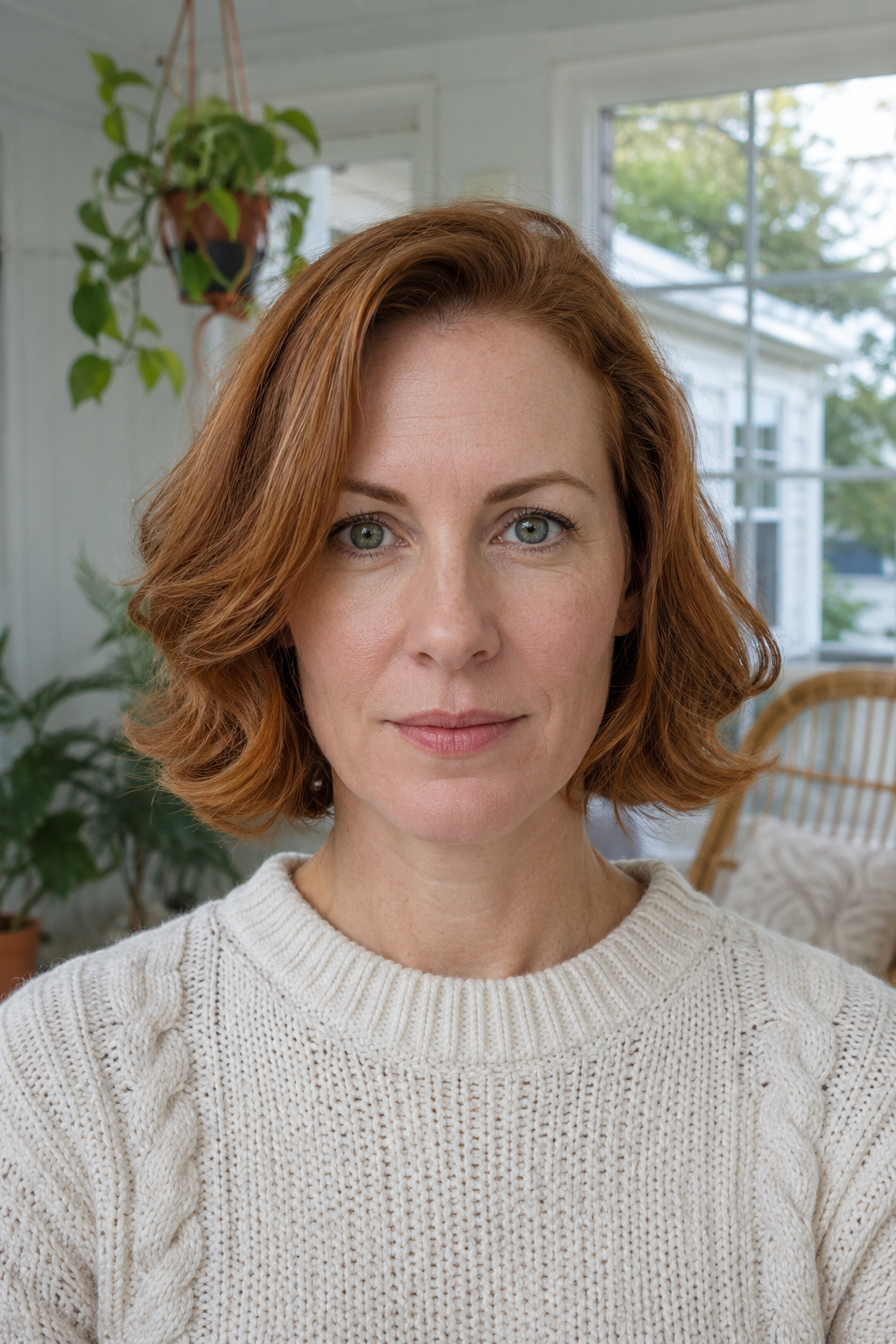
A chin bob stops right at the jaw, adding width exactly where a long face needs it. Waved rather than straight, it puffs out at the sides and frames the cheeks. Wave the hair away from your face with a flat iron, then flick the very ends outward at the jaw. A middle amount of volume through the sides keeps things wide without stacking height on top. Skip a sleek center-parted blowout, which only stretches the face longer.
Long Layers with Face-Framing
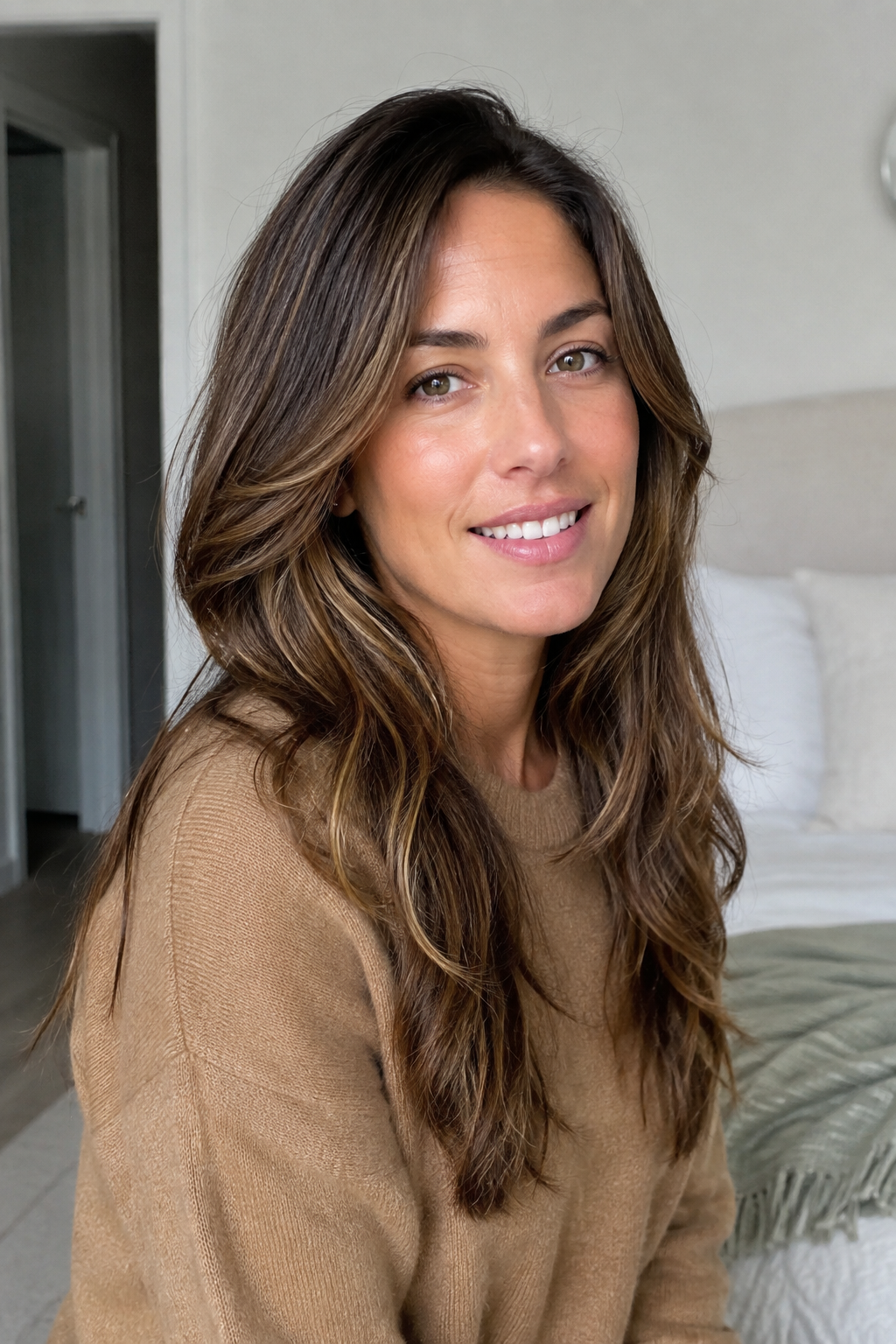
Long hair suits a long face as long as it is not worn flat and straight down the middle. Add face-framing layers that start at the jaw, a side part, and soft waves to bring width to the sides. The layers catch the cheekbones and pull the eye outward. Part deep to one side to break the straight vertical line. Bend the front pieces toward your face, then away, so they frame rather than hang.
Voluminous Lob with Waves
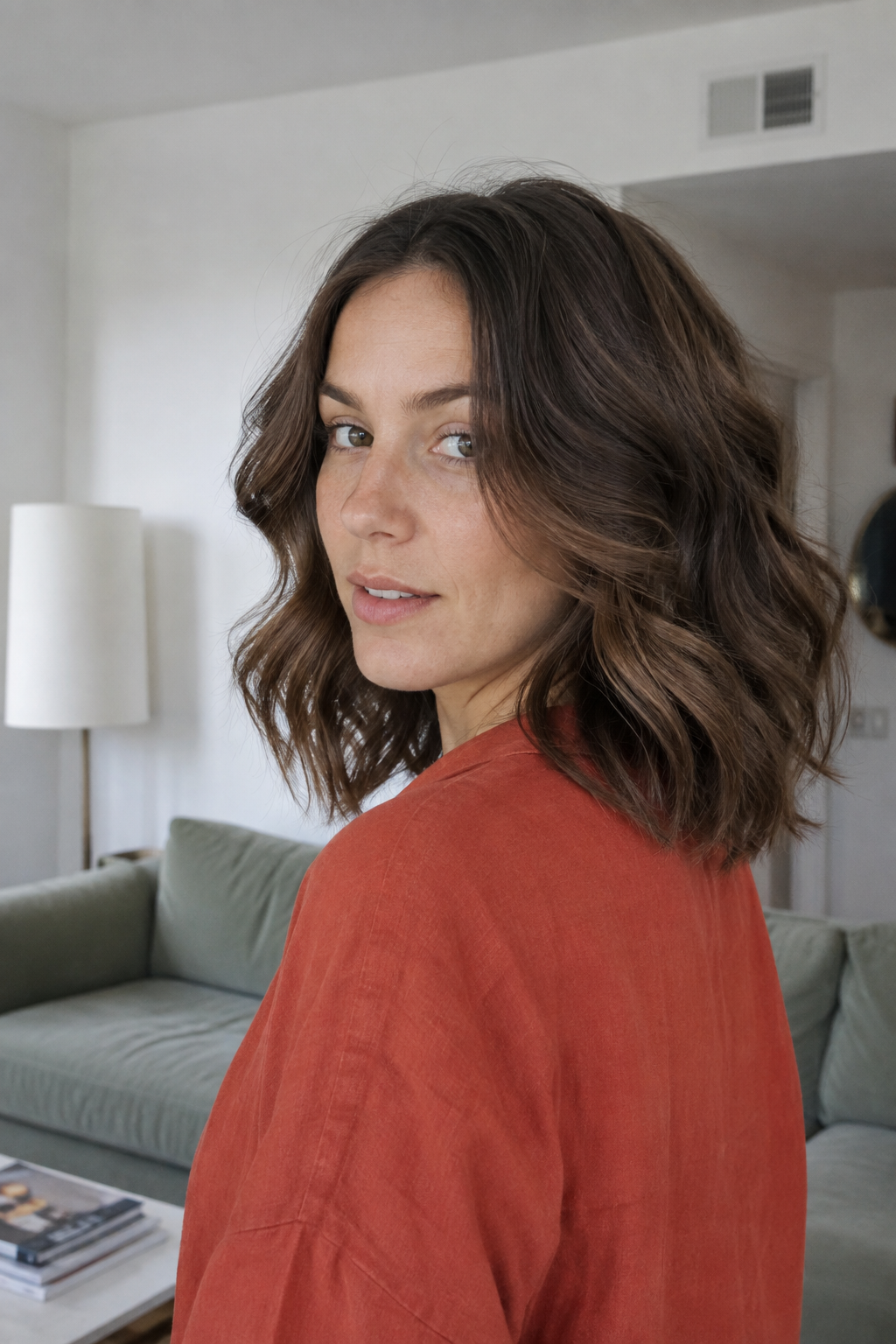
Big, tousled waves on a lob that sits just past the shoulders throw width out at the cheeks and jaw. All that side fullness draws attention away from the length of the face. Rough-dry the hair first, then wave it with a large-barrel iron for loose bends. Scrunch a texture spray through the mid-lengths for body. Keep the volume low and to the sides, never piled on the crown, which would only add height.
Layered Shag with Bangs
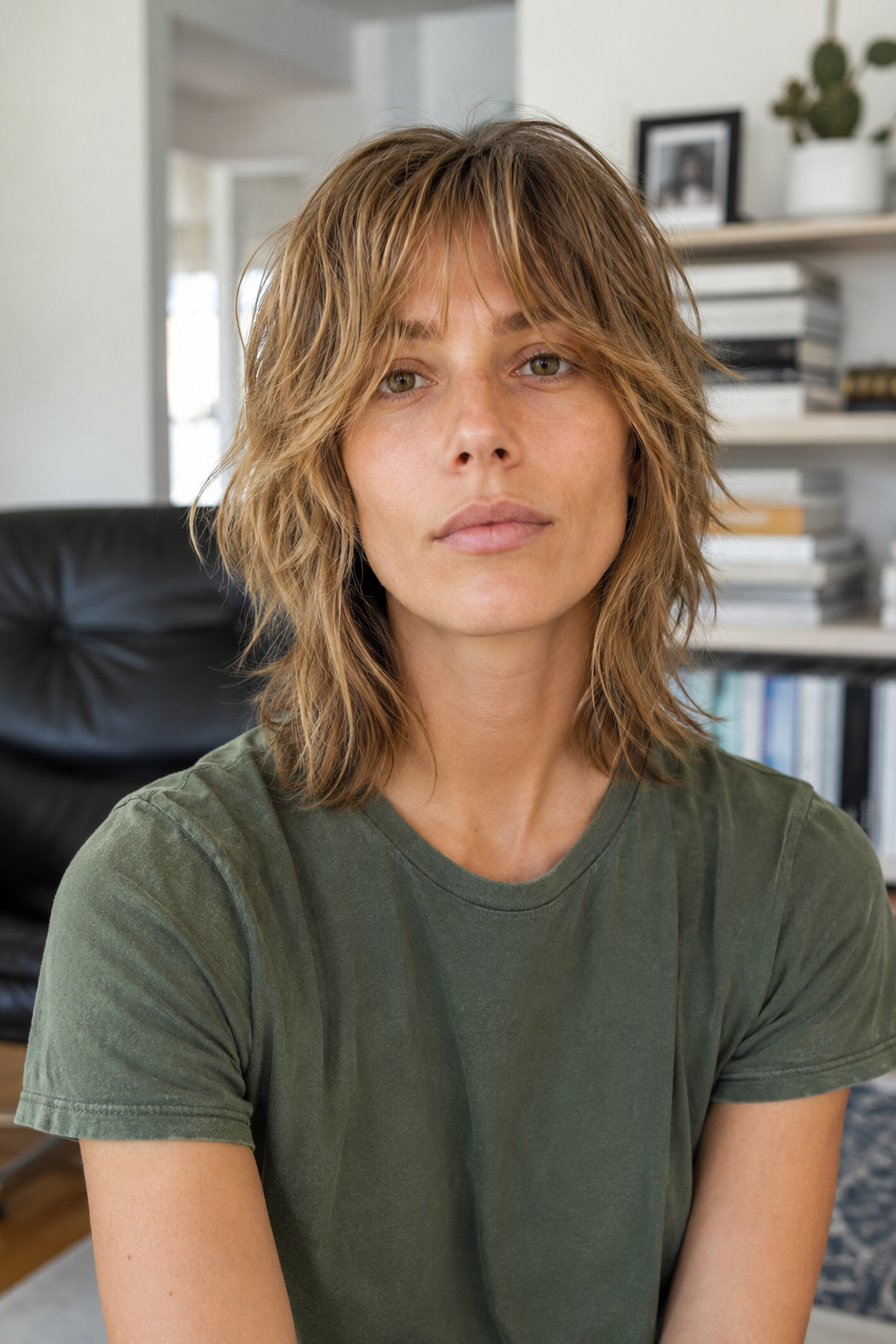
Choppy shag layers add movement and width all around the head, which flatters a long face. Paired with a fringe, the layers frame the cheeks while the bangs cut the forehead short. Scrunch mousse into damp hair and air-dry for that undone texture. Pick the layers apart with a little clay so they separate and spread wide. Ask for a fringe, curtain or wispy, to finish the shape and shorten the face up top.
Curly Lob
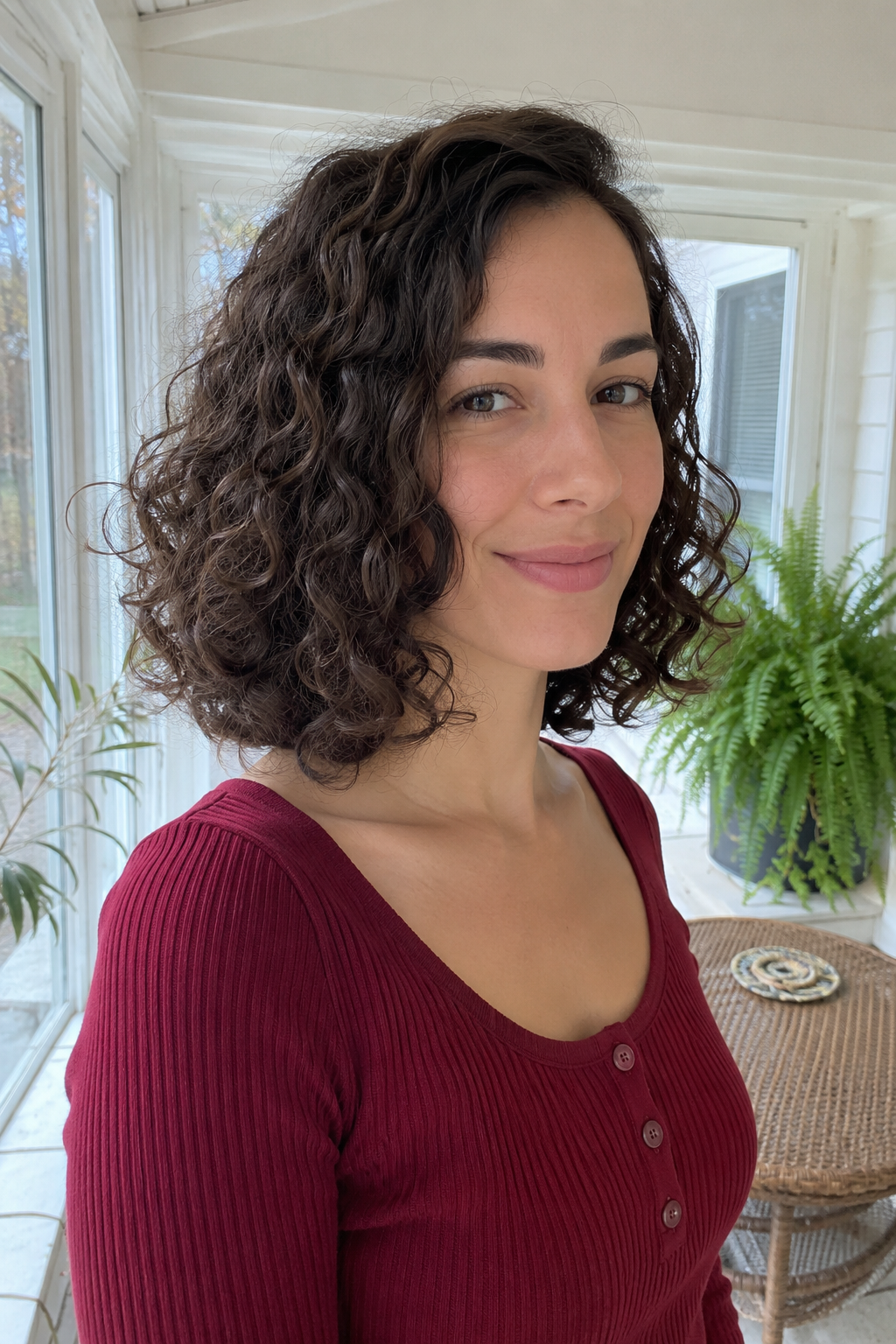
Curls sit wide by nature, which makes a curly lob a natural fit for a long face. The volume falls out to the sides at the cheeks and jaw, adding the width the shape wants. Keep the length near the collarbone so the curls spread out rather than stack tall. Diffuse upside down for root lift at the sides, not the crown. Define with a curl cream and pick out the pieces around your face for extra width.
A-Line Lob
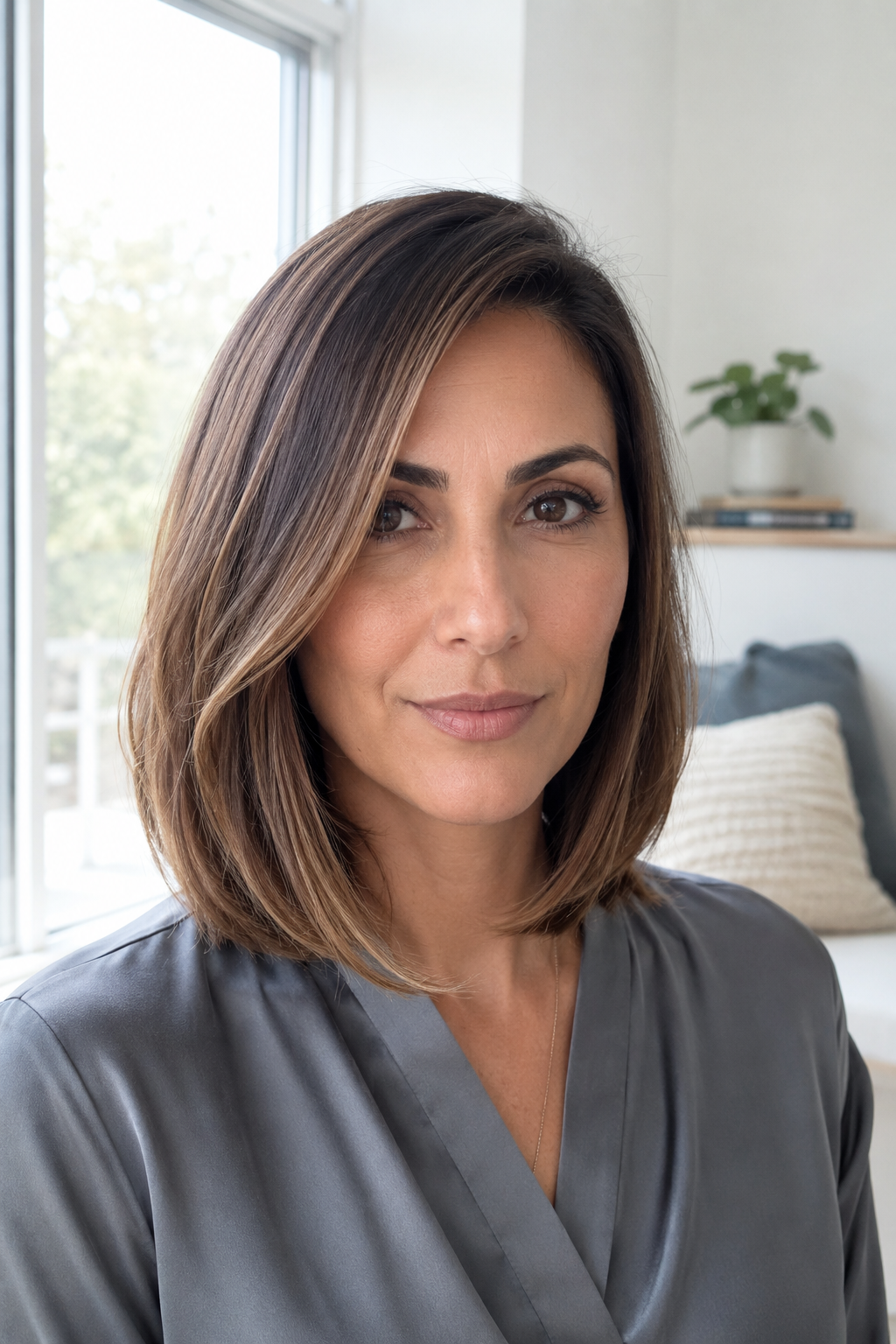
Cut longer at the front and shorter at the back, an A-line lob leaves face-framing pieces that fall along the jaw. Those front lengths curve inward and pull the eye across the face. Curl the ends under at the jawline with a flat iron for a soft inward bend. A deep side part adds width and breaks the vertical line. Keep the front pieces long enough to graze the jaw, where they widen the lower face.
Blowout with Flipped Ends
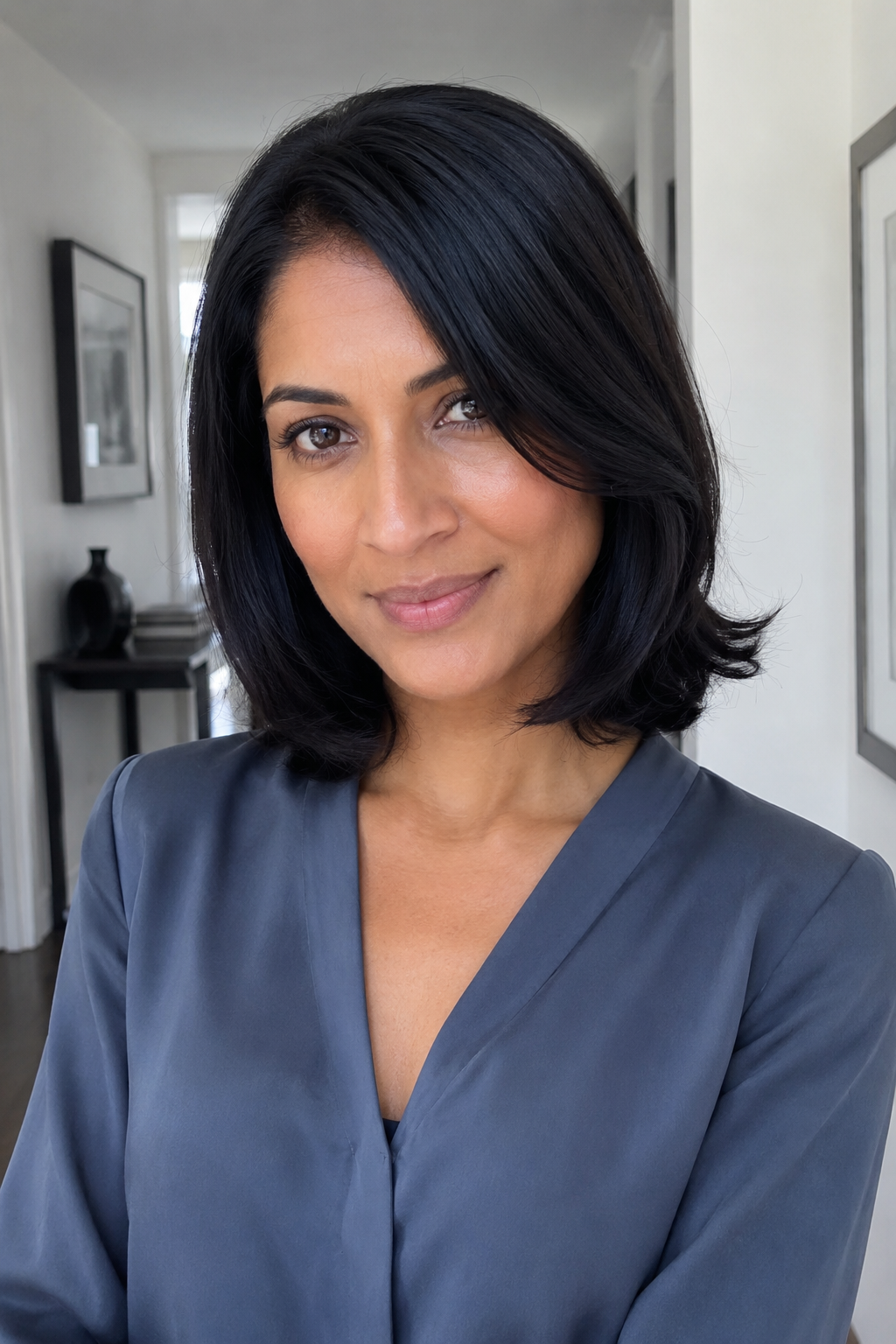
A smooth blowout with the ends flicked outward adds width low, right at the jaw or shoulders. That outward flip is the opposite of a straight blunt drop, which would only lengthen the face. Round-brush the ends out and away as you dry the last few inches. Keep the roots at the crown flat and let the width build at the bottom. A light hairspray holds the flip so it lasts through the day.
Stacked Bob Softened with Waves
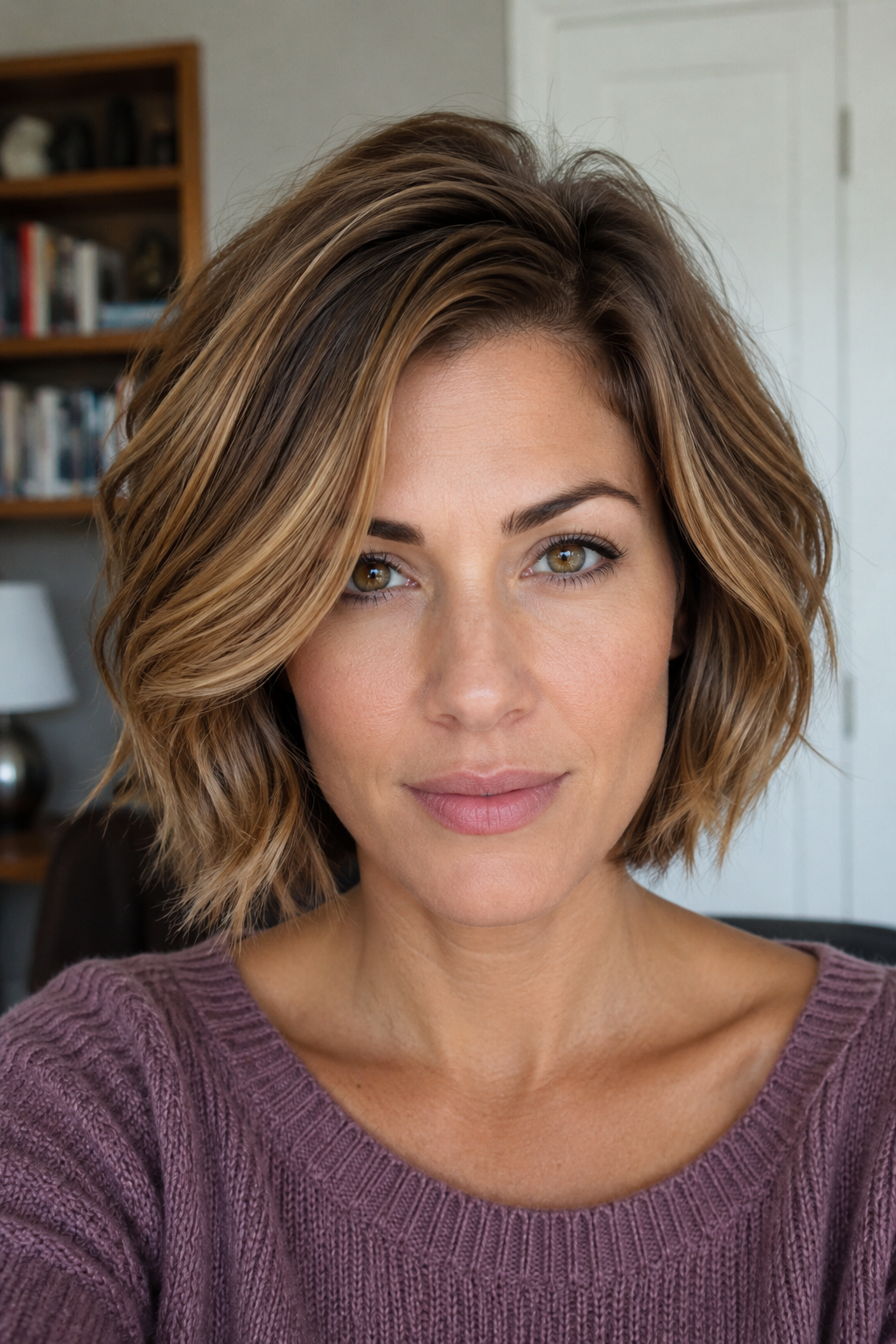
A stacked bob carries some crown height, which sounds wrong for a long face, but waves below fix it. The fullness the waves add at the sides offsets the height so the shape stays wide. Wave the lengths outward from the face and keep the crown lift gentle, not tall. Flick the ends out at the jaw for width down low. This works best when the waves start high enough to fill out the cheeks.
Wispy Bangs on Long Hair
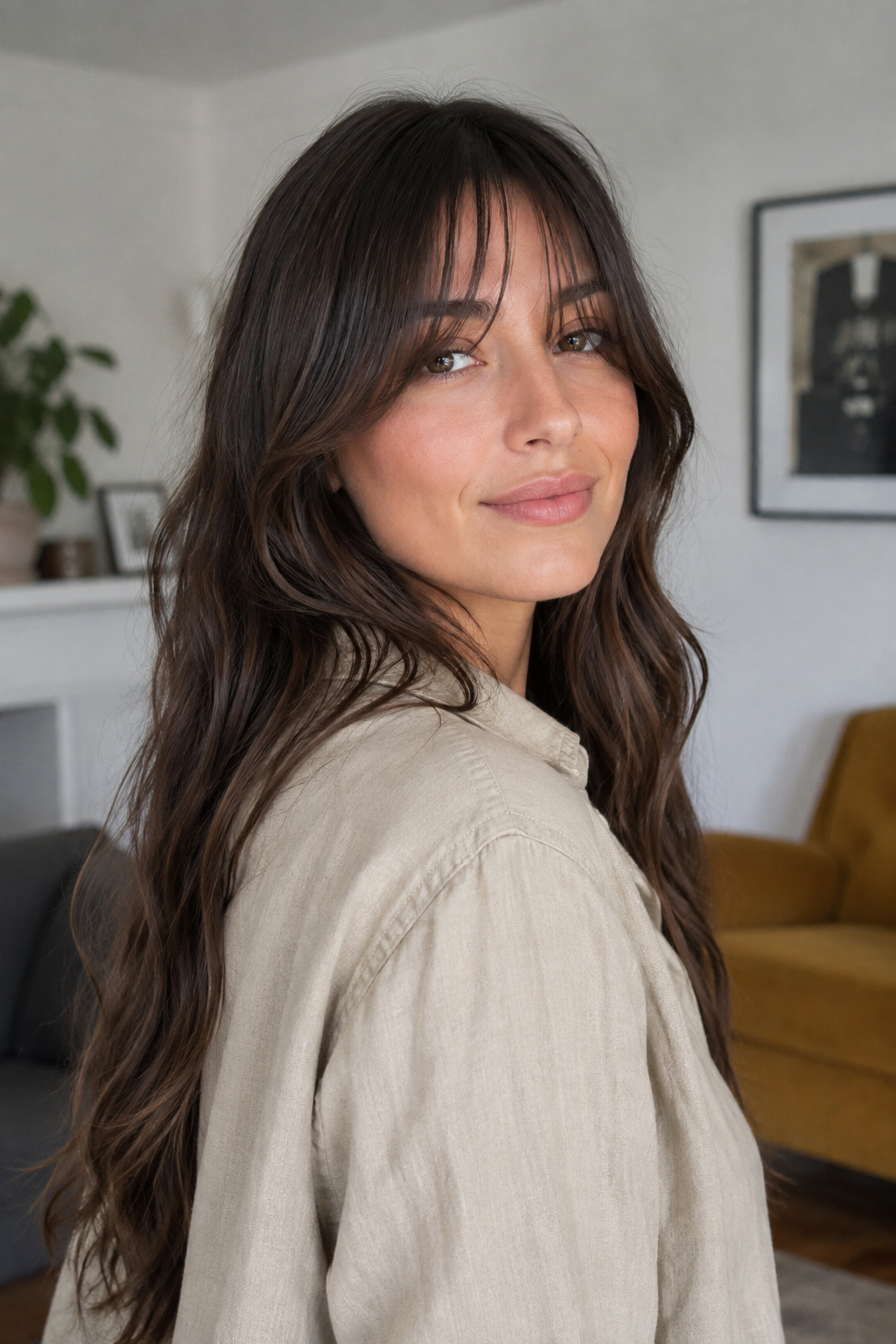
Thin, feathered bangs soften a long forehead without the weight of a full fringe. On longer hair, they break the vertical line gently and blend into the face-framing pieces. Ask for a point-cut wispy fringe so it stays light and airy. Wear the rest in soft waves with a side part for width at the sides. Push the bangs slightly apart in the center so they open toward the cheekbones rather than sitting flat.
Half-Up with Face-Framing Pieces
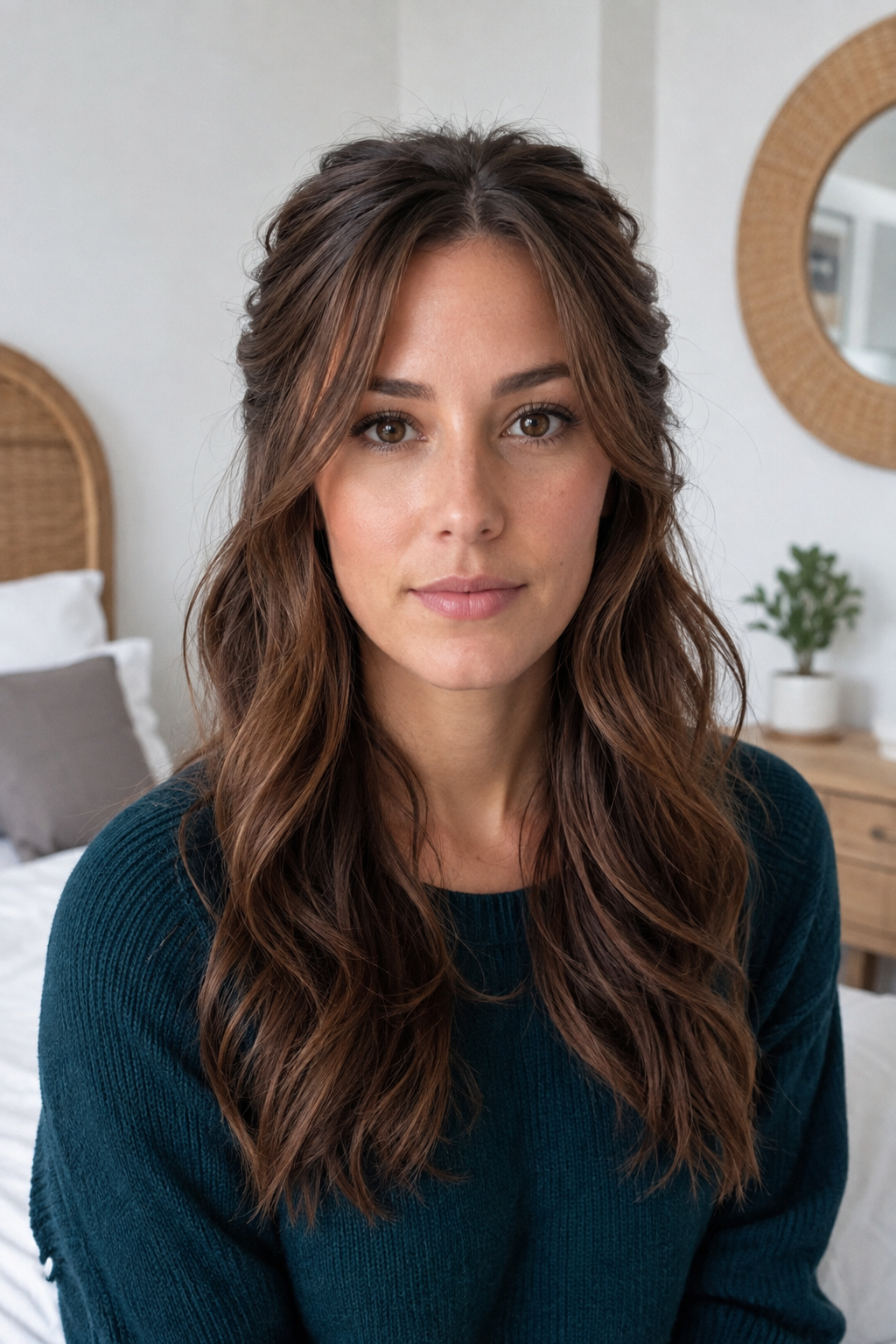
Pulling the top half back while leaving soft pieces loose at the front keeps width around the face on a long shape. Leave curtain pieces or bangs out to frame the cheeks and shorten the forehead. Secure the half-up low, at the middle of the back, never in a high pile that adds crown height. Pull a few waves loose at the sides for fullness. This keeps hair off your neck while holding the width up front.
Low Loose Updo
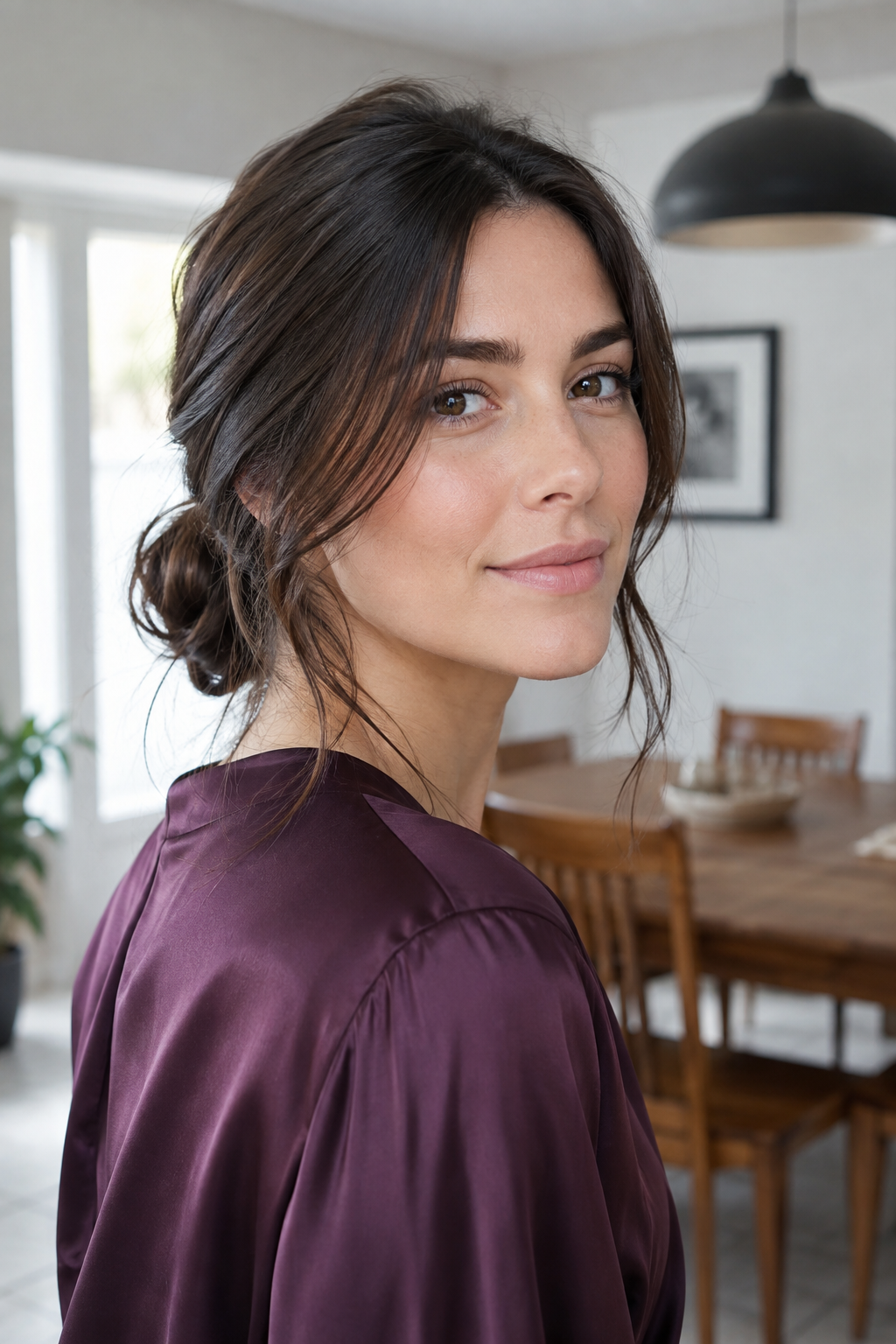
A low bun or twist at the nape suits a long face far better than a tall topknot, which stretches it further. Gather the hair loosely and pin it low, then leave curtain pieces out to frame the cheeks. Tug a few strands free at the sides so the shape stays wide, not sleek. Keep the crown flat and soft rather than smoothed up high. It works for events without adding any height on top.
Deep Side Part with Soft Waves
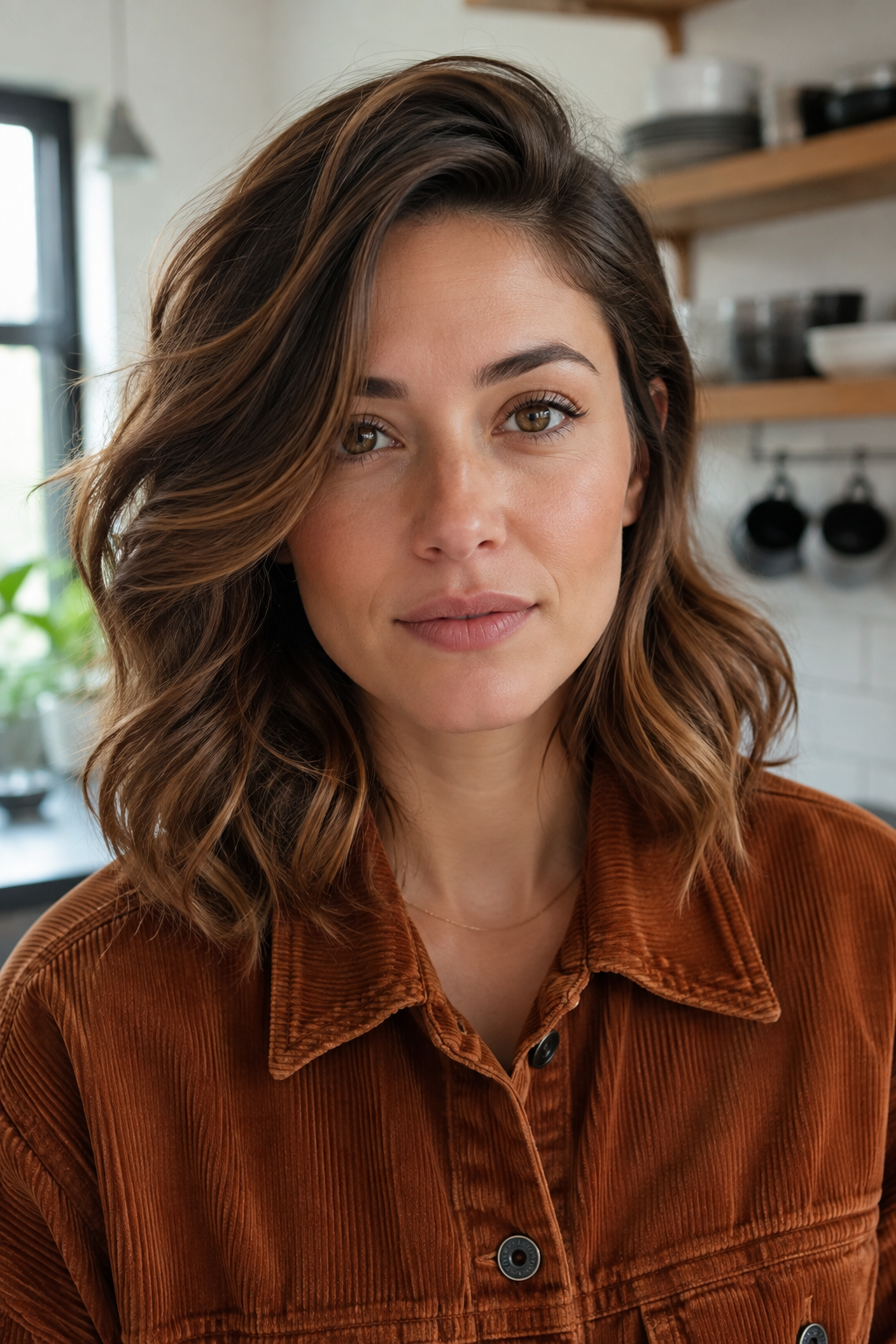
Switching from a center part to a deep side part is a small change that widens a long face fast. The off-center sweep adds volume to one side and breaks the straight vertical line a center part draws. Comb the part deep, well past the arch of your brow. Sweep the heavier side across your forehead and wave the lengths outward. This alone makes a difference, and it pairs with almost any cut or length.