Hair past 50 often loses some density at the crown and temples, and heavy one-length cuts make that obvious. A shag does the opposite. Short layers through the top lift the roots, while the ends stay soft rather than bluntly square. That is why stylists steer so many clients toward shaggy shapes once hair starts to thin or gray.
The cut also saves styling time, since the layers are meant to look slightly undone. Air drying, a quick scrunch, and a little texture spray are usually all it takes.
Shaggy Bob
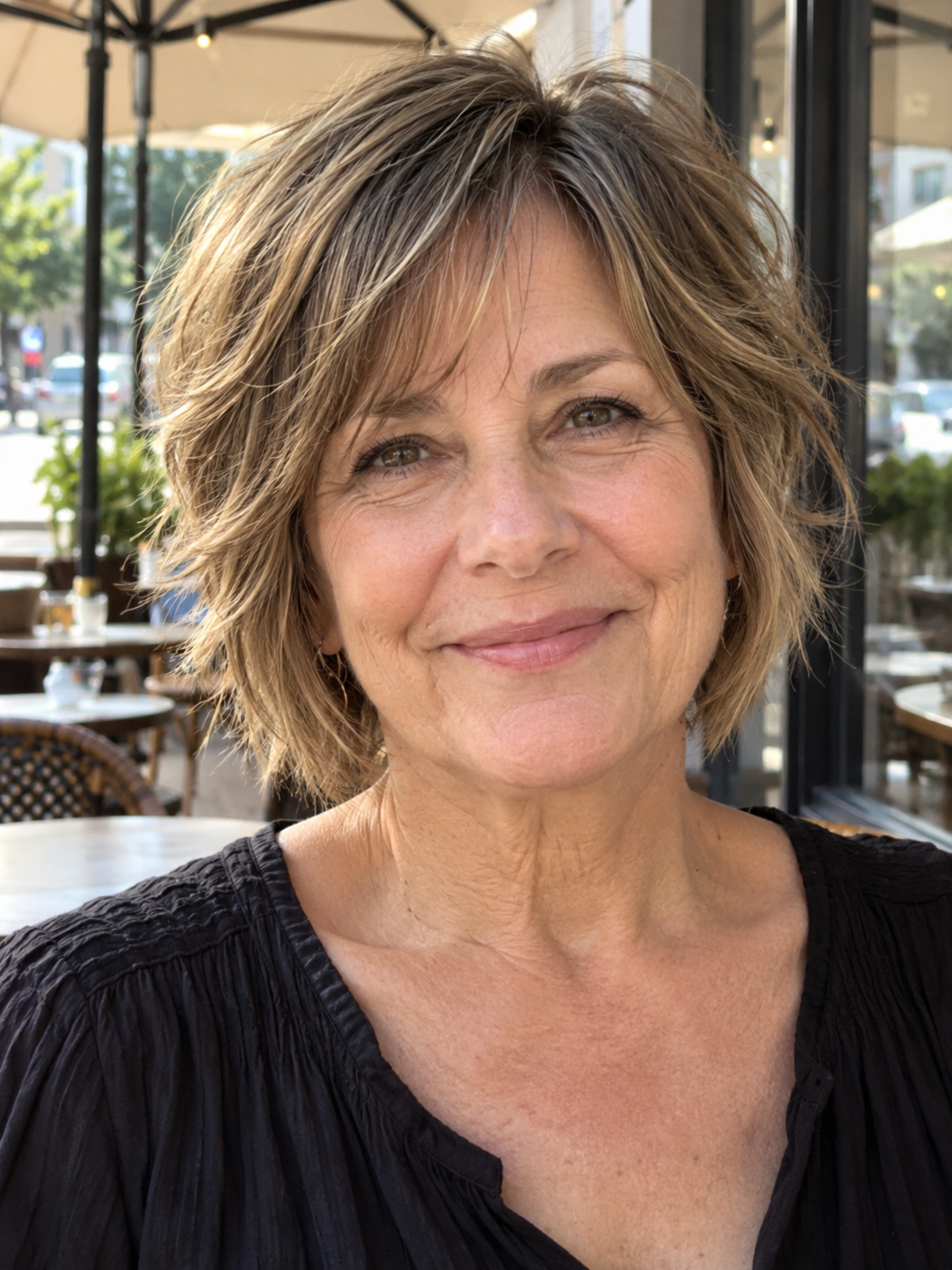
A chin-grazing bob with layers cut all the way through sits lighter than a blunt one. The layers start around the cheekbones and get shorter toward the crown, so the shape lifts instead of falling flat. Ask for soft, point-cut ends rather than a straight line. Blow dry with a round brush for a rounded finish, or scrunch in mousse and let it air dry for a tousled one. Gray hair takes to this cut well, since the texture hides regrowth lines.
Short Choppy Shag

Ear-length to jaw-length, with ends snipped into deliberate uneven pieces, this one looks like you just ran your hands through it. The choppy ends give the cut its character, so skip anything that smooths them down. Work a pea-sized amount of texture paste through dry hair and push pieces in different directions. It grows out gracefully, which matters when salon visits stretch to eight weeks.
Shaggy Pixie
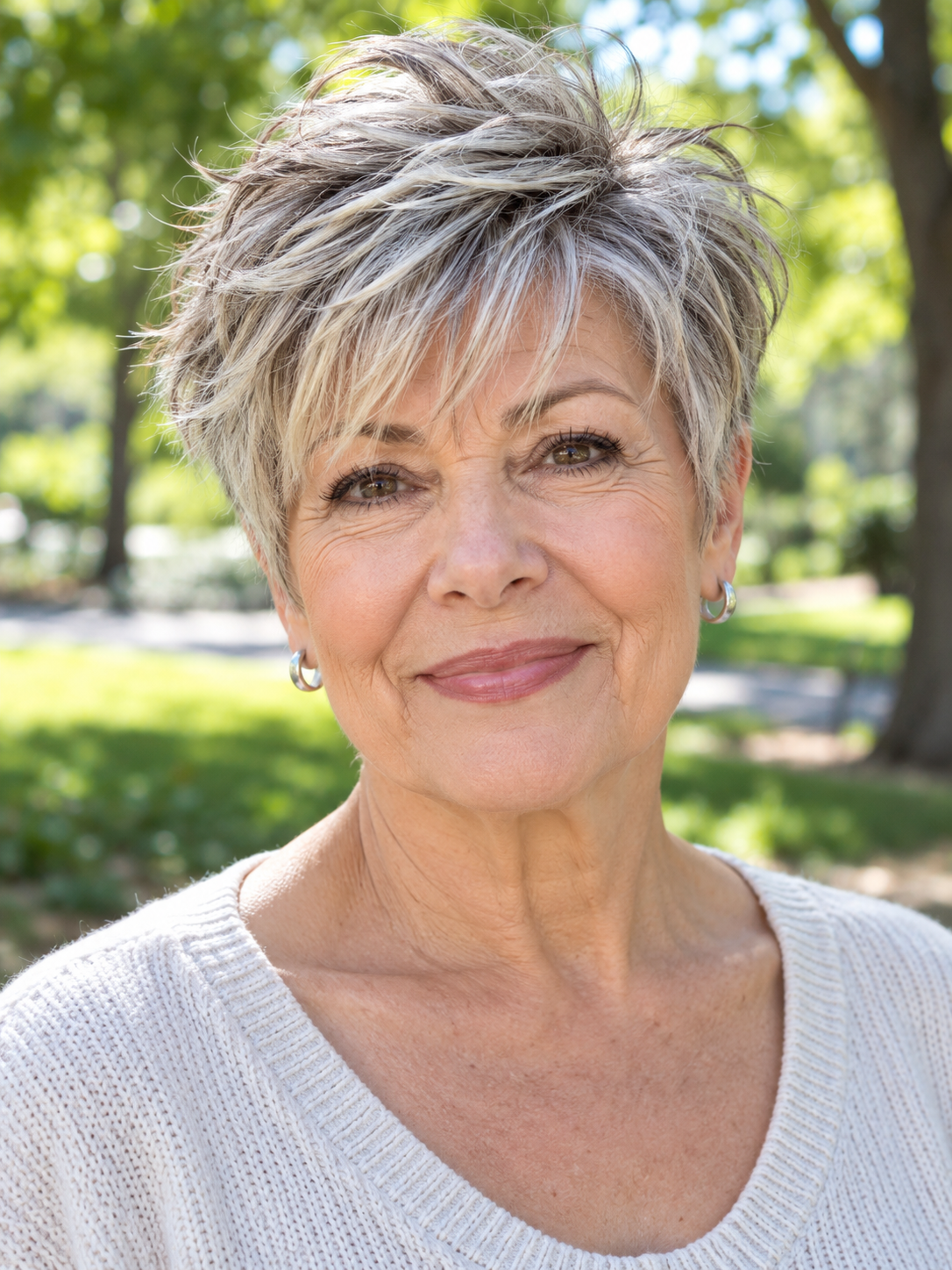
Longer, feathered layers on top spill over a tighter back and sides. That is what separates a shaggy pixie from a standard one. Hair over 50 often sits flatter at the crown, and those loose top layers give it back some height. Style with a light cream rather than wax, which can make thinning hair look greasy. The fringe can be cut to brush the brows or swept to one side.
Curtain Bang Shag
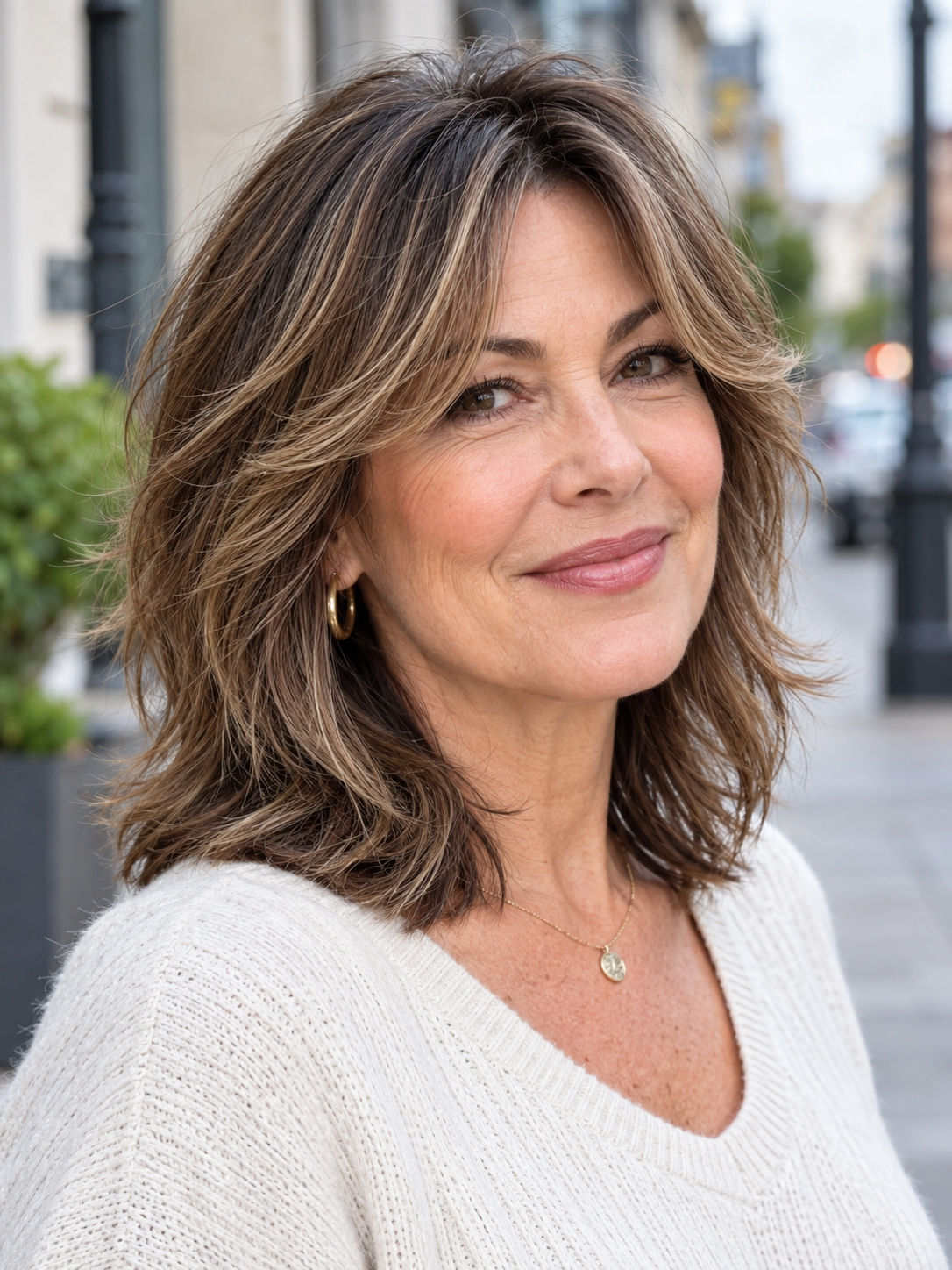
Soft bangs parted down the middle and swept to either side frame the face without covering it. Pair them with collarbone-length shag layers and the whole cut moves as one piece. The bangs should hit around the cheekbones at their shortest point. This length works at any age because the layers keep weight off the ends. Blow dry the bangs with a round brush, then leave the rest to air dry.
Silver Shag
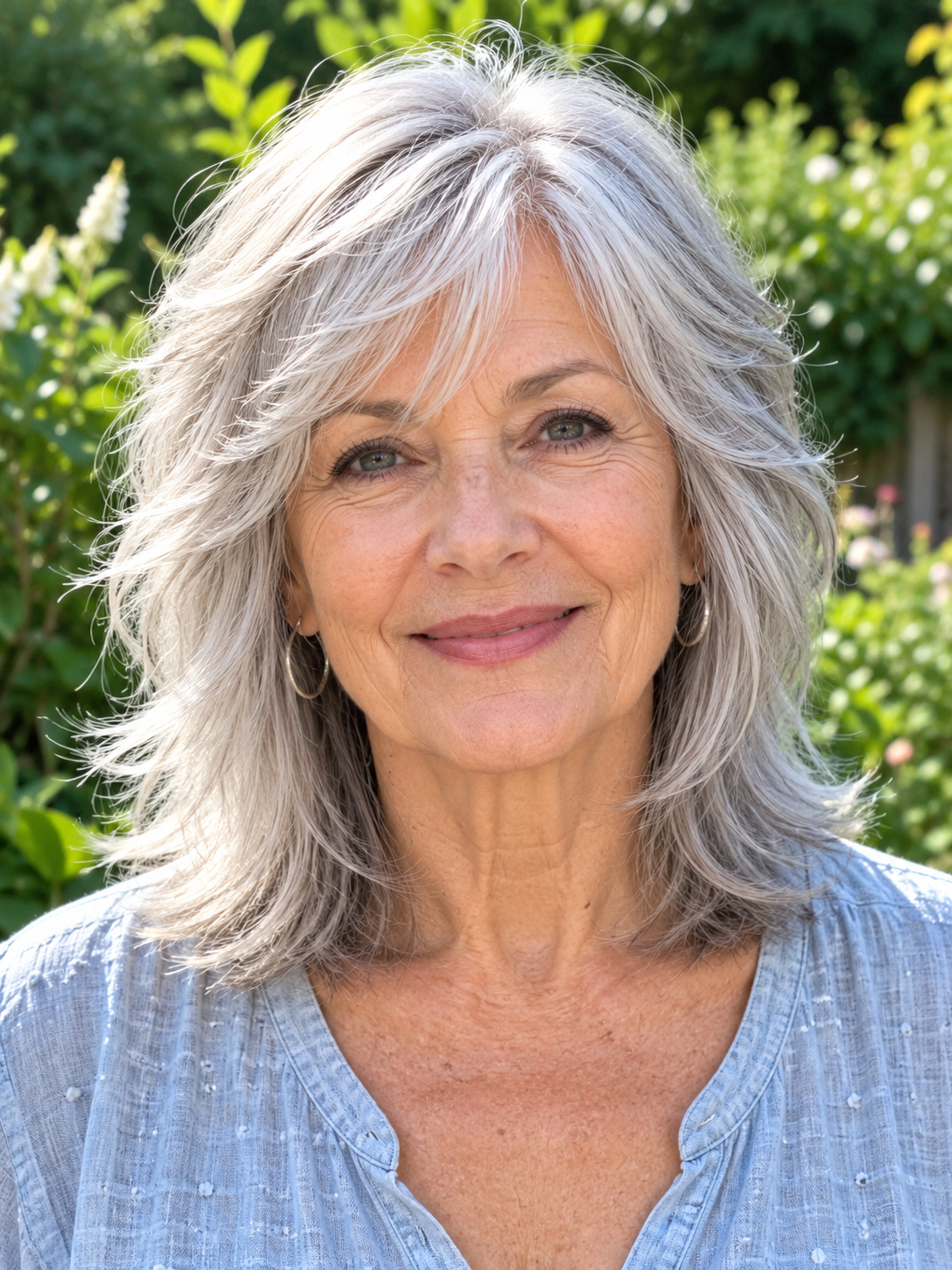
Silver and white hair catches light along every layer of a shag, which is why the two pair so well. Natural gray tends to be coarser and holds the shape of a layered cut without much product. Keep the layers shoulder-length or shorter so the ends don’t look wiry. A purple shampoo once a week keeps the tone bright. Add a light shine serum through the mid-lengths before styling.
Shaggy Lob
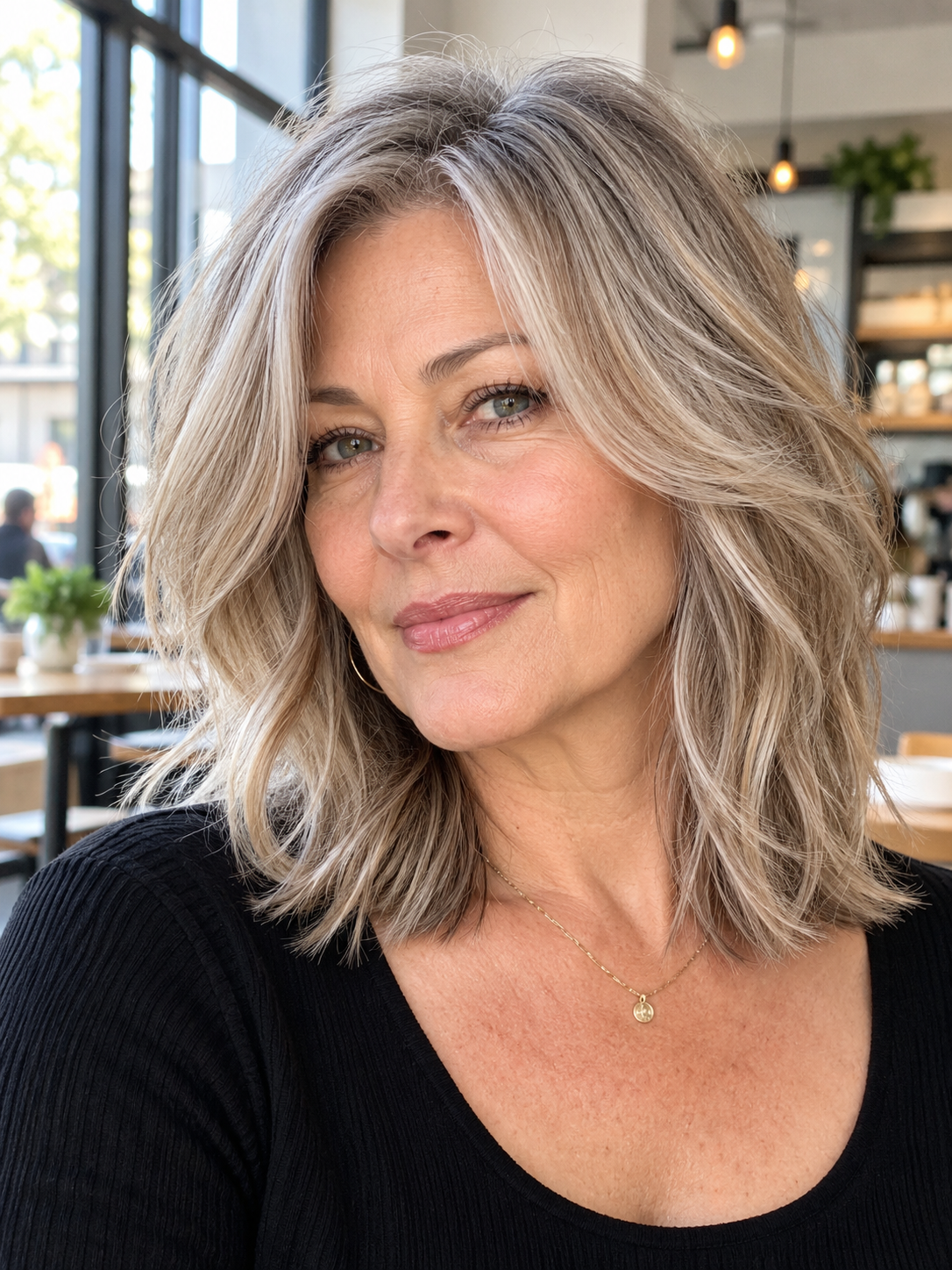
Collarbone-length, layered from the jaw down, and swingy when you turn your head. A shaggy lob is the choice when you want shag texture but aren’t ready to go short. The layers should be long and blended, not stacked, so the shape stays soft. Flat-iron waves through the mid-lengths give it a lived-in bend. It also pulls back into a loose clip on days you want it off your face.
Curly Shag
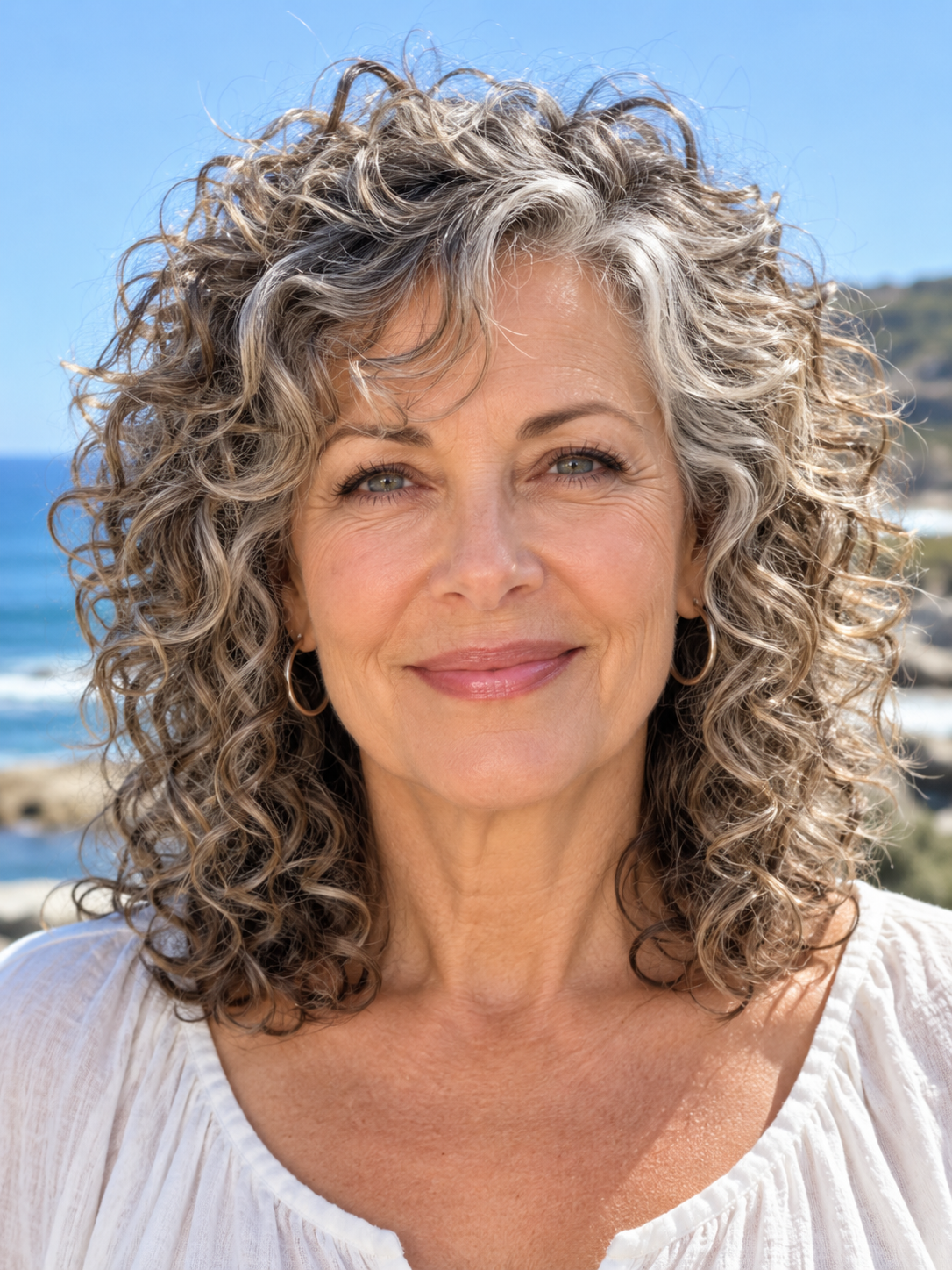
Natural curls cut into shag layers spring up instead of hanging heavy. Have the cut done dry, curl by curl, so each layer lands where the curl actually sits. Keep the shortest layers near the crown for lift and let the sides fall longer. Scrunch in a curl cream on soaking wet hair, then leave it alone until fully dry. Shrinkage will pull everything up, so ask for layers slightly longer than you think.
Wispy Bang Shag
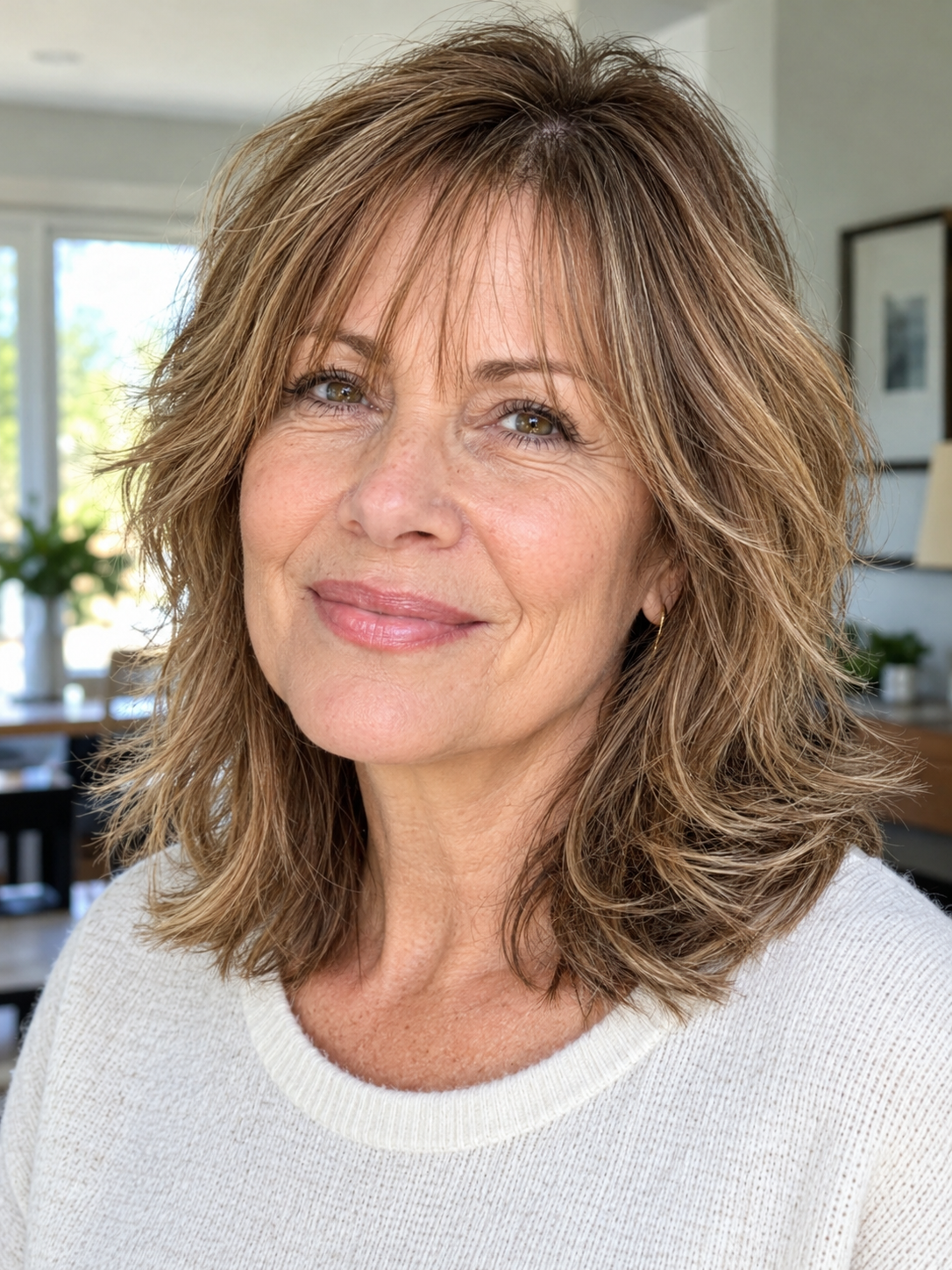
Thin, see-through bangs over shoulder-length shag layers soften the forehead without a heavy block of hair. You keep more of the face visible than with a full fringe, and the bangs blend into the layers at the sides. Have them cut to brush the brows. Dry them straight down with your fingers, then push them gently apart. Wispy bangs also suit a high forehead because they break up the space without covering it entirely.
Bixie Shag
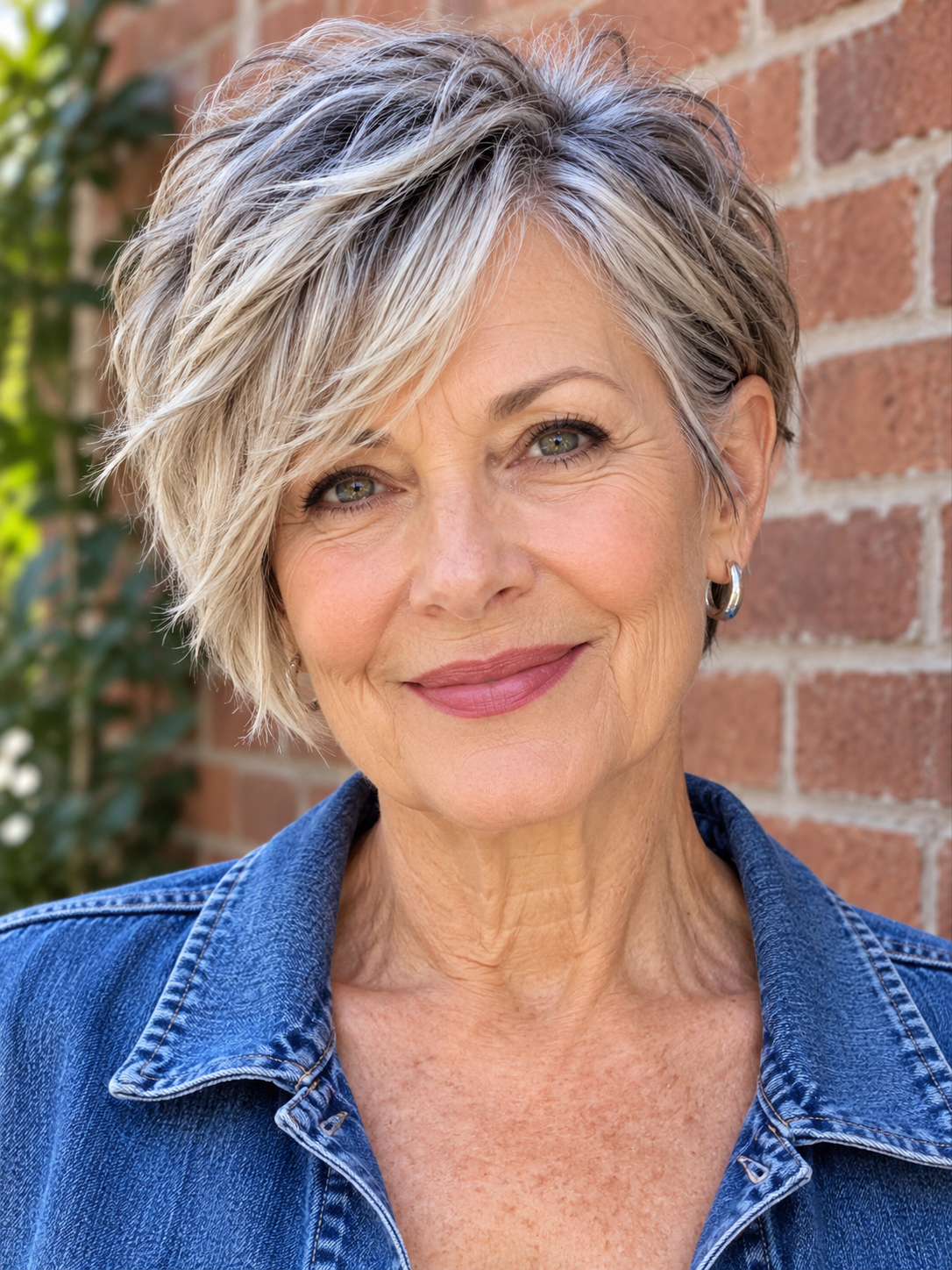
Half pixie, half bob, with shaggy layers throughout. The bixie lands between ear and jaw length, long enough for soft movement but short enough to style in five minutes. Layers through the crown build volume while longer pieces at the sides keep it soft. Tuck one side behind the ear for a cleaner look. Ask for texturizing at the ends so nothing sits heavy.
Feathered ’70s Shag
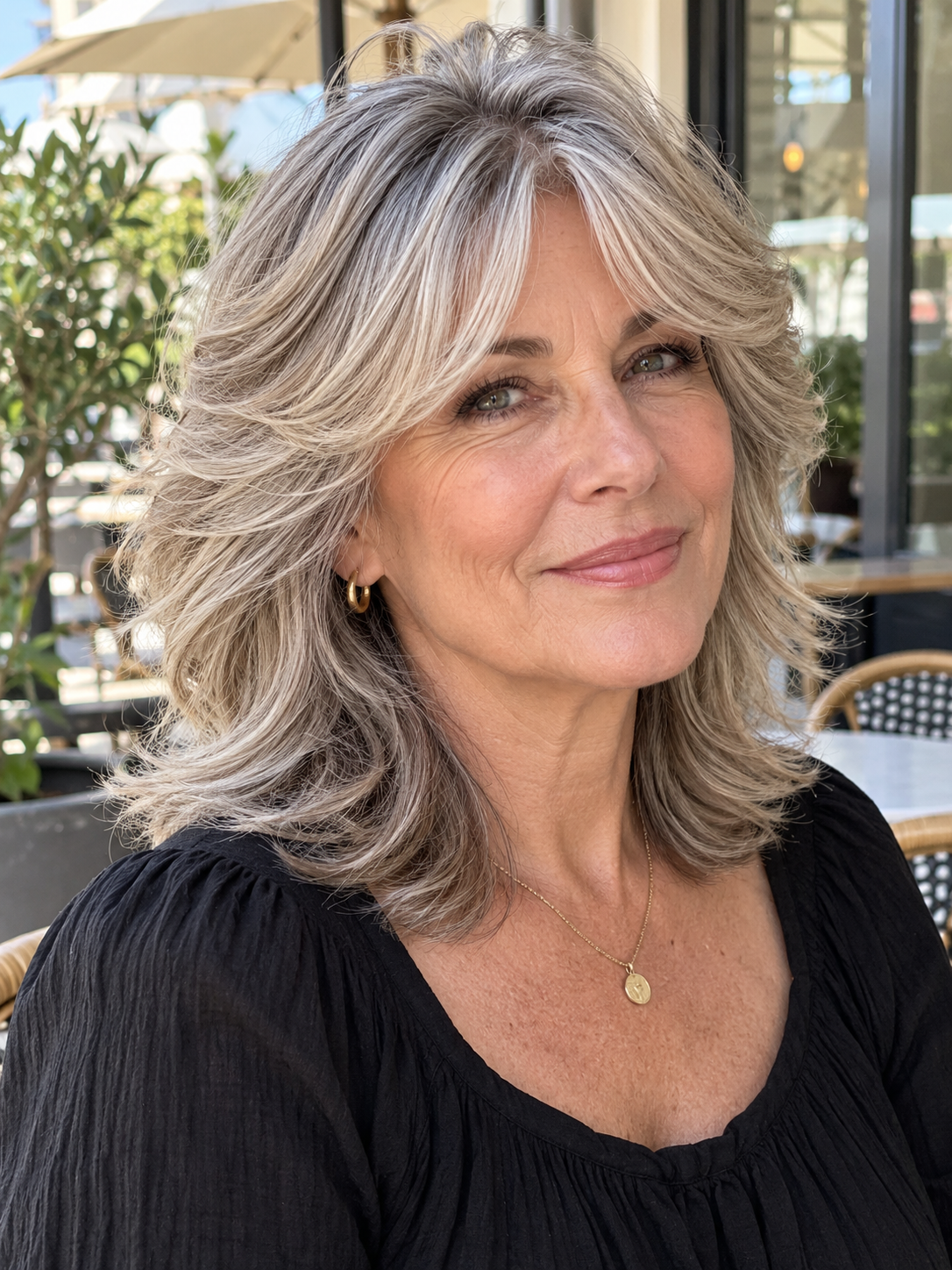
This is the original shag, with layers swept back from the face in soft feathered waves. Blow dry sections back and away from the face with a round brush, then shake it out. The layers run short on top and gradually lengthen, usually finishing around the shoulders. On mature hair the feathering adds width at the temples, which balances a face that has narrowed. Keep bangs long enough to feather back as well.
Wavy Beach Shag
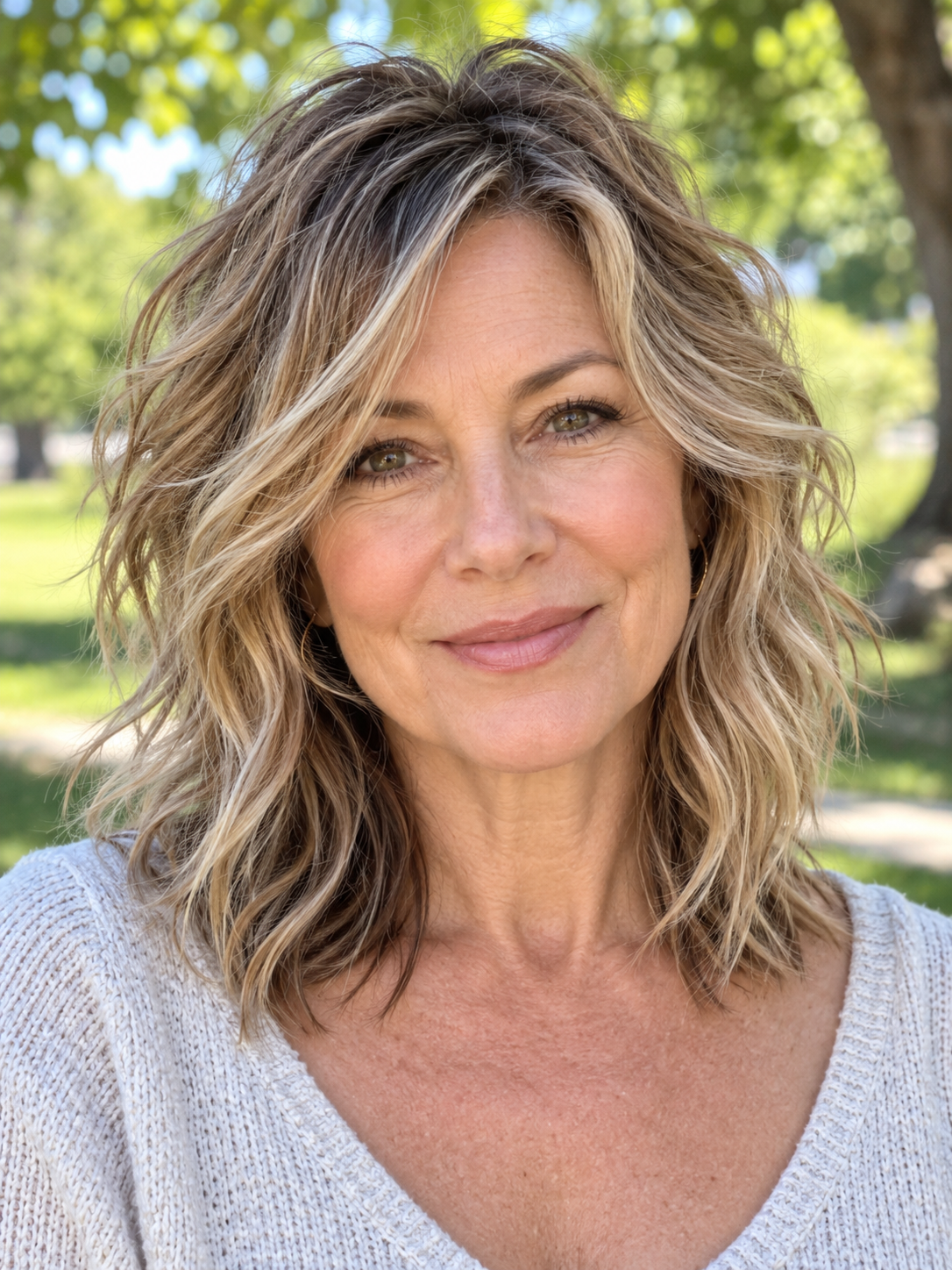
Loose, tousled waves through medium-length shag layers look like you came in from a windy walk. Mist damp hair with a sea salt spray, twist sections loosely, and let them dry on their own. The layers should start at the chin and continue down to just past the shoulders. Waves hide any thinner areas by adding visual texture. Skip the flat iron entirely with this one, since polished waves lose the point.
Softened Wolf Cut
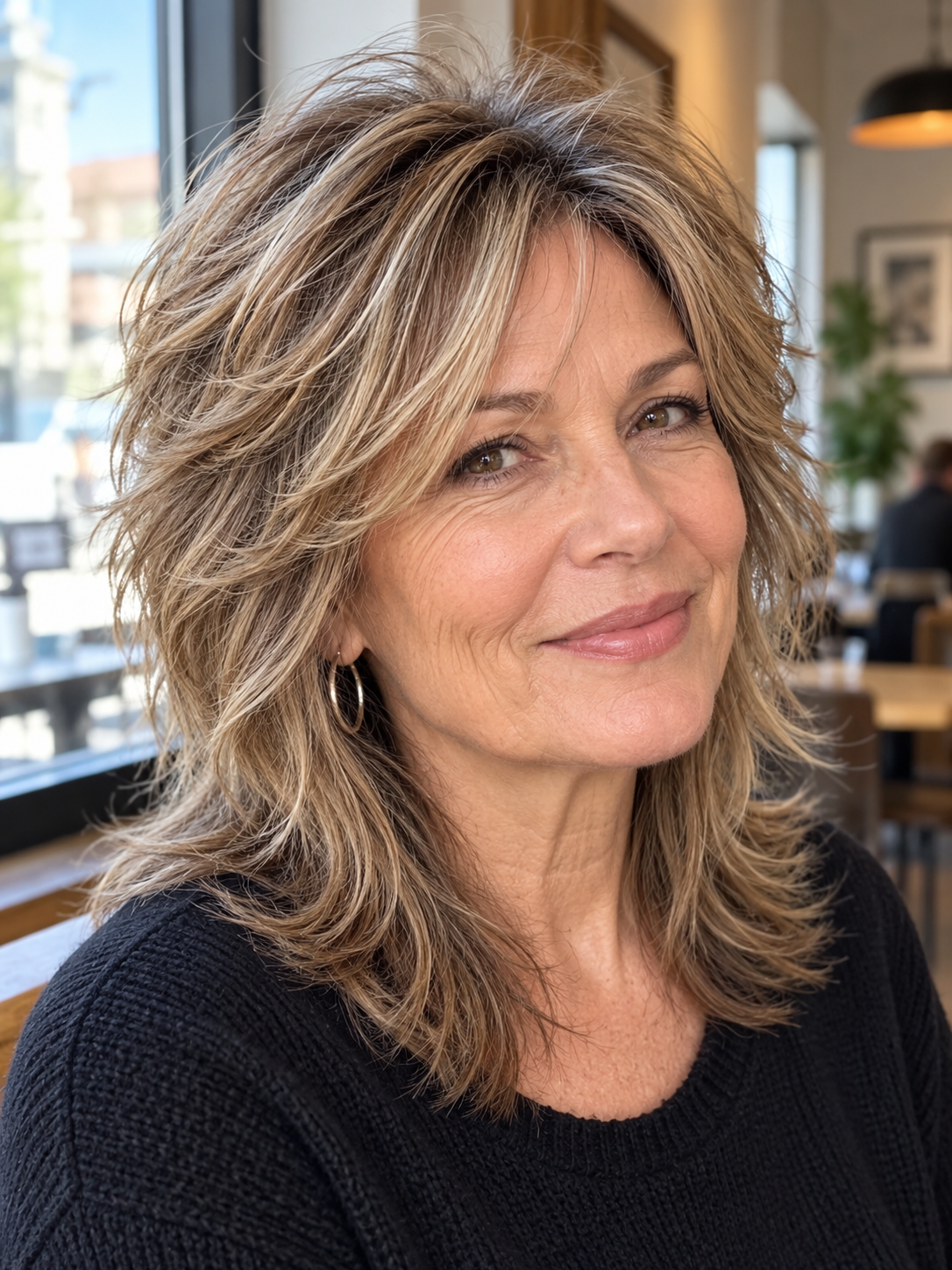
A wolf cut combines shag layers with a mullet-style length at the back, and the softened version keeps those elements subtle. The crown layers are shorter and fuller, the back sits just past the shoulders, and nothing is extreme. Ask for the top layers to blend rather than sit in a visible shelf. Rough dry upside down for volume. It gives a current feel without looking like you borrowed a cut from a teenager.
Side-Swept Bang Shag

Long bangs swept across the forehead soften shag layers that fall anywhere from chin to shoulder. The sweep covers one side of the forehead while leaving the other eye clear. Dry the bangs in the opposite direction first, then flip them over for lift at the root. A side part also helps hide a thinning hairline. Keep the layers around the face slightly shorter so the bangs merge into them.
Long Layered Shag
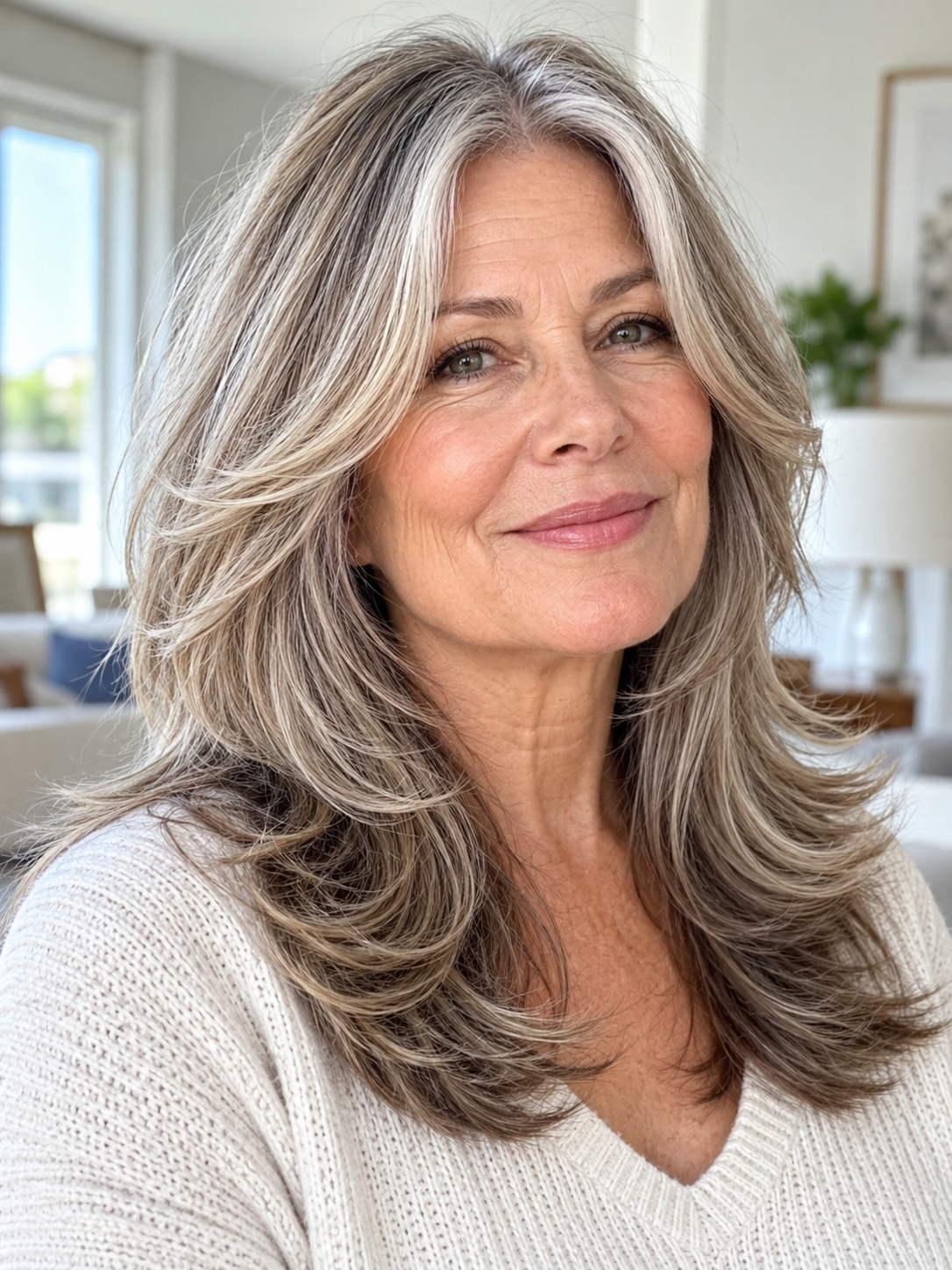
Past the shoulders with layers starting at the chin, this shag keeps length while still moving. Long hair after 60 can look heavy if cut straight across, and the layers fix that by thinning the ends naturally. Blow dry with a large round brush, flicking the ends outward. A center part shows the layers best. Trim every ten weeks so the bottom layers don’t go stringy.
Soft Shag Mullet
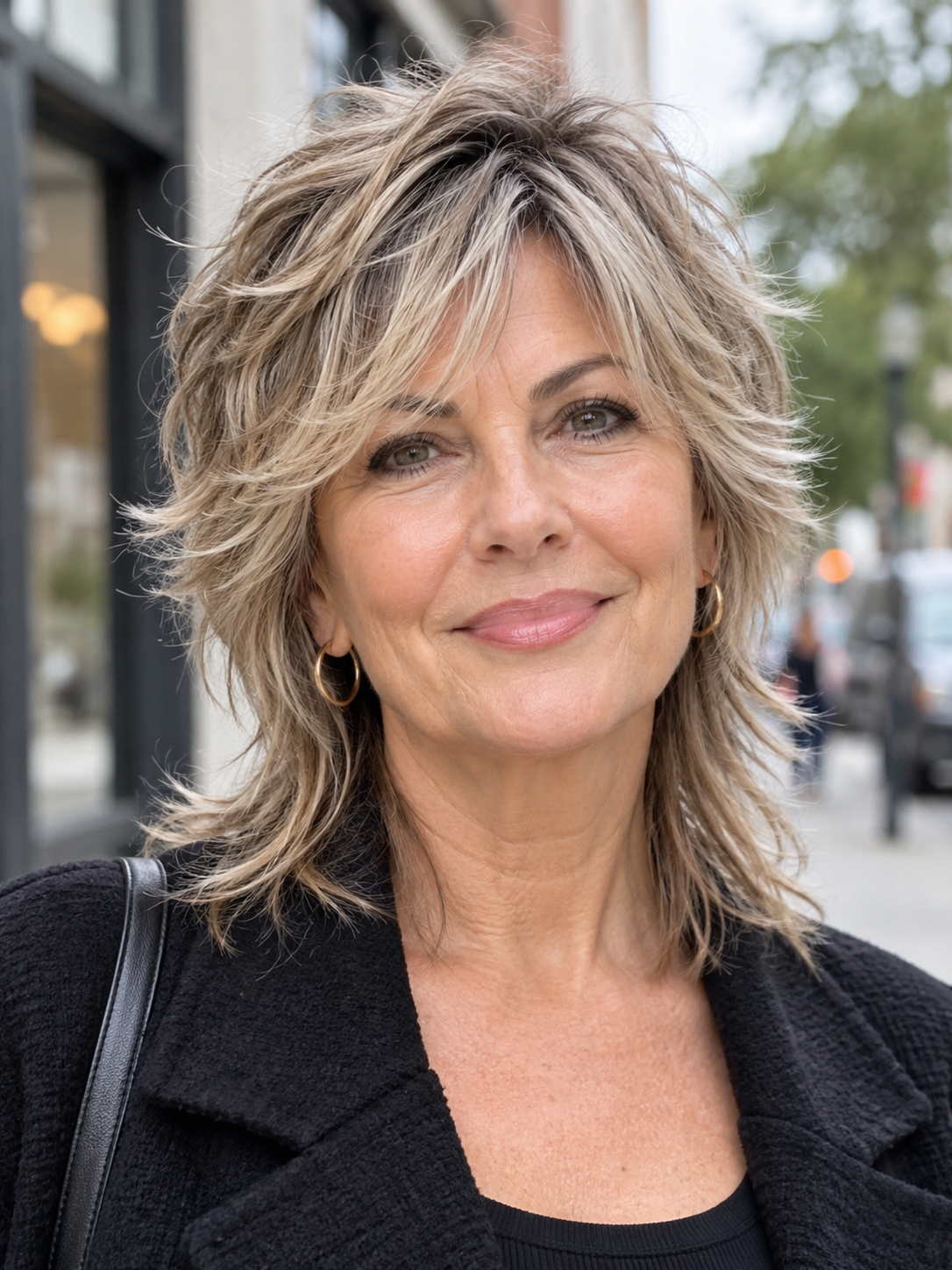
Short, shaggy layers around the face and crown, with the back left a few inches longer. The modern version is far gentler than the 1980s one. The length at the back should blend, not drop off in a sharp step. Piece the front with a styling cream and let the back stay soft. It’s a strong choice for anyone who wants an unexpected cut after years of the same bob.
Highlighted Shag
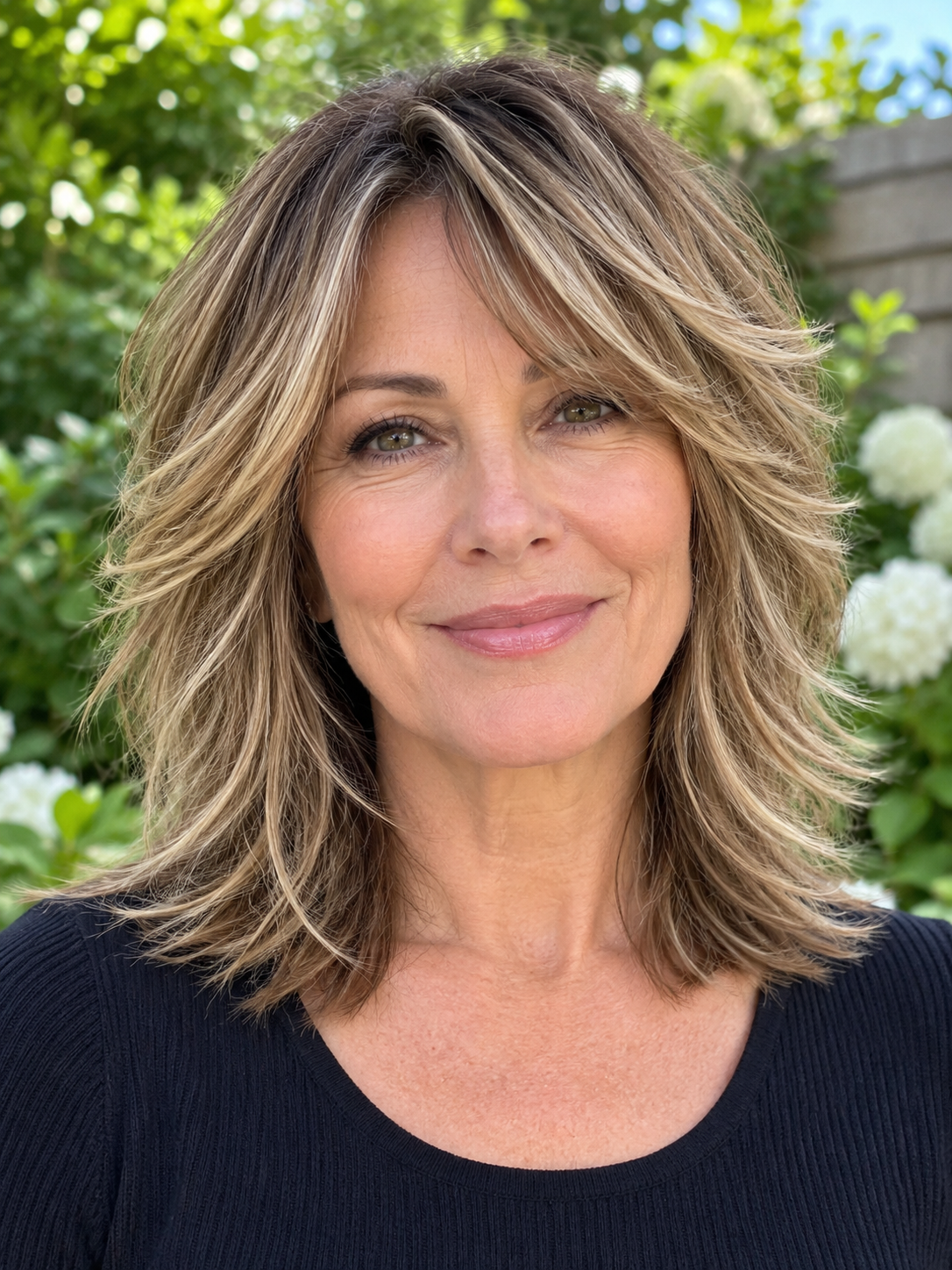
Fine highlights woven through shag layers make every piece visible. A brunette or dark blonde base with lighter ribbons a shade or two up shows the cut’s movement from across a room. Keep highlights fine rather than chunky, so the result stays soft. The technique also blends in gray as it comes through, which stretches time between color appointments. Use a color-safe shampoo to keep the contrast from fading.
Face-Framing Shag
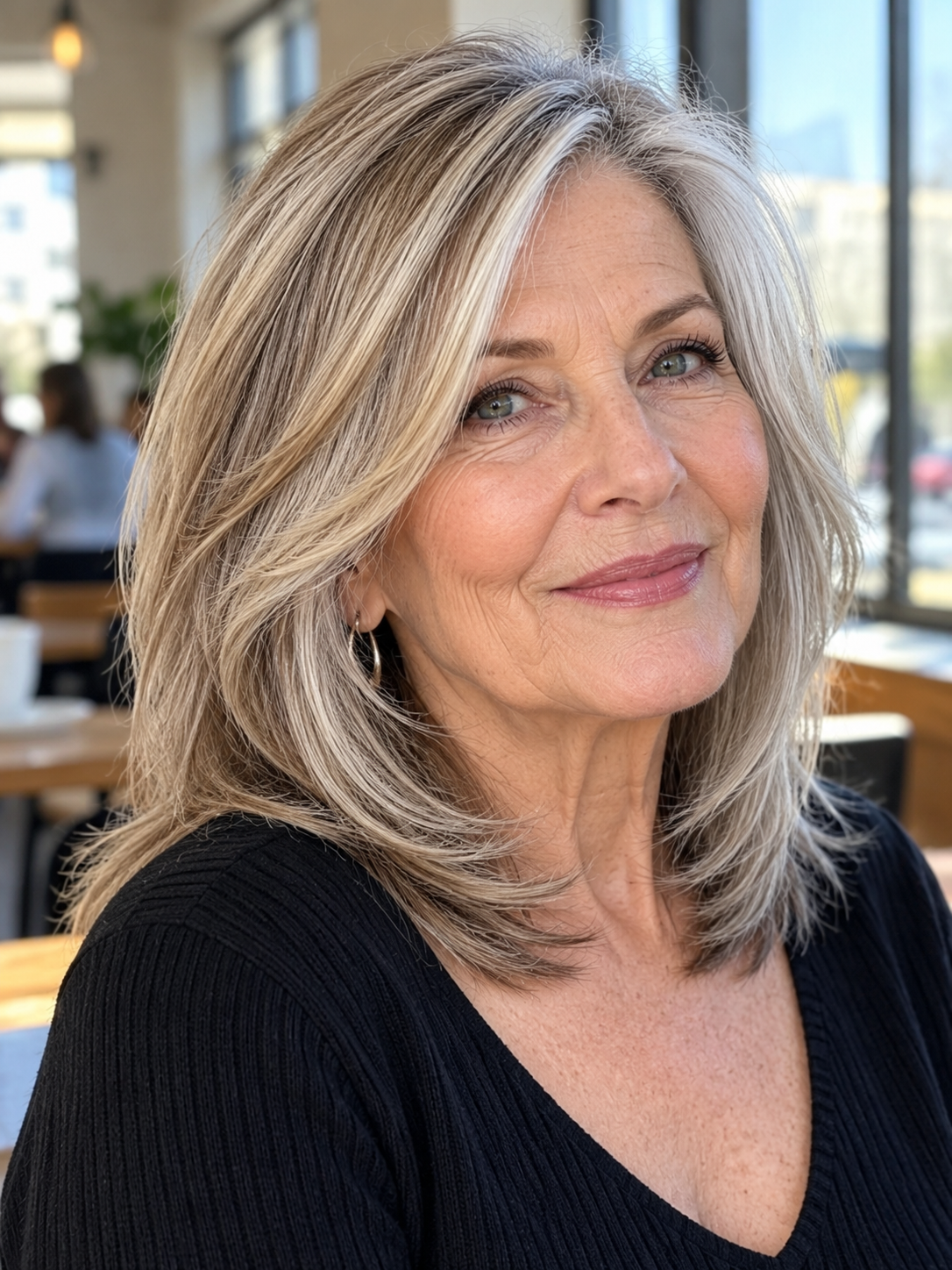
Shorter layers that start at the cheekbone and trace the jawline, with the rest left longer. The focus sits entirely around the face, so the back can be any length you like. Have the front pieces cut to curve slightly inward. These layers draw attention to the eyes and cheekbones. Smooth the front sections with a flat brush while the rest air dries.
Crown-Volume Shag

Short layers concentrated at the crown build lift exactly where hair tends to flatten with age. The sides and back can stay chin-length or longer, but the top is cut noticeably shorter and texturized. Spray a volumizing mist at the roots and dry with your head tipped forward. The result is height without teasing, and it holds through the day on hair that has lost body.
Blunt-Bang Shag
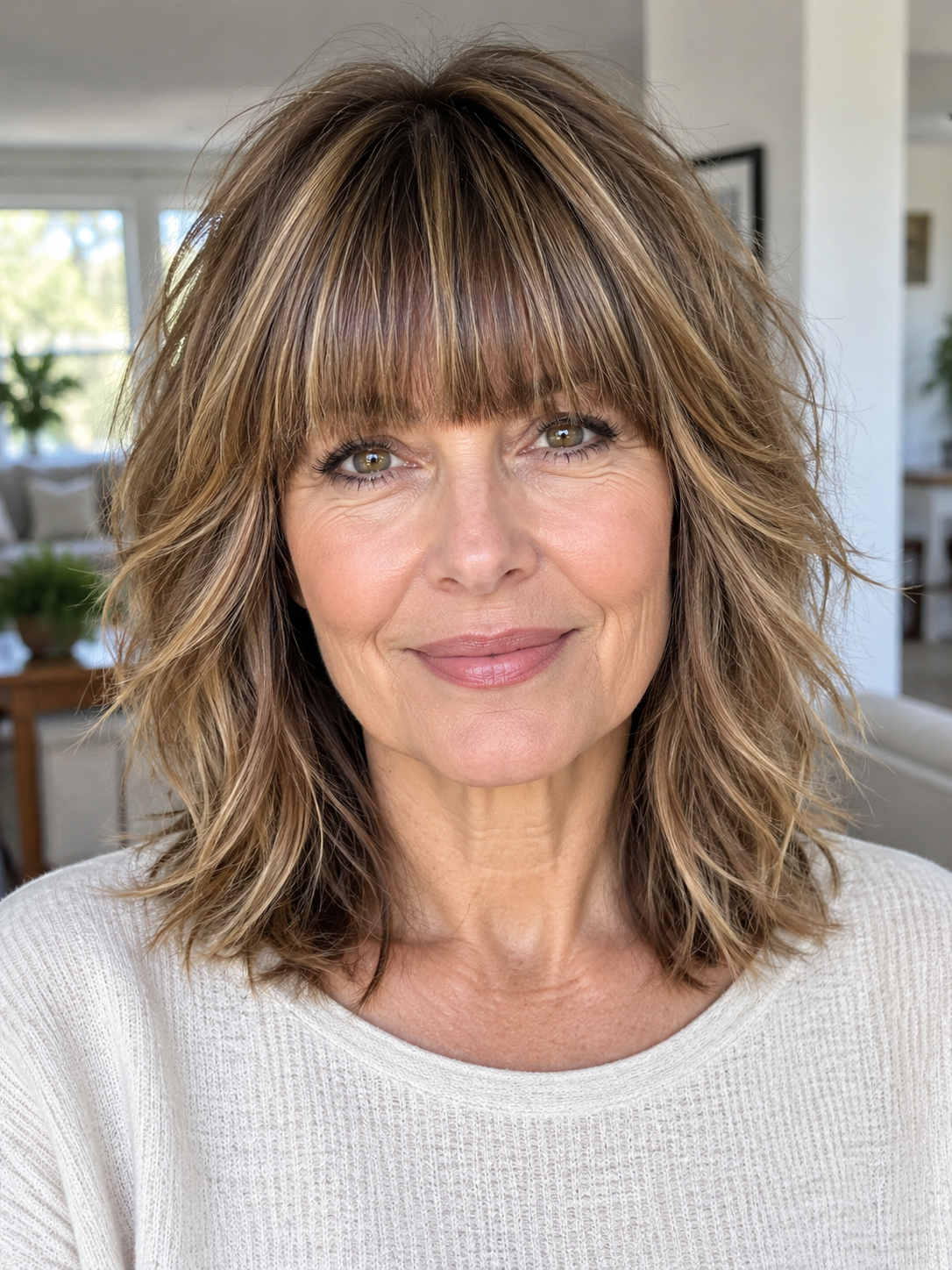
Full bangs cut straight across the brows paired with shoulder-length shag layers. The contrast between the solid fringe and the soft layers is what makes it work. Bangs should sit right at the brows, never above. Flat-iron the bangs smooth and leave the layers tousled. It covers forehead lines completely while the layers keep the overall shape from feeling heavy.