Fine hair after 60 is usually dealing with two things at once, fewer strands and strands that have shrunk in diameter. Long lengths pull what is left flat against the head. Cut short, the same hair stands up on its own because there is no weight dragging it down.
That is why a pixie is the most reliable fix for thinning, not just a trend. The cut has to be done with care though. Over-thinning the ends or stacking too many layers makes sparse hair look sparser. Ask for soft layers, blunt ends, and height at the crown.
Classic Short Pixie
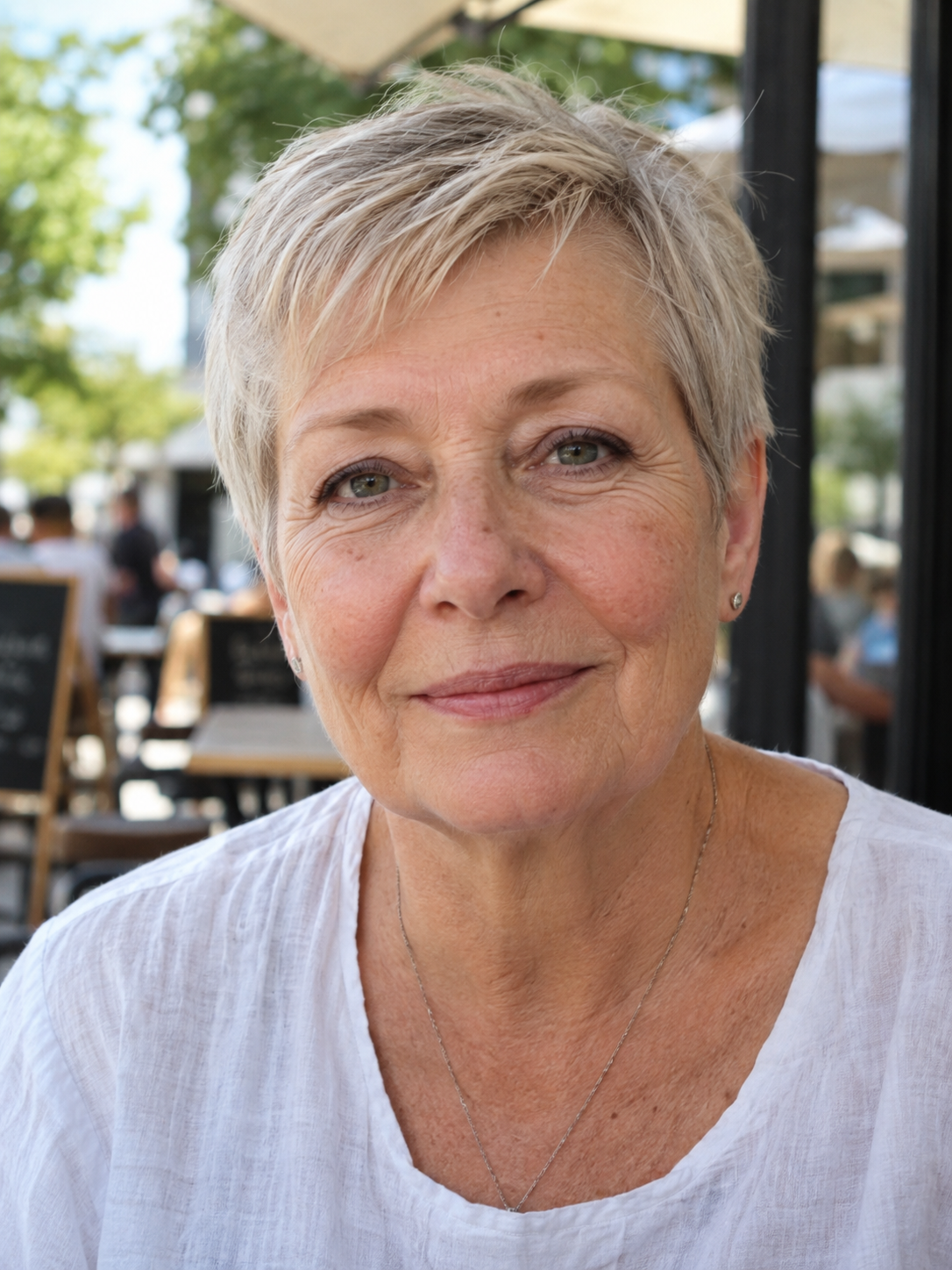
Short at the sides and back, a little longer on top, and brushed lightly forward. The classic pixie gives fine hair the most lift for the least effort, because the top layers are short enough to stand on their own. Keep the top around two inches and the sides neat. Blow dry with your fingers, lifting at the roots. A pea-sized amount of light mousse is all the product it needs.
Textured Pixie with Crown Volume
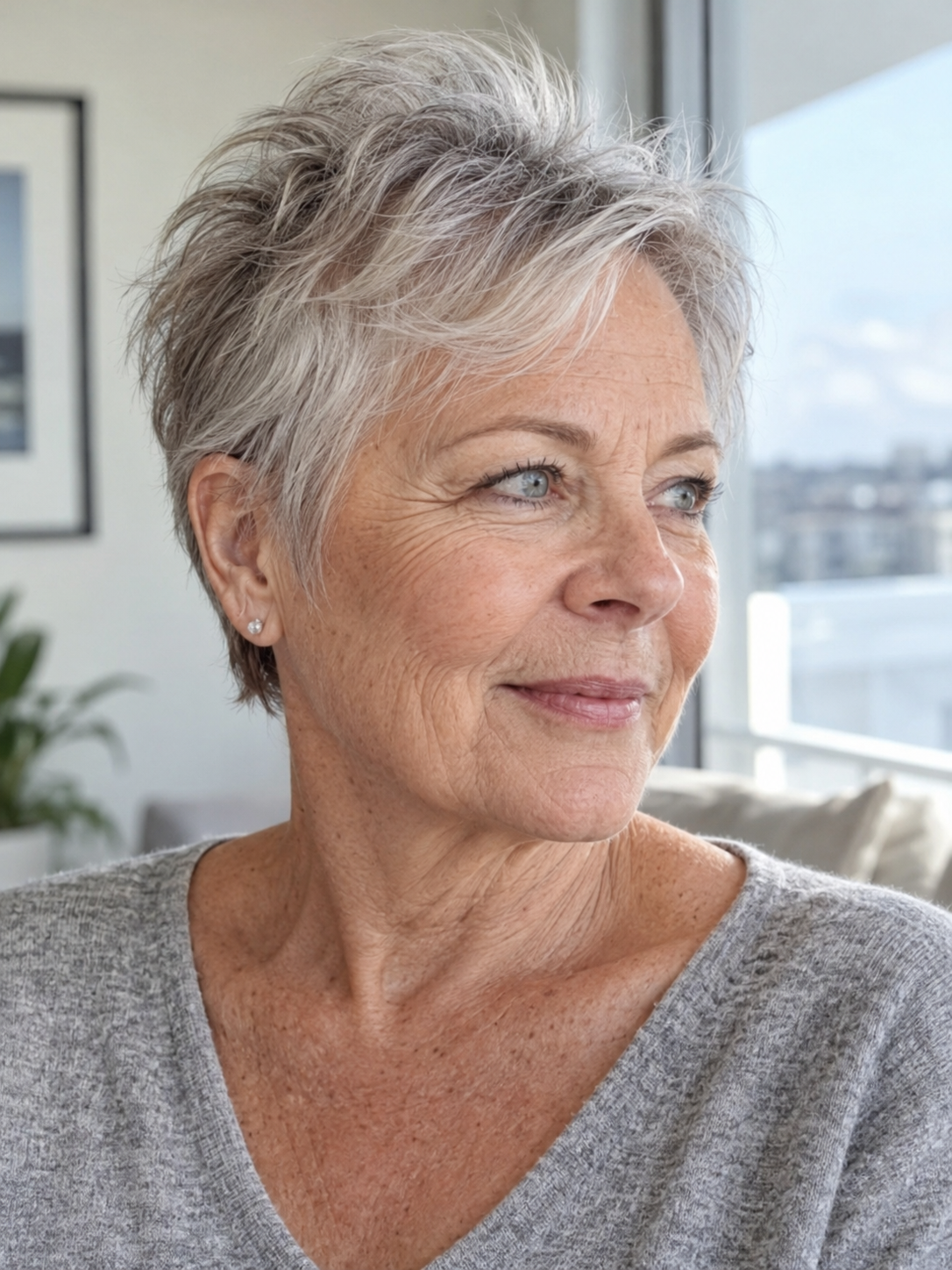
Height at the crown is the whole point here. The top is cut in short, choppy layers that lift when roughed up, while the sides stay close to the head. Thin hair looks fuller when the crown has visible shape. Work a volumizing spray into damp roots and dry upside down. Finish by pinching a few pieces at the crown upward. Avoid heavy pastes, which collapse fine strands within an hour.
Long Pixie
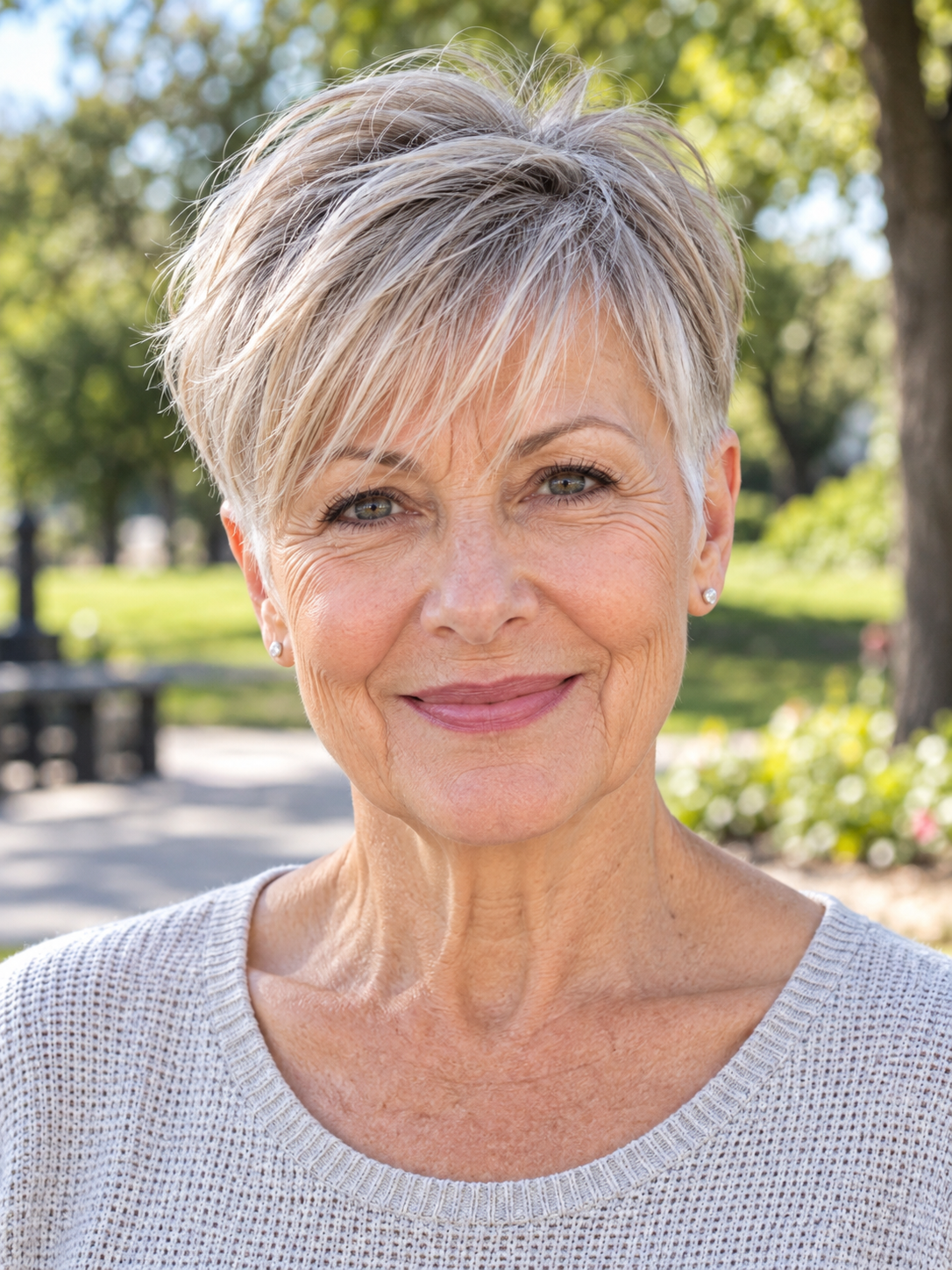
Longer top layers that fall toward the brows, over sides and back that stay cropped short. A long pixie gives fine hair somewhere to go, so the top can be swept, parted, or pushed back. Keep everything above the ears tight so the length on top looks intentional. Dry the top with a small round brush for a smooth sweep. It needs trimming every five to six weeks.
Side-Swept Pixie
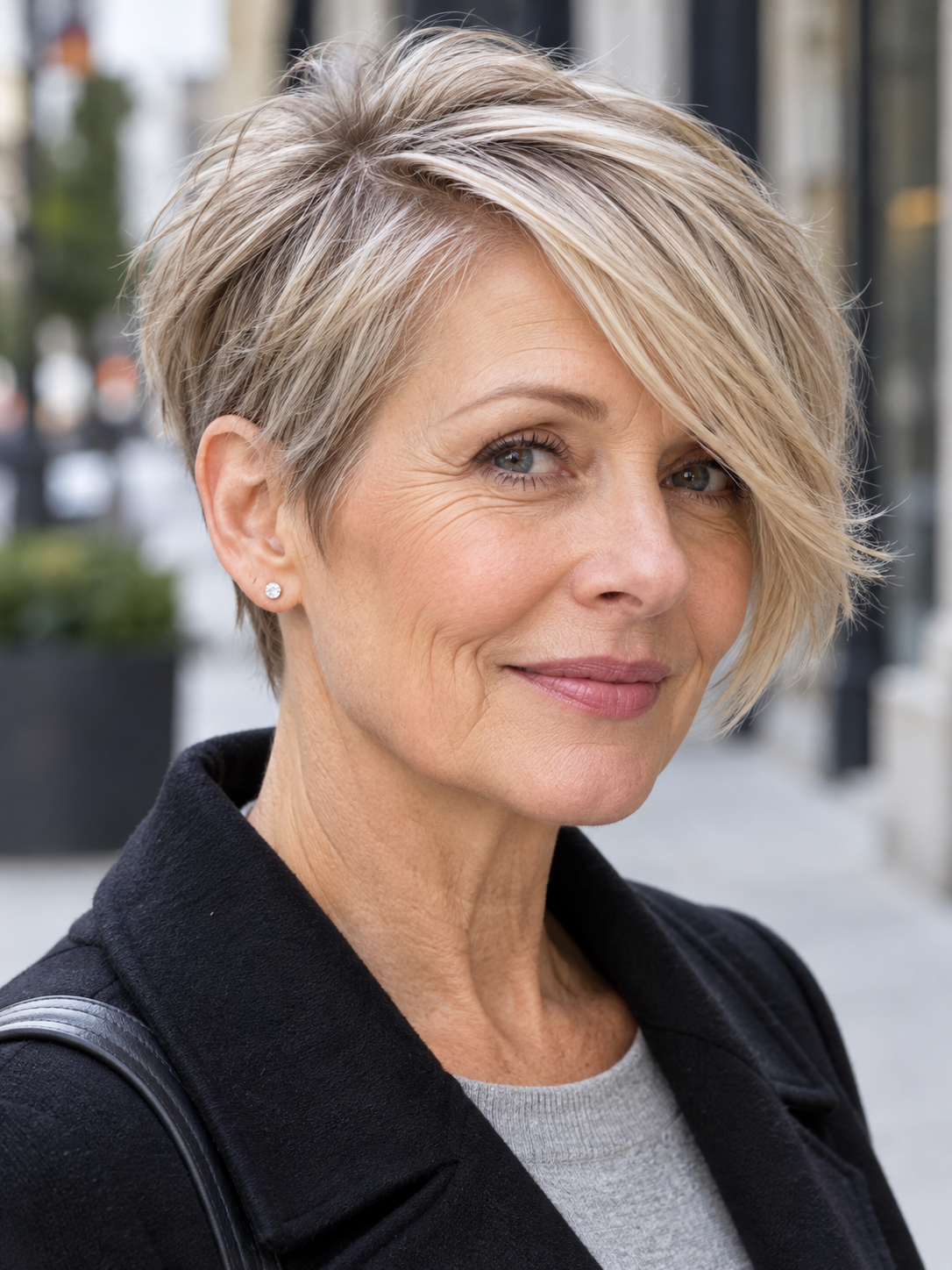
A long fringe swept across the forehead to one side gives a short pixie some softness around the eyes. The sweep also covers a thinning hairline at the temples. Have the fringe cut to skim the top of the cheekbone. Dry it in the opposite direction, then flip it over for root lift. Fine hair holds the sweep with a light hairspray, nothing stronger. The rest of the cut stays cropped close.
Wispy Bang Pixie
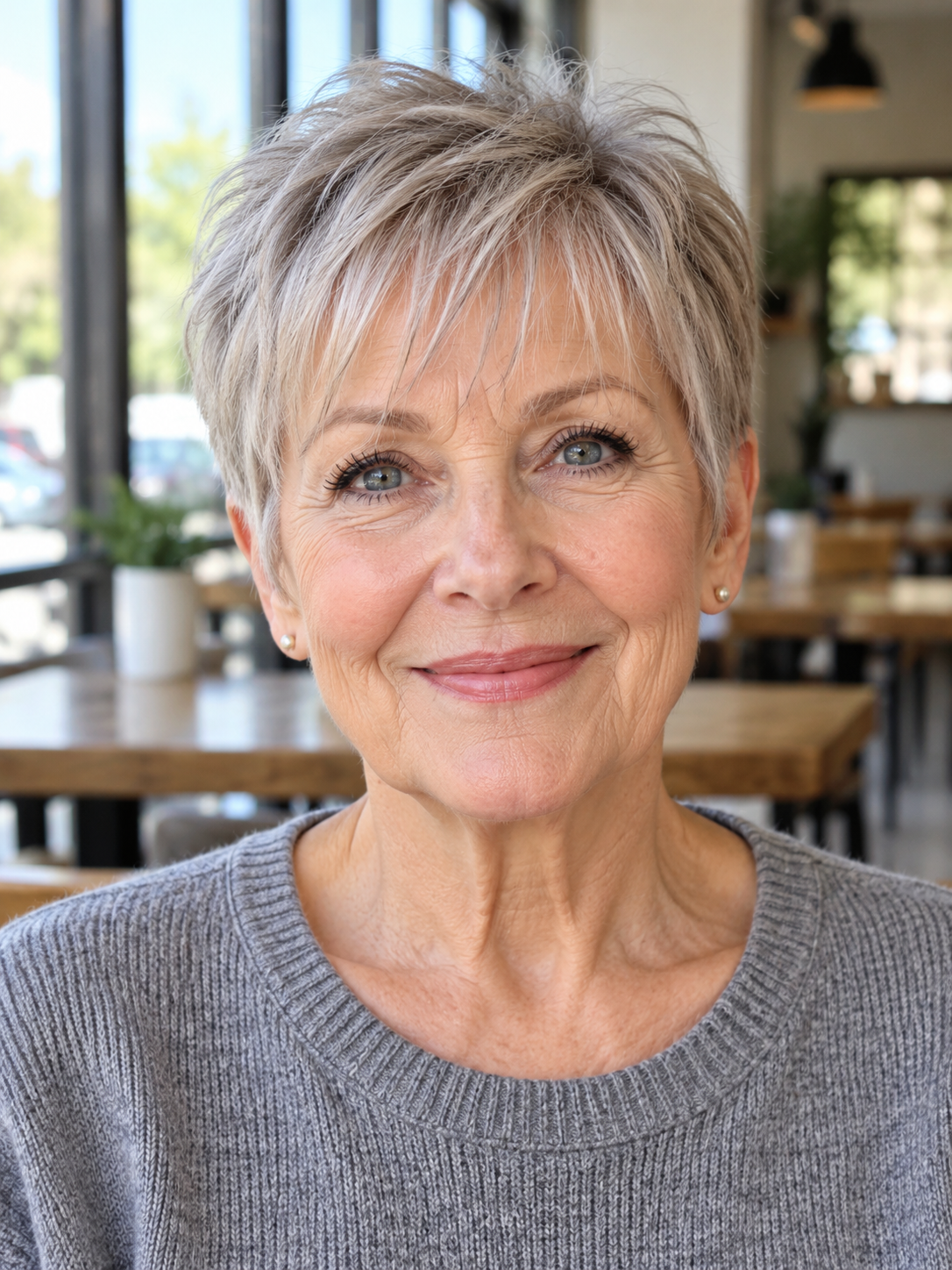
Soft, sparse bangs brushing the brows make a cropped pixie feel gentler on the face. Fine hair is already wispy, so this fringe works with what you have instead of fighting it. Have the bangs cut thin and slightly uneven so they don’t look like a solid line. Dry them straight down with your fingers. The sides and back stay short and tidy. Trim the bangs every three weeks.
Feathered Pixie
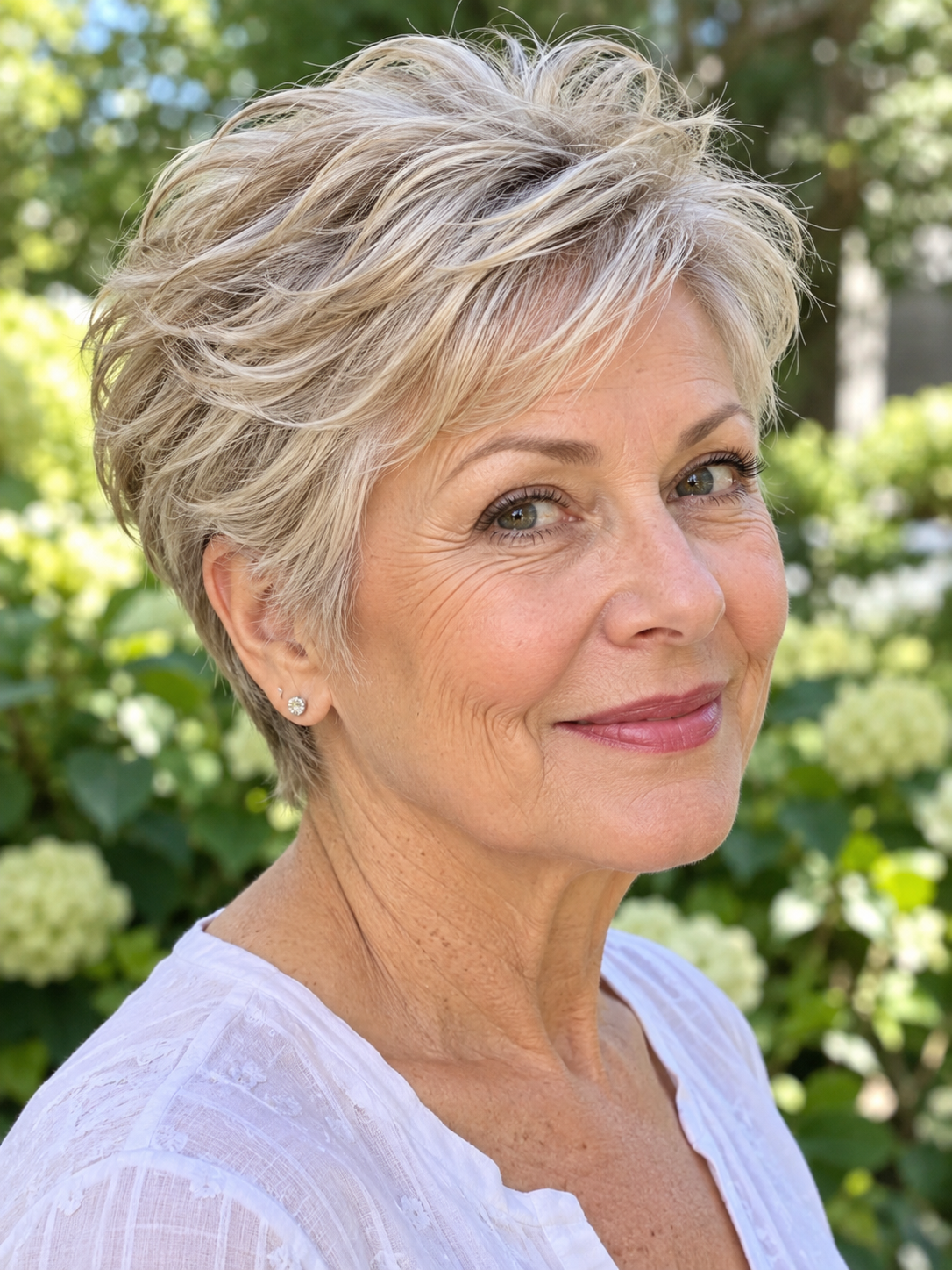
Layers brushed back and away from the face in soft feathered pieces, short around the ears and nape. Feathering lifts fine hair off the forehead and adds width at the temples. Blow dry each section back with a small round brush, then shake it loose. A tiny amount of light cream keeps the feathers soft. Hair with a slight natural bend holds the feathered shape longest.
Tapered Pixie
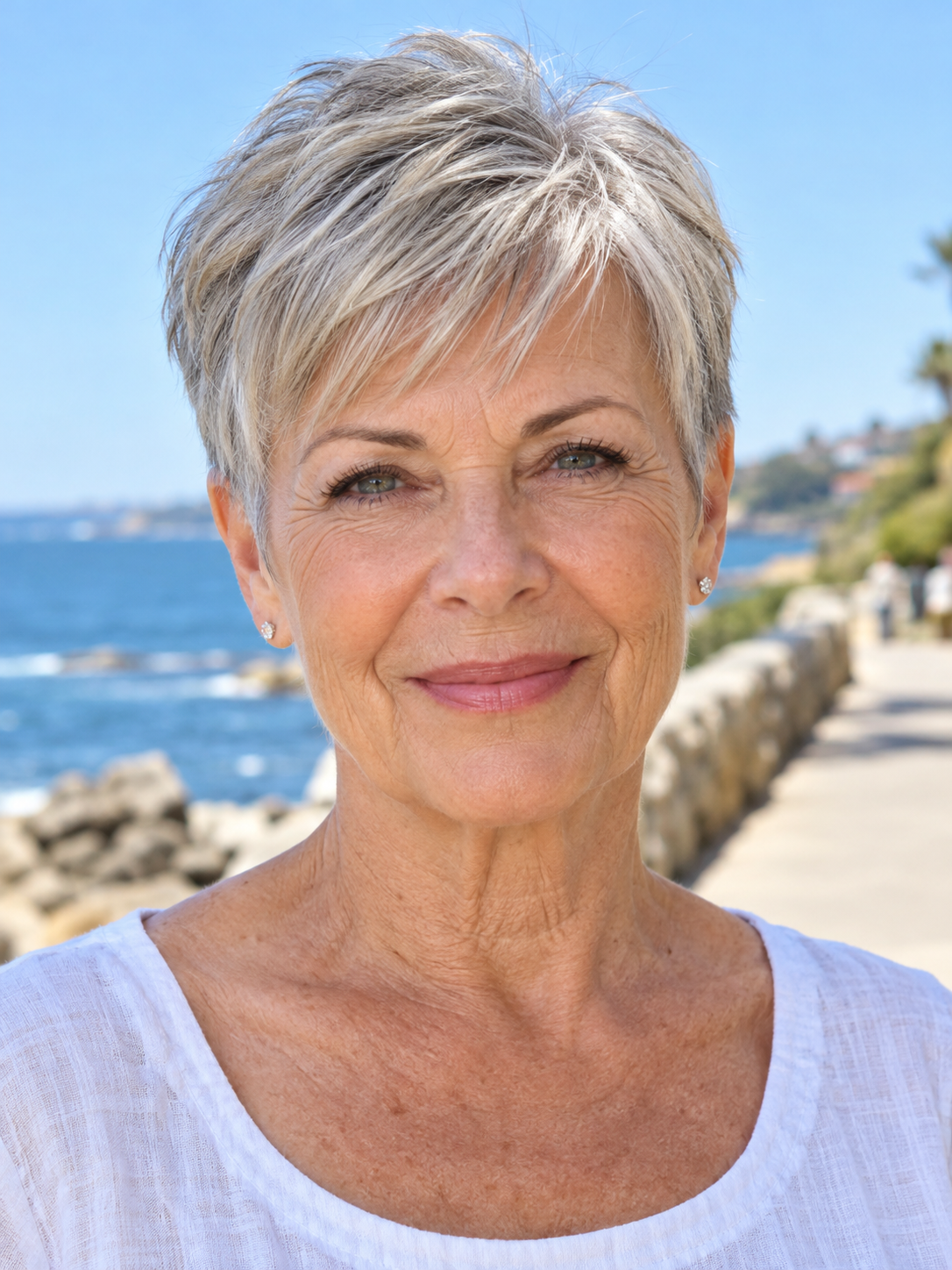
The sides and back taper gradually down to the nape, getting shorter as they go, while the top keeps a little length. Tapering removes bulk where fine hair tends to look stringy, right at the neckline. The result is a clean outline with soft volume on top. Ask for scissor tapering rather than clippers for a softer edge. Style the top forward with fingertips and a drop of serum.
Choppy Pixie
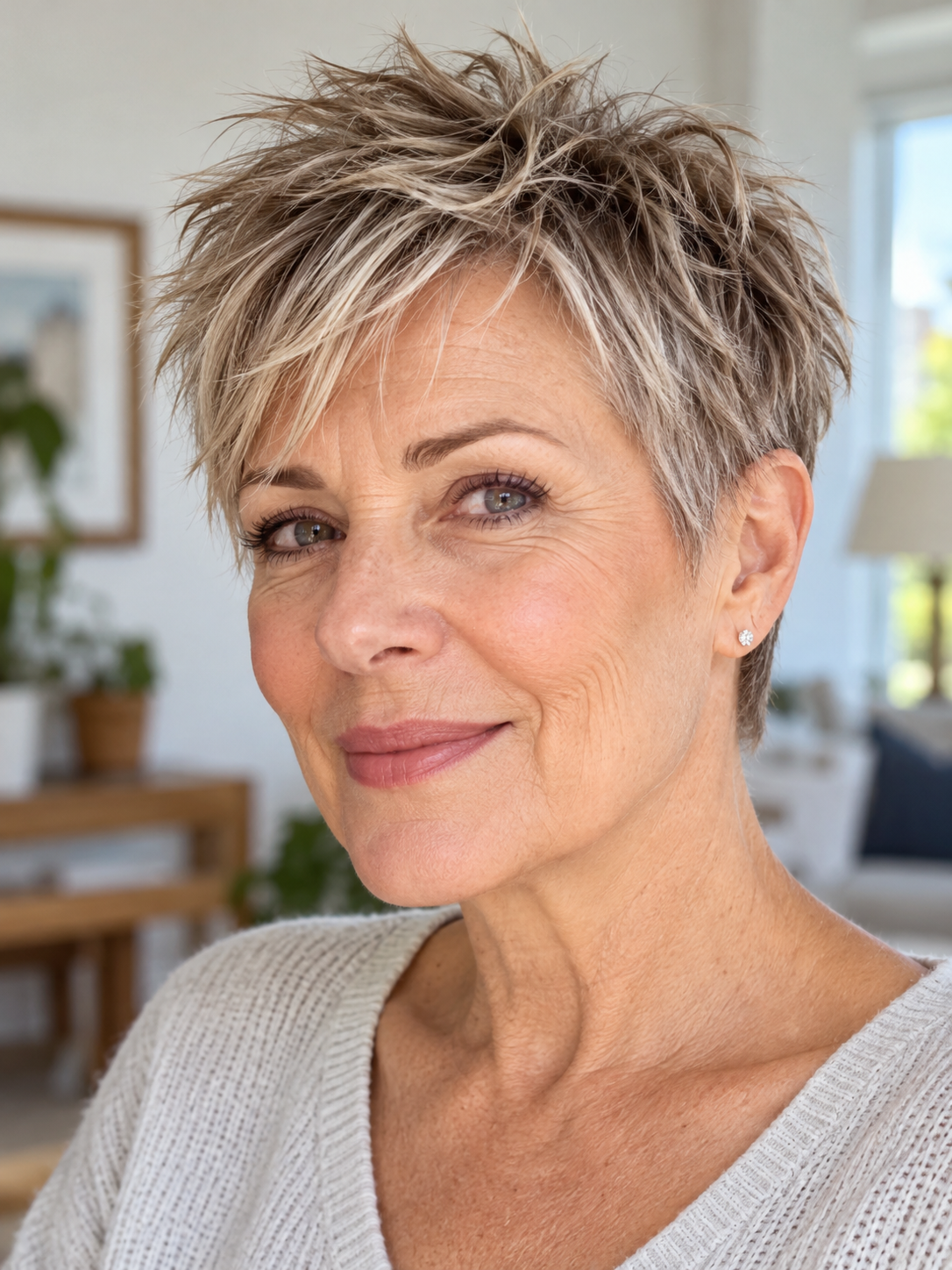
Uneven, snipped ends through the top and sides give fine hair the illusion of more texture than it has. The chopped pieces catch the light at different angles, which hides thin spots. Keep the choppiness to the top and let the sides stay close. Rub a small amount of texture spray into dry hair and push pieces around. No need for a brush at all with this one.
Silver Pixie
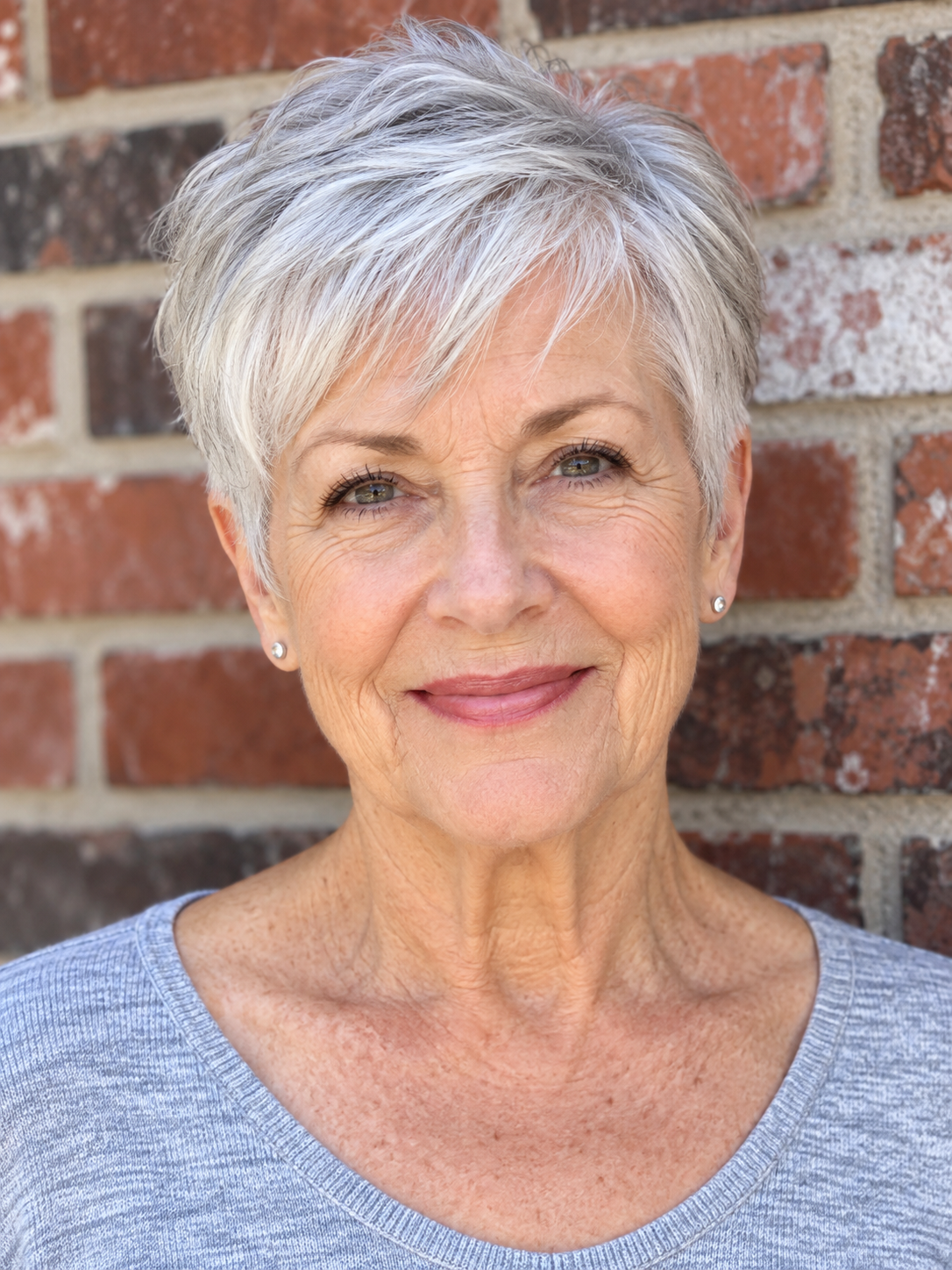
White and silver hair cut into a short pixie has a brightness that makes thinning far less noticeable. Light hair shows less scalp contrast than dark hair, so sparse areas blend in. Keep the cut short and clean so coarse gray strands don’t stick out at the ends. A purple shampoo once a week stops yellowing. Add a shine serum through the top for polish.
Blonde Pixie
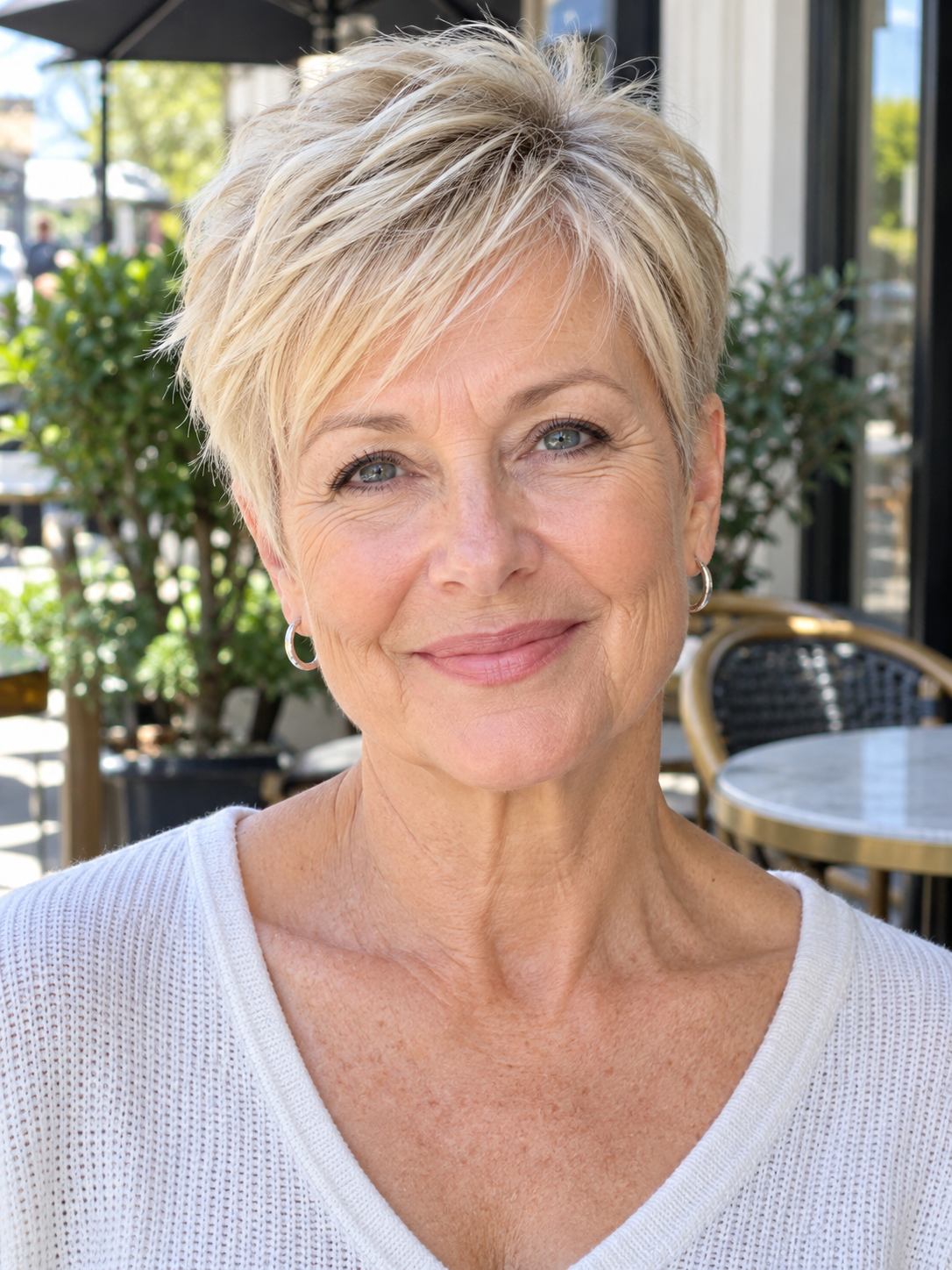
A soft blonde a few shades up from the natural base lightens the overall look and softens the line between hair and scalp. On fine hair that matters, because dark roots against pale skin show every gap. Keep the blonde close to the natural shade so regrowth stays gentle. Toning every six weeks keeps it from going brassy. Short hair takes color quickly, so appointments are brief.
Highlighted Pixie
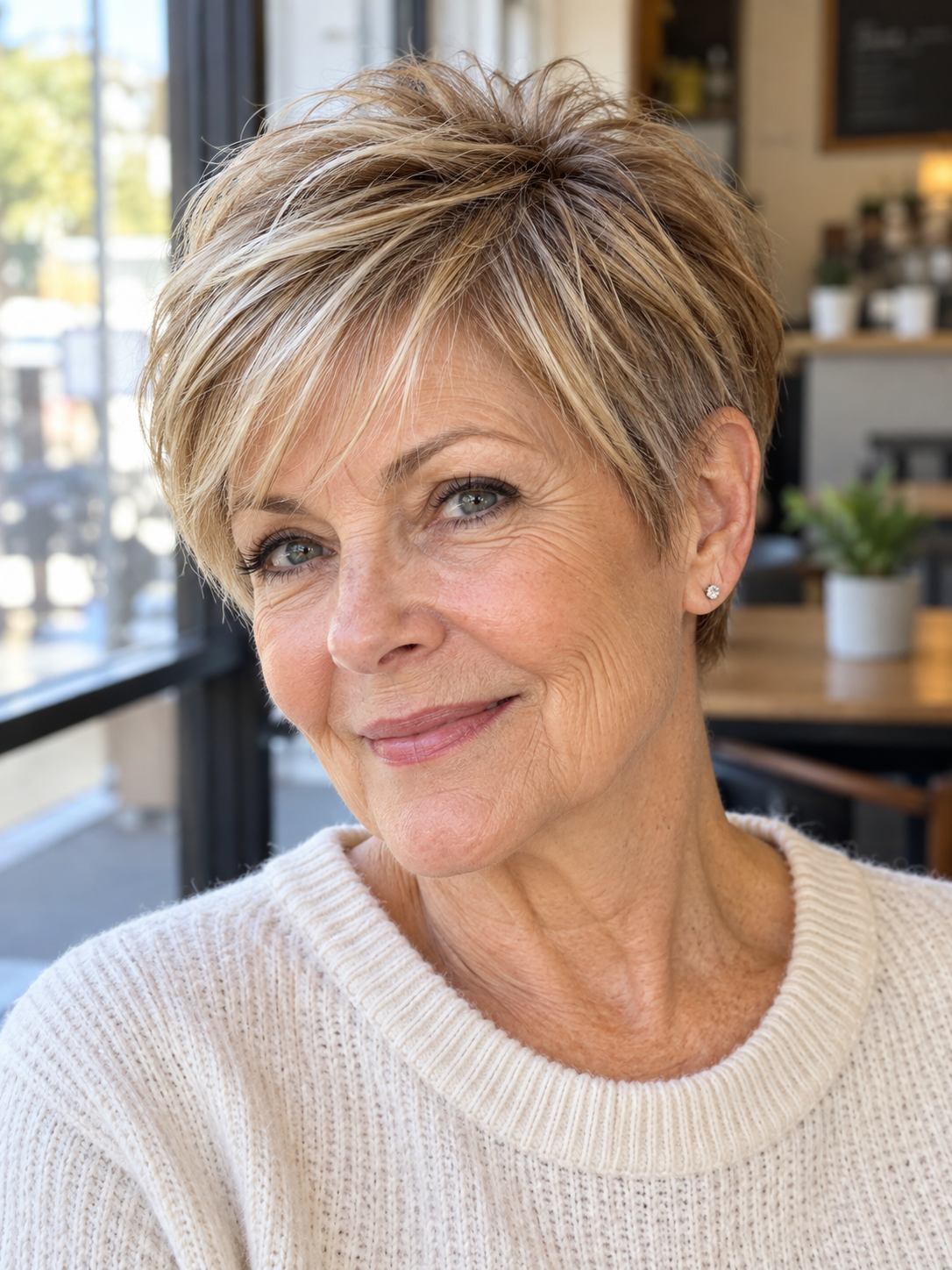
Fine babylights scattered through the top of a short pixie add depth that flat, single-tone hair lacks. The contrast between lighter and darker strands creates the appearance of more hair. Concentrate the highlights at the crown and fringe, where the eye lands. Keep them thin and blended. A color-safe shampoo stretches the time between touch-ups. It also softens incoming gray.
Wavy Pixie
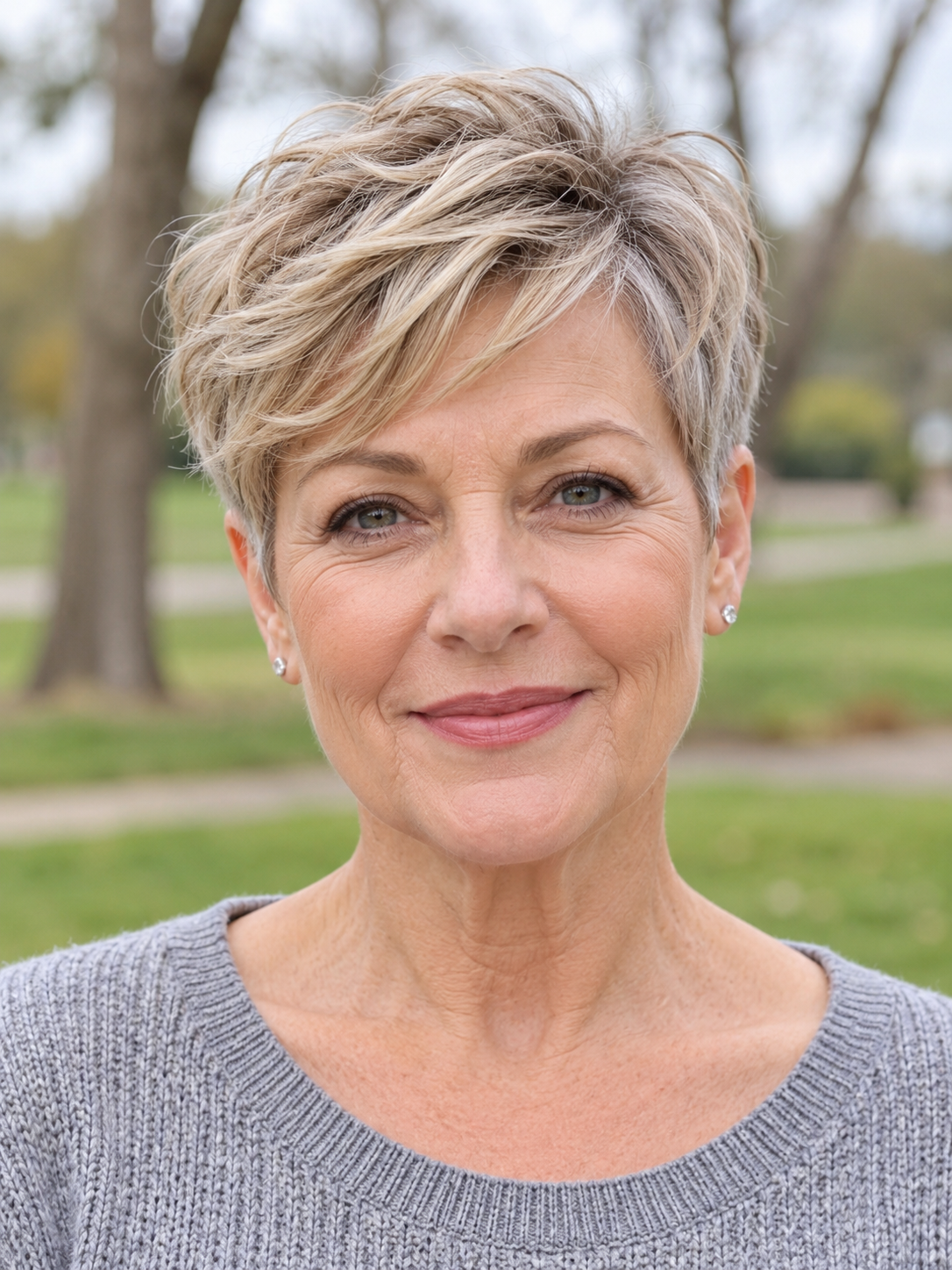
Loose bends through the longer top layers of a pixie make fine hair look thicker, since waves take up more space than straight strands. Use a small barrel iron on the top only and leave the sides smooth. Two seconds per section is enough on fine hair. Shake it out and mist with a light-hold spray. Natural waves can be scrunched with mousse and air dried instead.
Curly Pixie
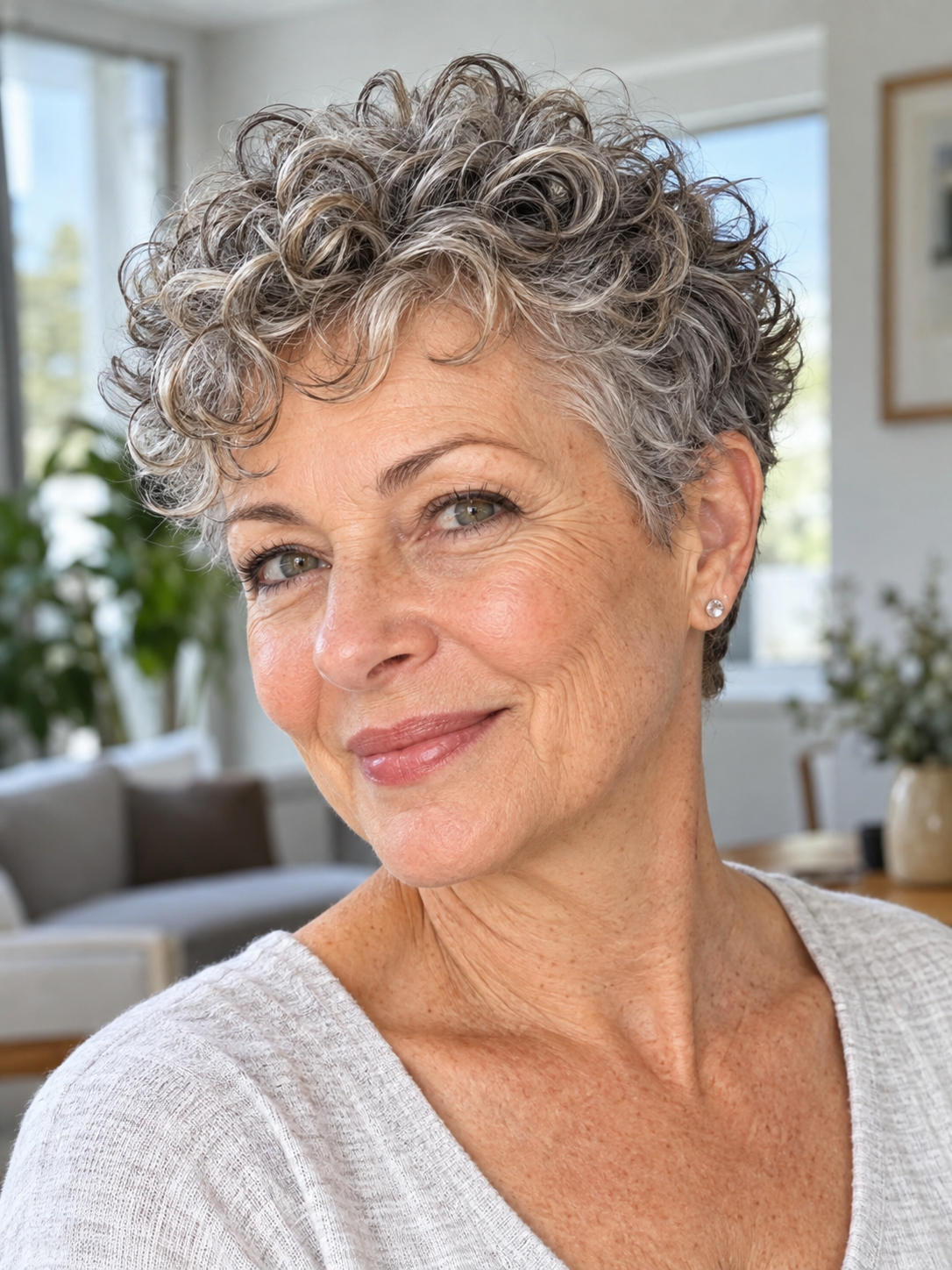
Natural curls cropped into a pixie bunch together and fill out, which is exactly what fine hair needs. Curl shrinkage pulls the top up into a soft rounded shape. Have it cut dry so the stylist sees the real curl pattern. Use a lightweight curl cream, since heavy creams weigh fine curls down. Diffuse on low heat or let it air dry. Keep the nape short to avoid stringy ends.
Soft Undercut Pixie
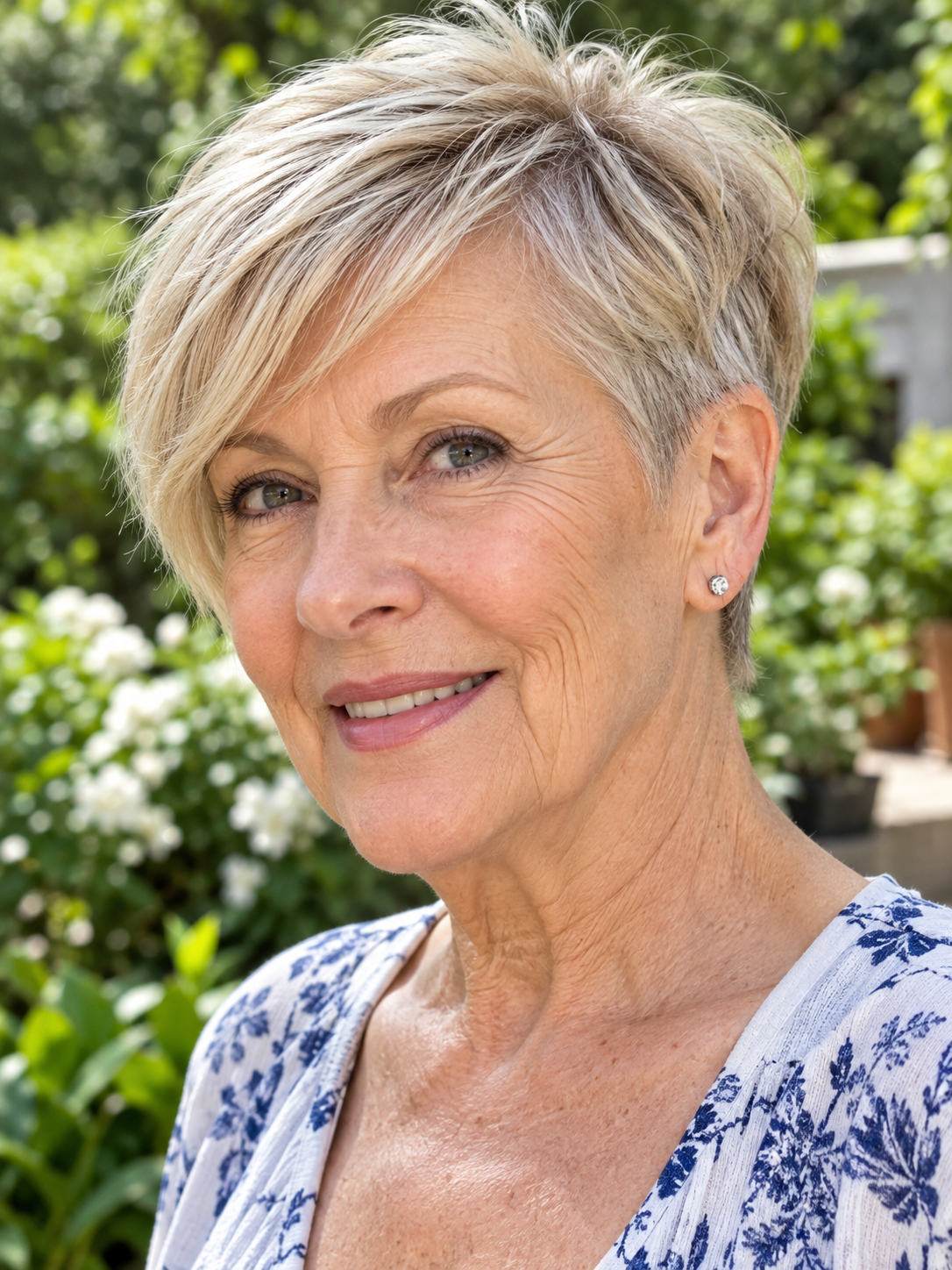
A closely clipped nape and sides under a longer top concentrate all the hair where it shows most. Fine hair spread over the whole head looks thin, but gathered on top it looks full. The undercut stays subtle, blended rather than shaved to the skin. Style the top forward or to one side with a light cream. The clipped sections need a tidy-up every four weeks.
Asymmetrical Pixie
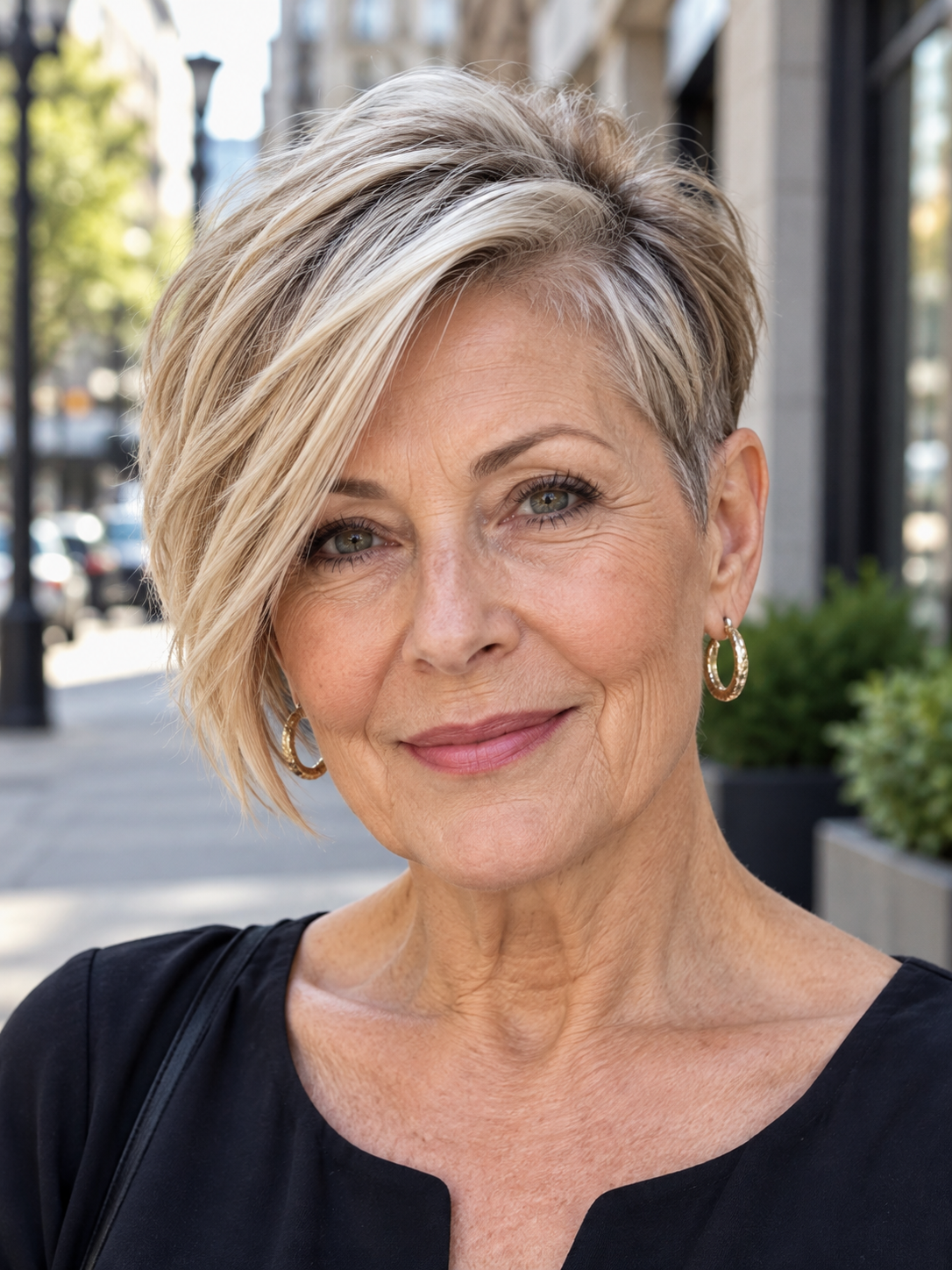
One side left longer and swept toward the cheekbone, the other side cropped short above the ear. The uneven lengths draw the eye sideways instead of up to the crown, where thinning is often most visible. Keep the longer side smooth with a flat brush. The short side can be tucked or left slightly textured. A deep part on the short side sharpens the contrast.
Rounded Pixie
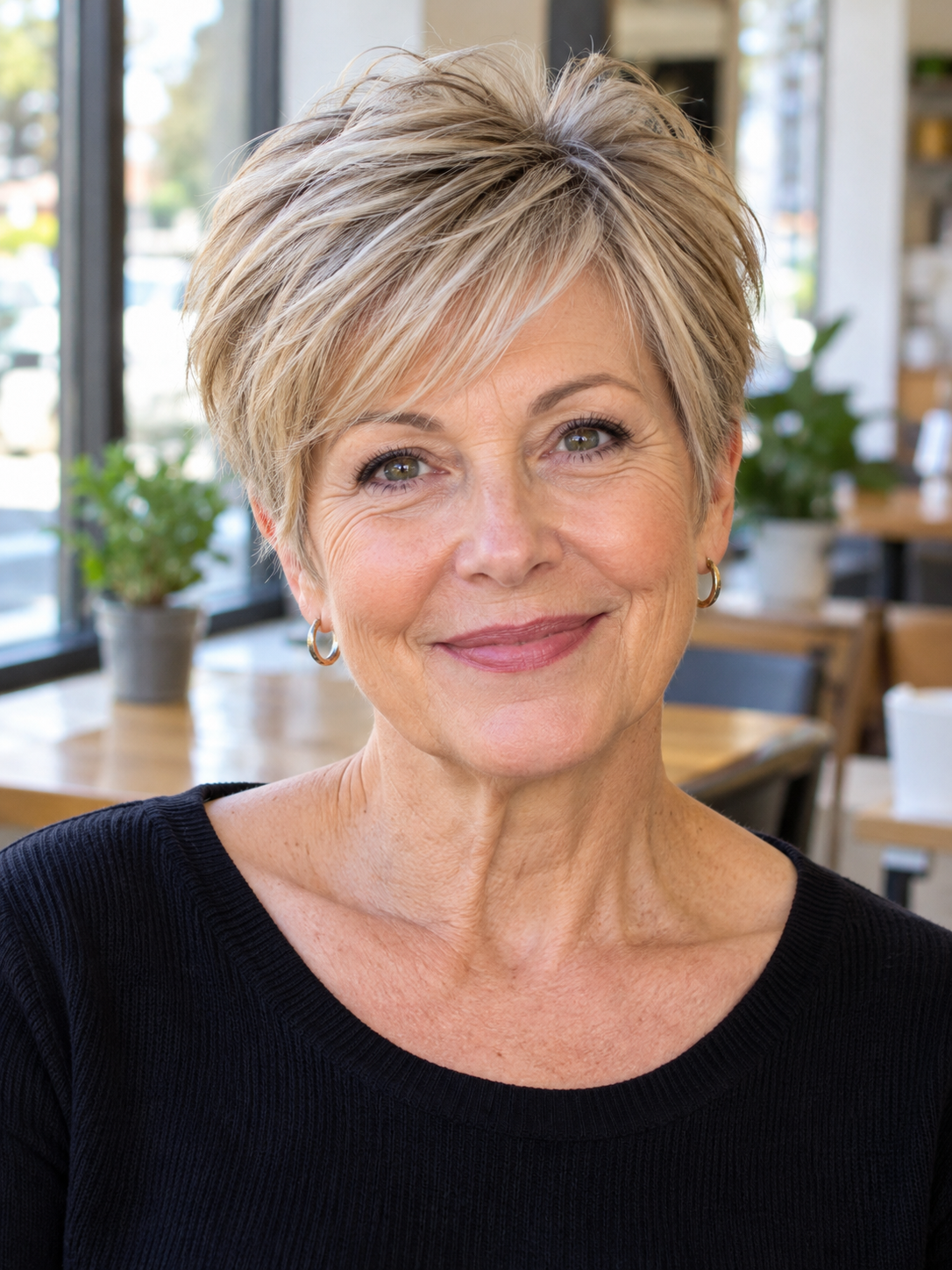
A soft, rounded silhouette built with a round brush, fuller at the crown and curving in at the nape. This shape works for fine hair because the blow dry does the job of adding body. Wrap the top sections around a small brush and dry them up and over. Finish with a cool shot to set. A light hairspray holds the curve through the day without stiffness.
Soft Spiky Pixie
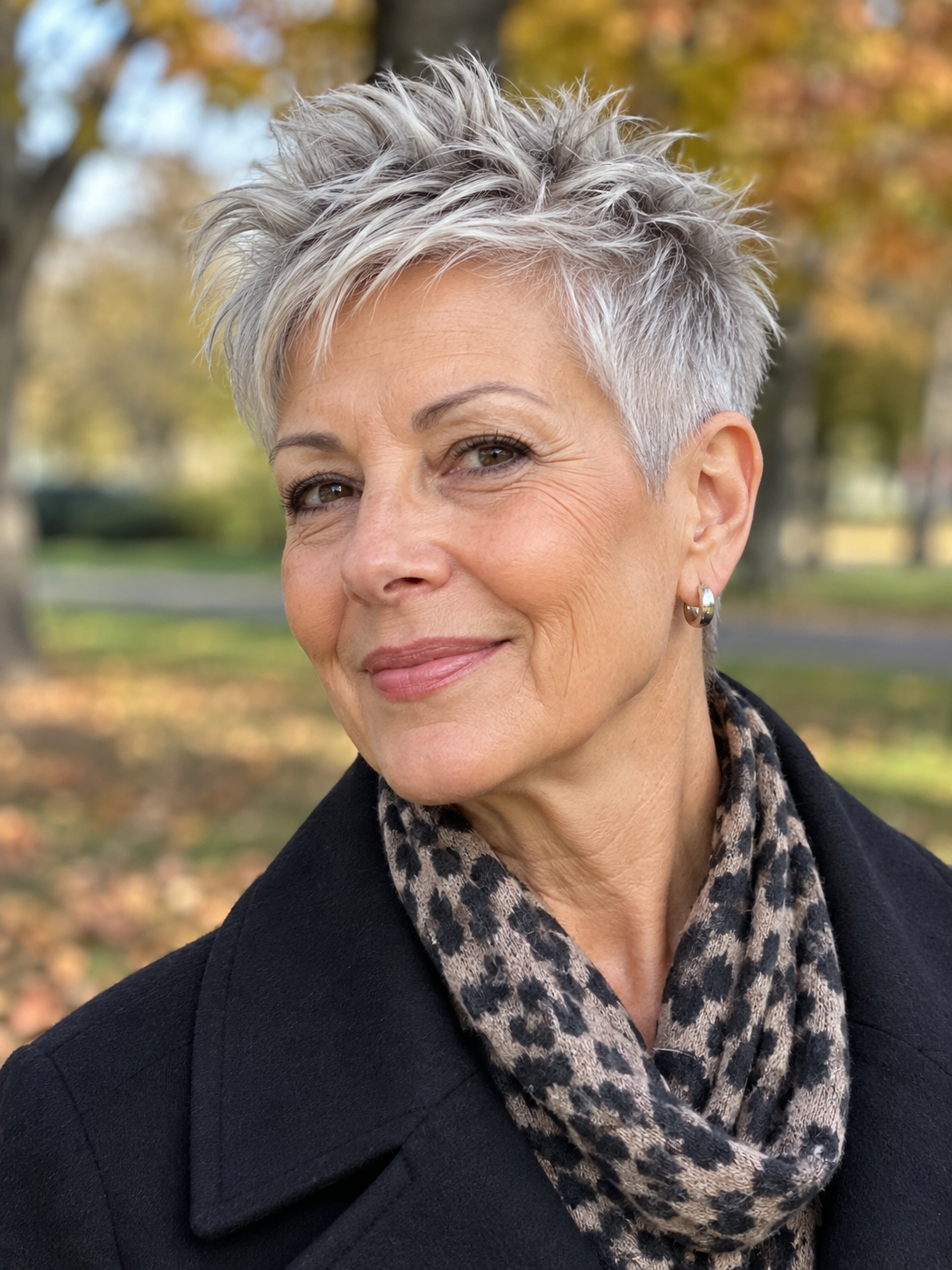
Short pieces on top pinched upward into soft, separated spikes, with the sides cropped close. On fine hair the spikes stay soft and slightly bent rather than stiff. A matte texture spray, not gel, gives enough hold without clumping strands together. Pinch pieces between finger and thumb and lift. It looks lively without much hair, which is the point. Keep the sides very short so the top stands out.
Pixie with Long Sideburn Points
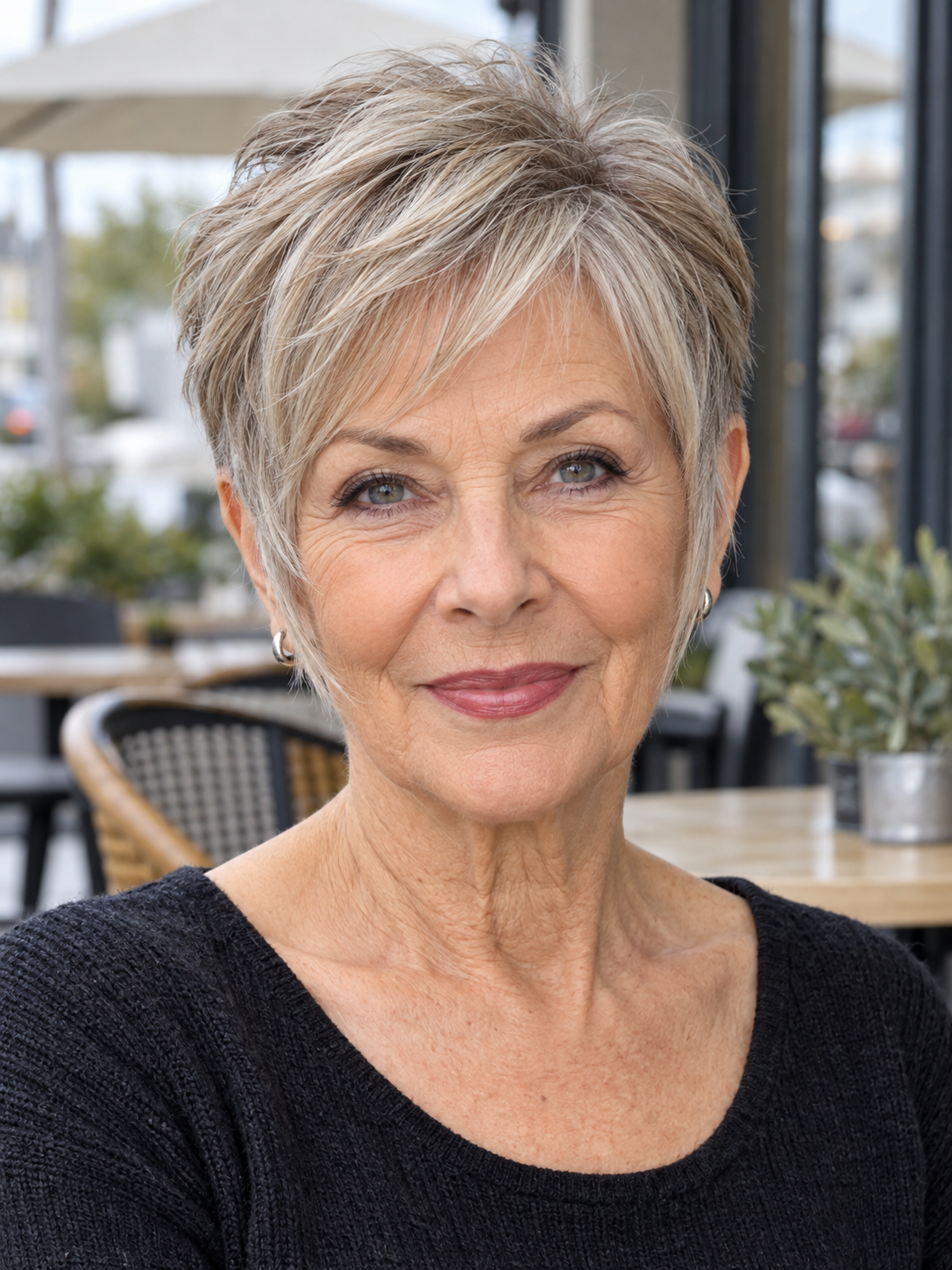
Soft pointed pieces in front of each ear extend down toward the cheekbone, while the rest stays cropped. These points frame the face and give a short pixie a touch of length without adding weight anywhere. Ask for them to be cut wispy, not blunt. Smooth them forward with a fingertip of serum. The back and sides remain short and tapered.
Micro Pixie
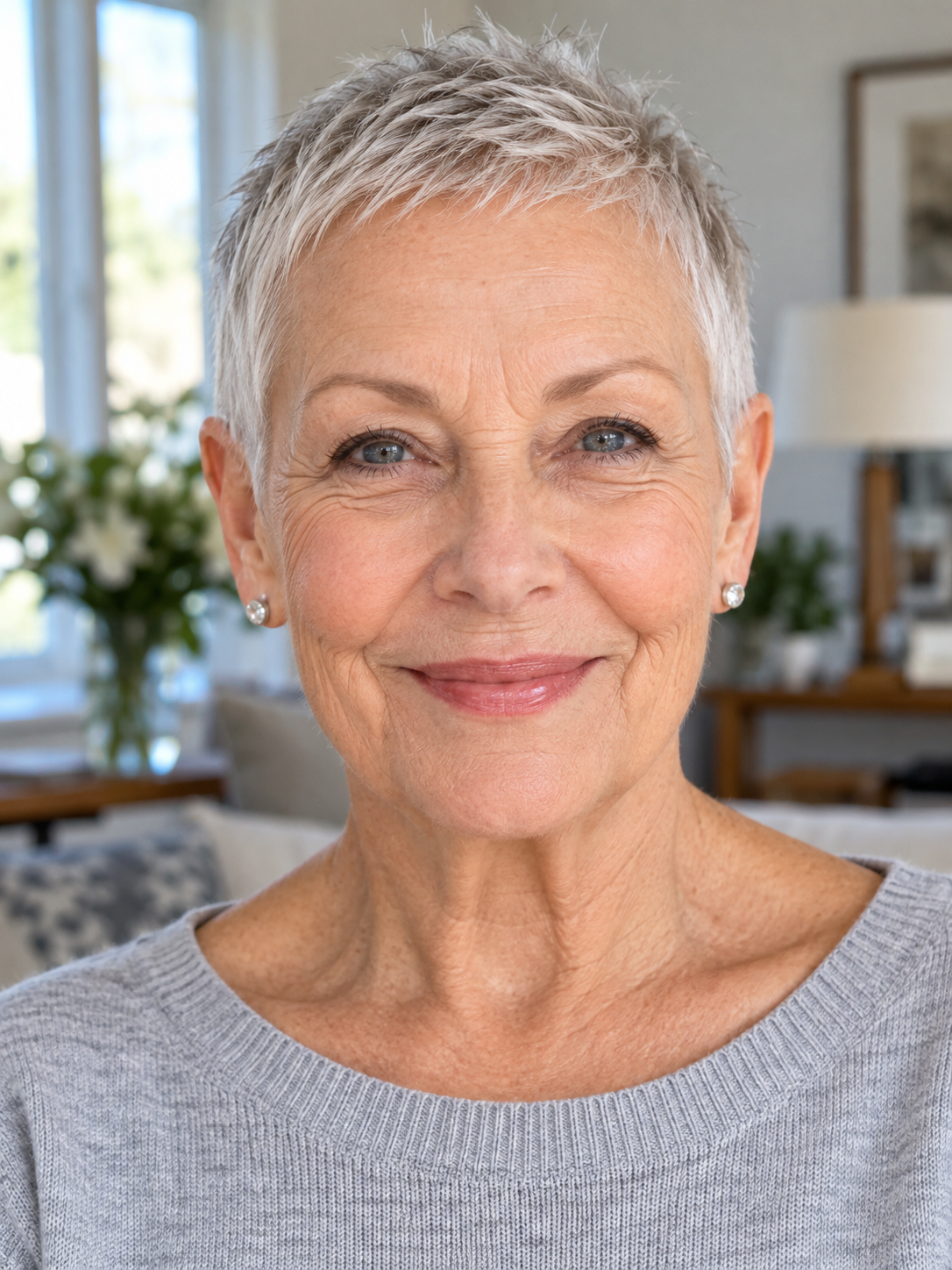
Very short all over, barely an inch on top, with the sides and back cut even closer. The micro pixie strips everything back to the shape of the head, and on fine hair that removes the problem of flatness entirely. There is nothing left to fall flat. A tiny amount of cream smoothed over damp hair is the full routine. Trim every four weeks to keep the outline sharp.
Slicked-Back Pixie
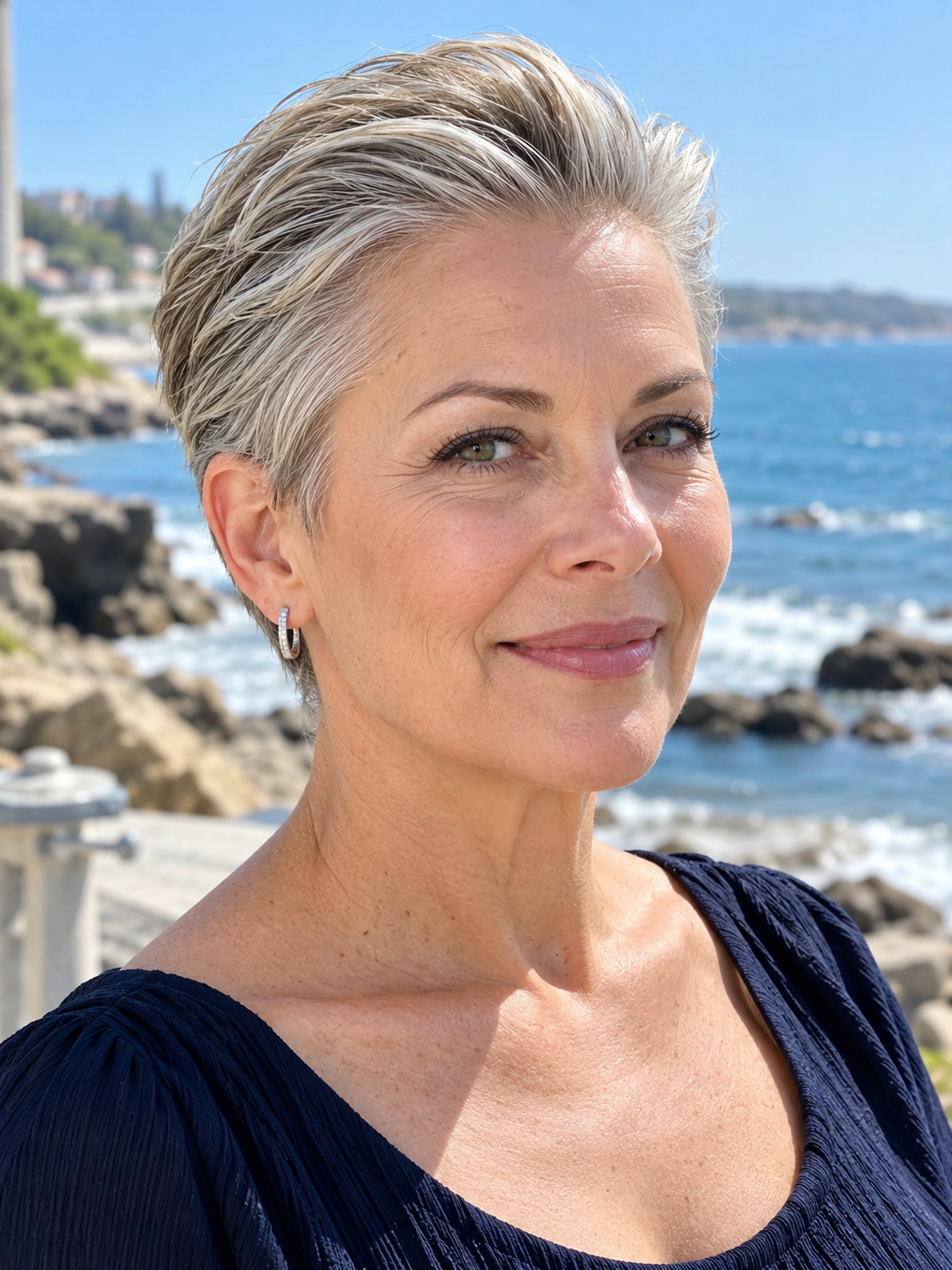
Hair combed back off the face and set flat with a light gel for a polished evening look. Fine hair slicks back easily since there is little bulk to control. Apply a small amount of lightweight gel to damp hair and comb straight back. Keep the product light or the scalp shows through more than you want. It works best on a pixie with a longer top and short sides.