The thing nobody warns you about gray hair is that the color is rarely the problem. Shine is. Follicles that stop producing pigment also produce less oil, so gray grows in drier, coarser and duller than the hair it replaced, and that dullness is what makes gray look tired. The same goes for yellowing, which is mineral and product deposit sitting on a strand with no pigment left to hide it. It washes out. Sort the shine first and almost any of the tones below will work on you.
Salt and Pepper, Left Exactly As It Is

Not every gray needs a colorist. If yours has come in evenly mixed through your natural depth, with the darker hair still doing most of the work, a sharp cut is all it takes. The shape does the job the color would have done. Ask for a clean outline and a close taper at the back. Uncolored salt and pepper looks like a choice when the cut is sharp, and it costs nothing to keep up.
Steel Gray Crop
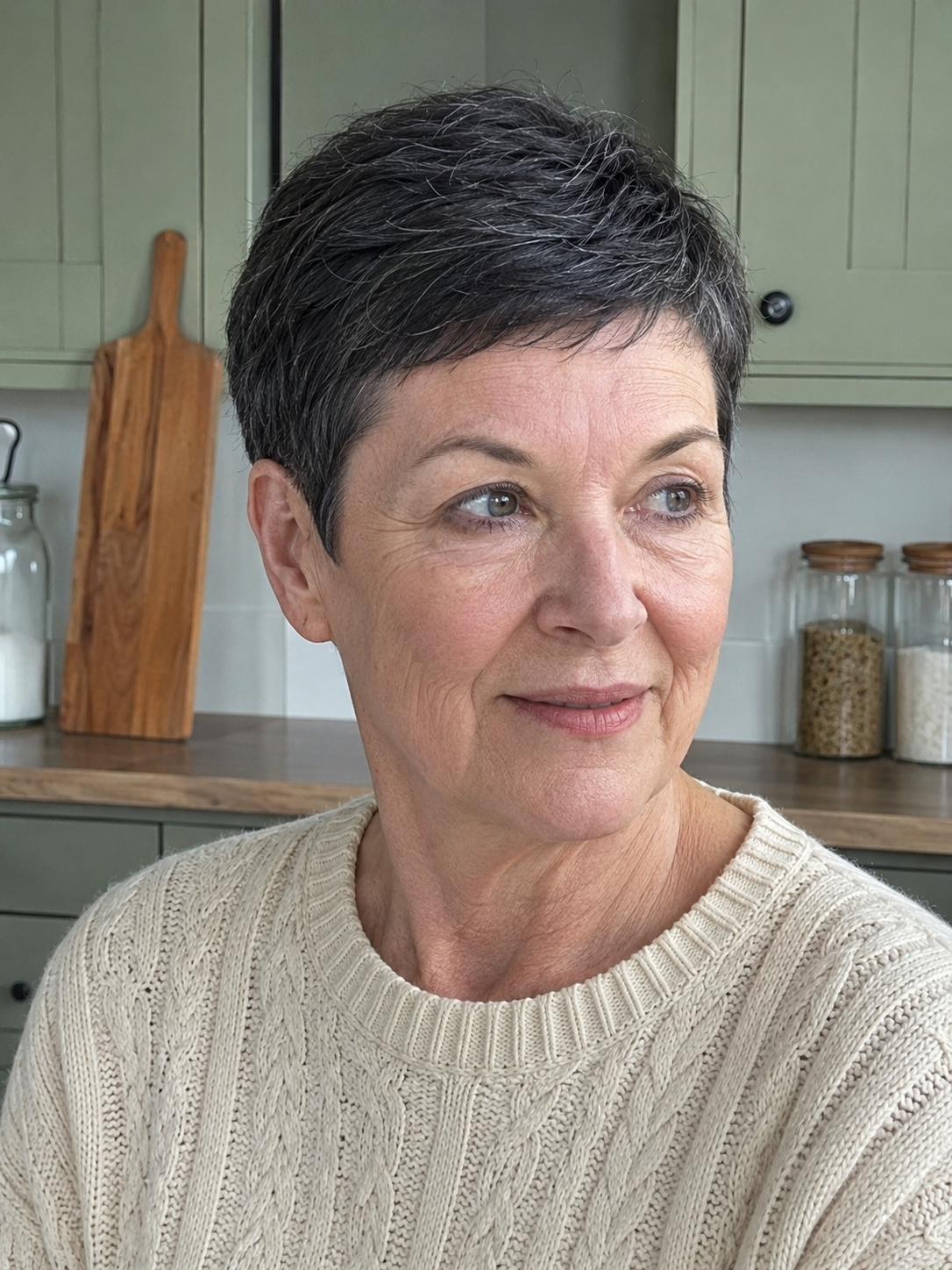
Steel sits at the darker end of the gray range, closer to charcoal than to silver, and it suits women whose hair has not gone fully white yet. That depth holds its own against dark brows and strong features in a way pale silver cannot. Keep the cut short and lightly graduated through the back. Because there is still darkness in the hair, yellowing is far less of a concern than it is on white.
Pewter Pixie With a Soft Fringe

Pewter is the middle ground, a cool mid toned gray with a faint metallic quality. It is one of the easier grays to live with, because it sits between white and charcoal, so both new growth and fading toner blur into it softly. Pair it with a soft fringe pushed slightly to one side. Toning every eight weeks or so holds the cool cast, and missing a round will not undo it.
Bright Silver Pixie
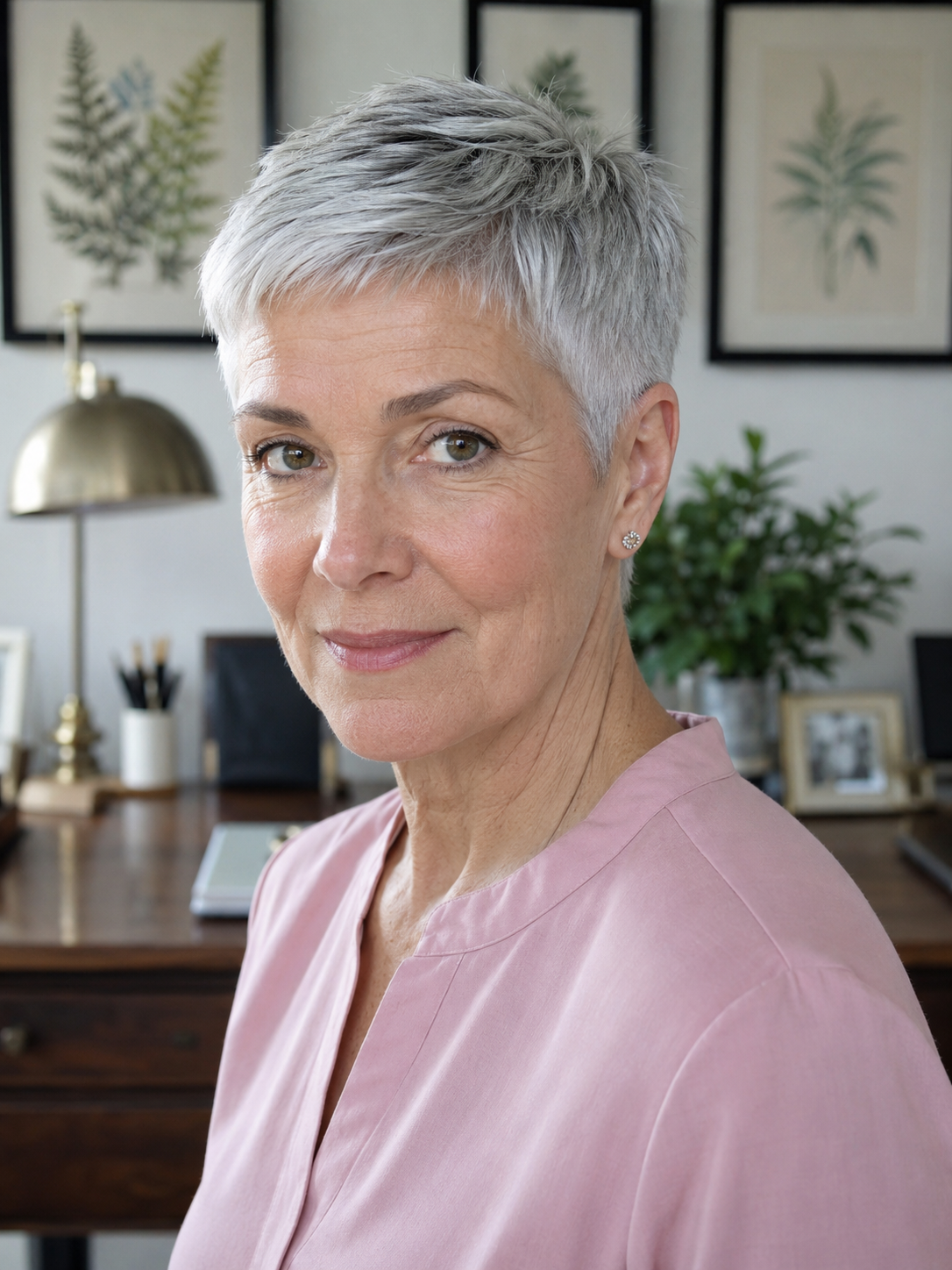
Silver is what most people picture when they say gray, and it is considerably brighter than the average head of gray hair actually is. Arriving there naturally takes a high proportion of white in the mix. Arriving there from a darker base takes lifting, which is a different conversation entirely. On a cropped cut the brightness has real impact, because light hits the whole shape at once.
The Pure White Crop

White is not the same as silver, and it usually shows up later. There is no gray cast to it at all. If you have it naturally, the most useful thing you can do is protect it, because white shows every trace of mineral film from hard water and every hint of yellow from heat styling. Keep the crop short and the ends fresh. White looks best when the edges are clean.
Pearl Gray With a Warm Cast
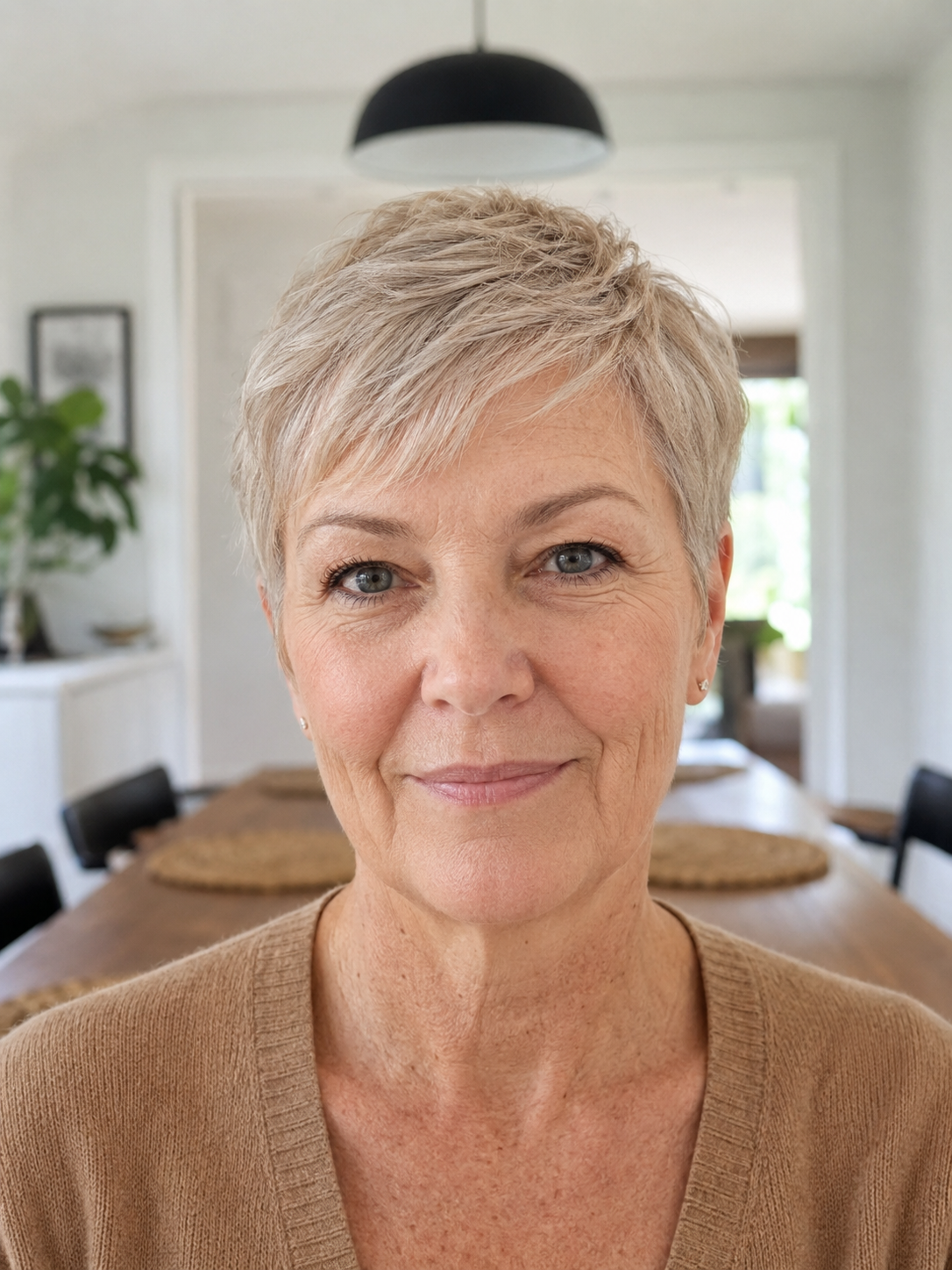
Cool gray does not flatter everyone. If your skin runs warm or golden, an icy tone can leave you looking drained, and the correction is a soft pearl or champagne cast rather than a bright silver one. It is a small shift that changes the entire picture. Ask your colorist for a warm leaning toner instead of a violet based one. Keep the cut soft around the face to match.
Ash Toned Pixie
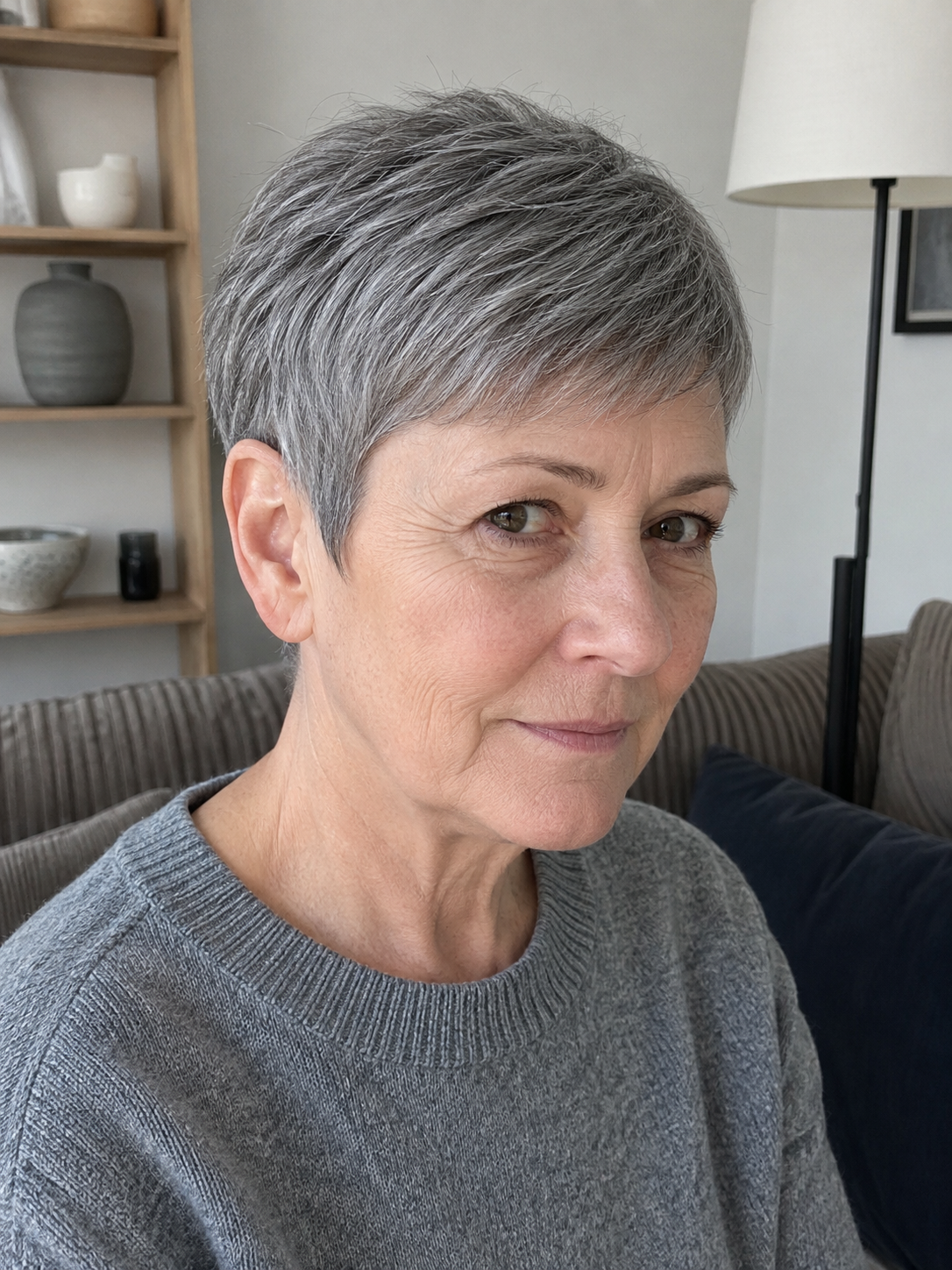
Ash pushes gray the other way, cooling it down and pulling any yellow or beige out of the mix. It is the most controlled version of gray and it asks for the most upkeep, because ash fades and warmth creeps back. A demi permanent toner every six to eight weeks holds the line. This is the one to pick if you want your gray to look like a decision rather than a default setting.
Smoky Slate Pixie
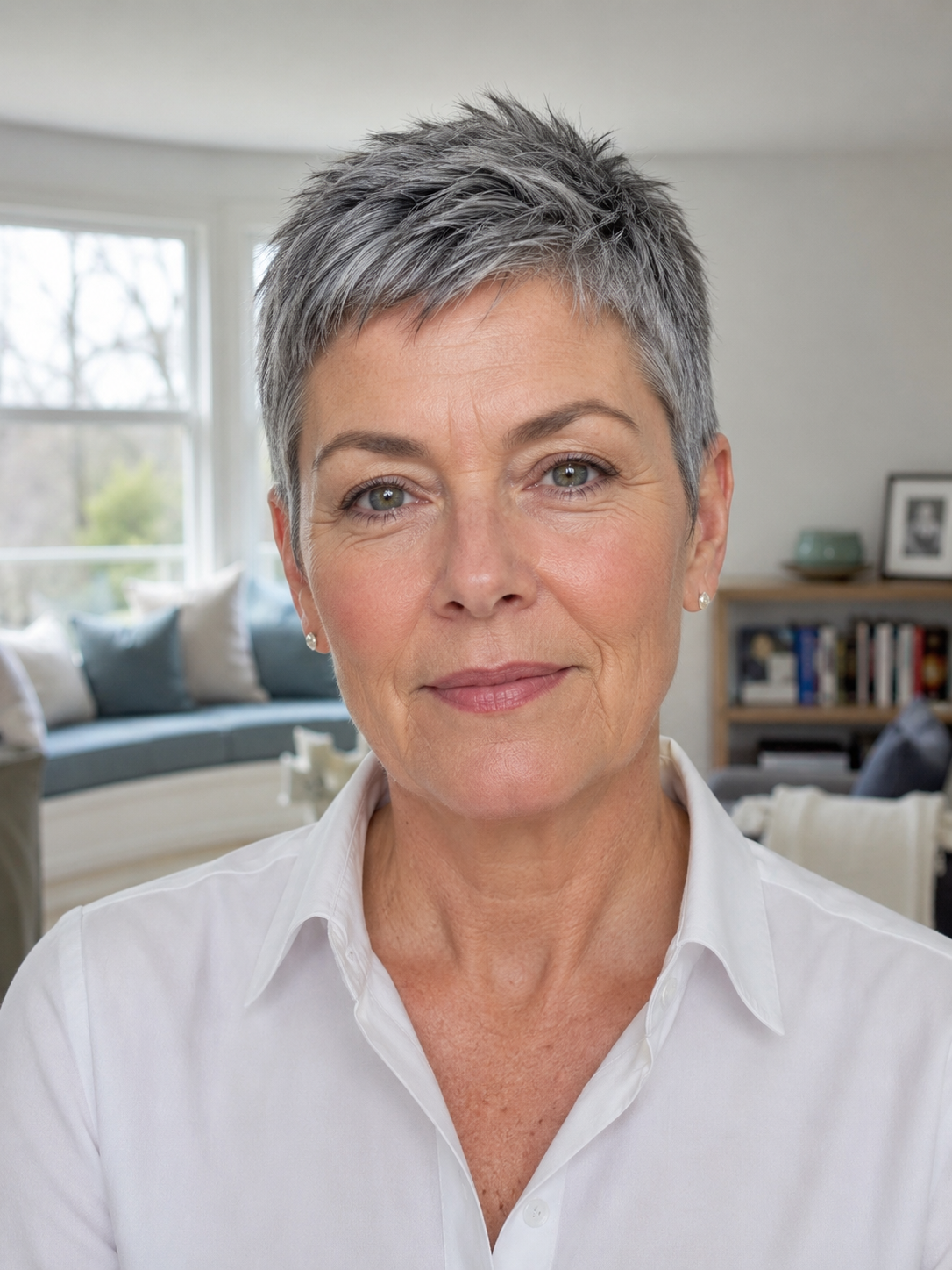
Slate leans slightly blue, and that is a deliberate choice rather than an accident. On a very short cut it looks modern instead of costume-like, mainly because there is not enough hair for the tint to take over. It works best over a base that is already mostly white. Ask for a blue based toner rather than a violet one. Expect it to soften within a few weeks, which is half the appeal.
Lavender Tinted Silver
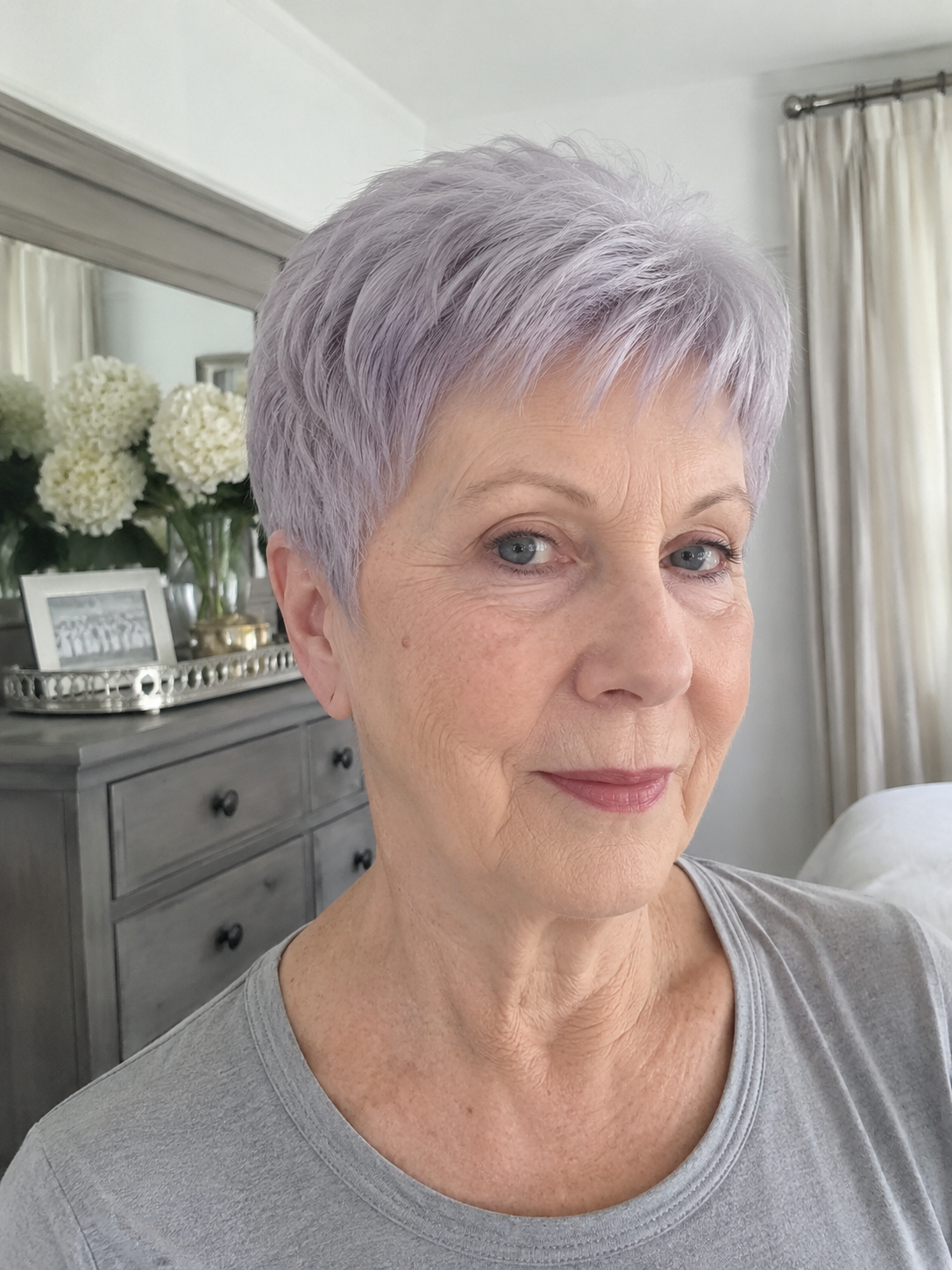
Plenty of women arrive at a lilac cast by accident, through purple shampoo used too often on porous white hair. If you like the result, ask for it on purpose and let a colorist control the depth. Done properly it is soft and unusual. Done accidentally it goes patchy, because gray is porous and grabs pigment unevenly across the head. Either way, stop the purple shampoo and clarify before anything else.
Gray Pixie With Woven Lowlights
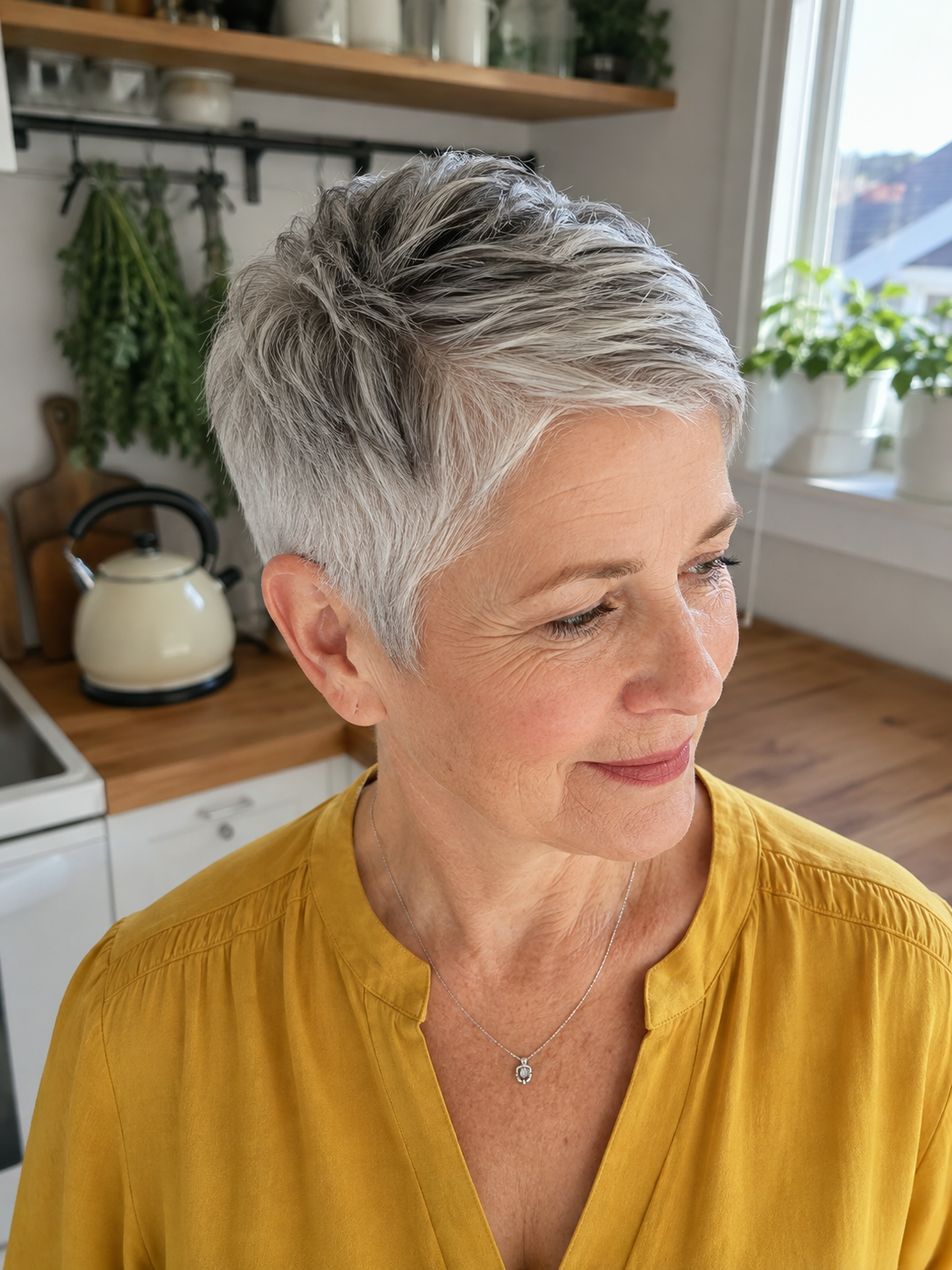
All-over gray can fall flat, particularly on fine hair and particularly under indoor light. Lowlights solve it. A few deeper pieces woven through the crown and around the part add depth without altering the overall color, and because they deposit rather than lift, no damage is involved. On a short cut you need very few of them. Ask for something close to your old natural depth rather than anything dramatic.
The Blending Highlight Pixie
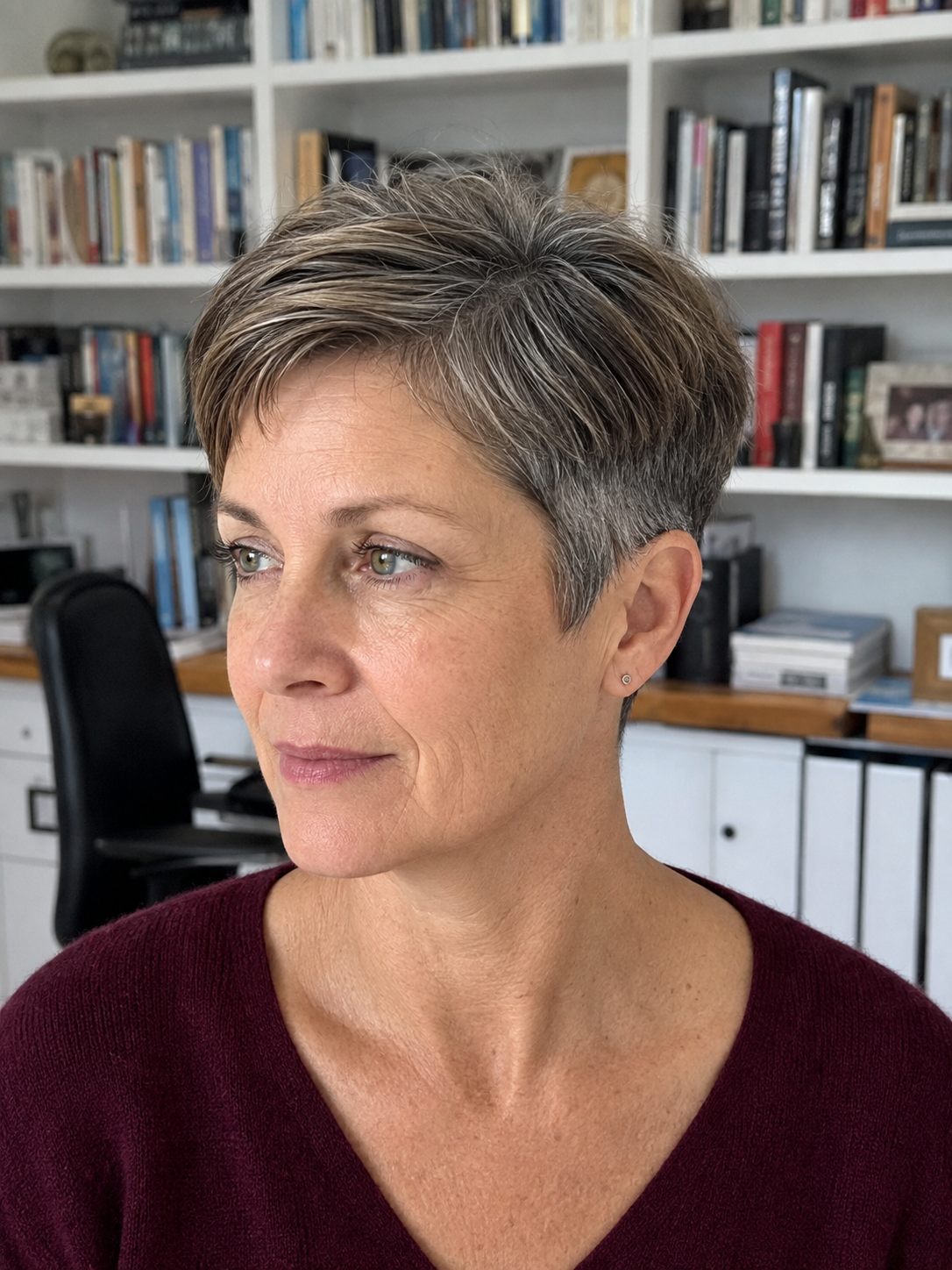
This is the one for anyone caught mid transition. Fine highlights broken through the join where dyed hair meets new growth stop that join from being a visible line. Colorists usually pair them with lowlights so the result keeps its depth. One detail worth knowing: ask for highlights rather than balayage, since balayage tends to run warm and warmth works against the cool tone you are growing in.
Gloss Finished Gray
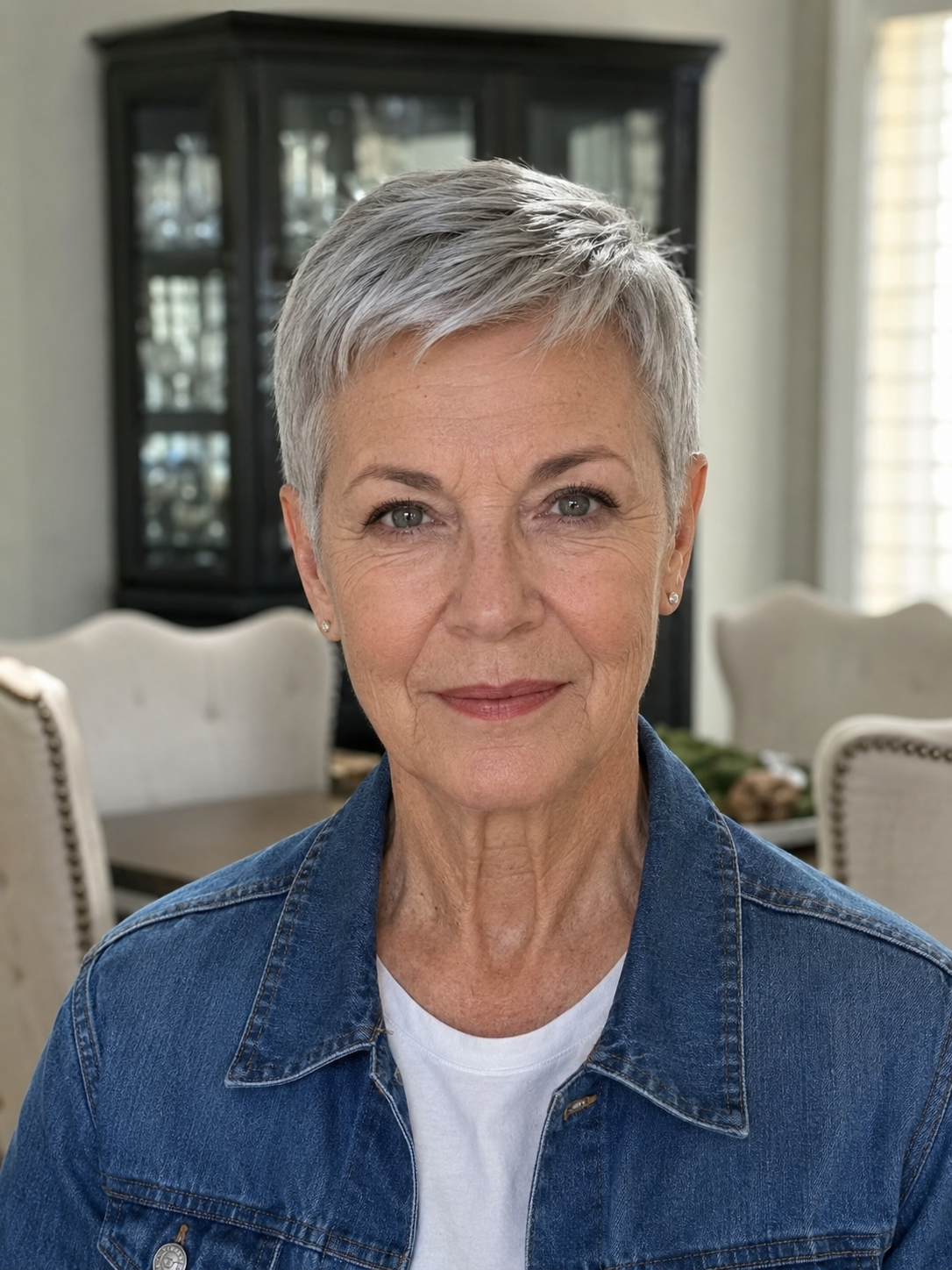
A gloss is the least invasive thing a colorist can do to gray hair and probably the most useful. Pick a clear one and it adds no color at all. What it does is seal the cuticle so light bounces off the hair instead of scattering, and that is the whole difference between gray that looks dull and gray that looks bright. Every eight to ten weeks, twenty minutes in the chair.
Root Smudged Transition Pixie
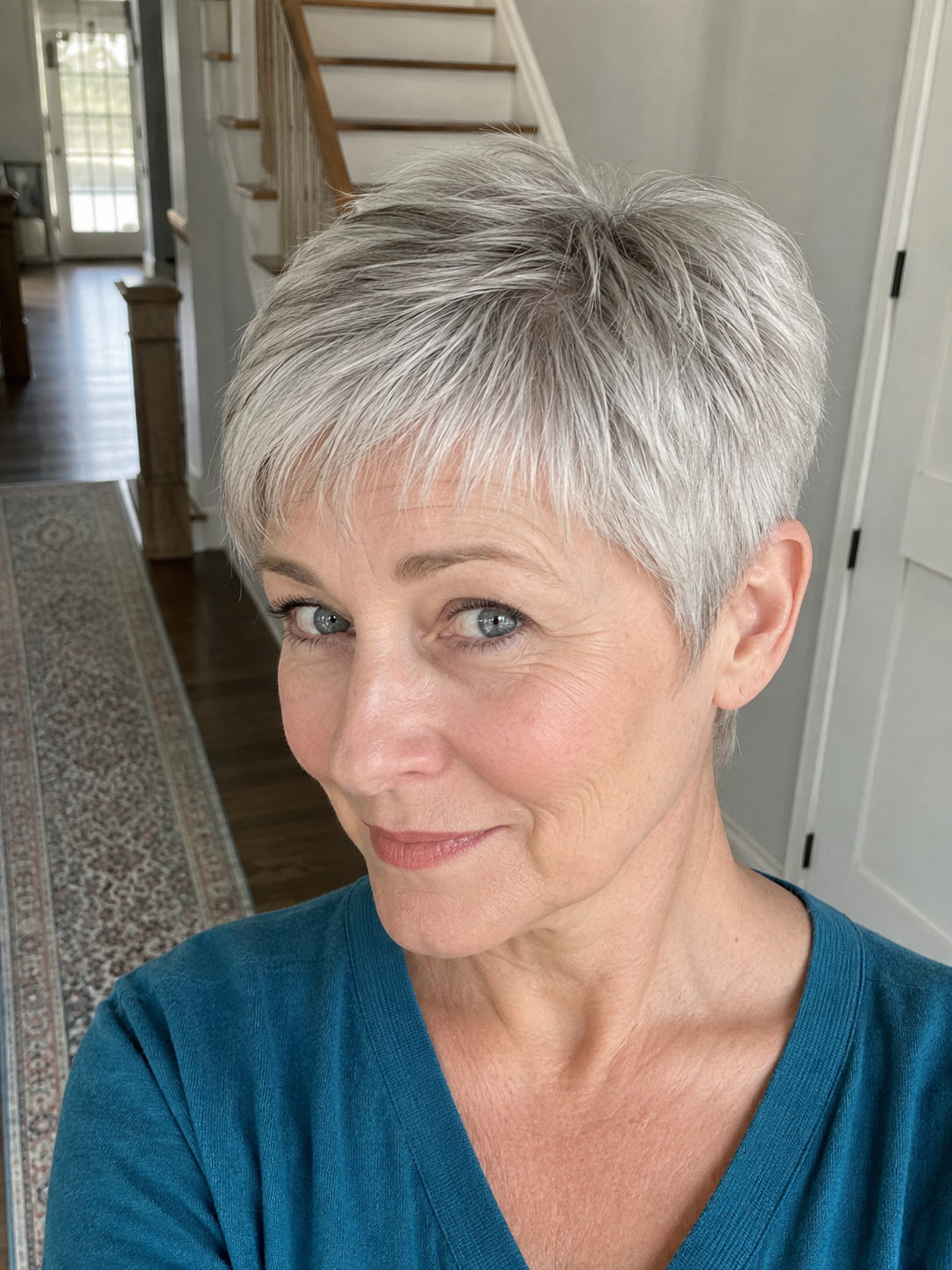
When previously dyed hair meets new gray growth, the join is what gives the transition away. A root smudge feathers a translucent tone across it so there is no hard edge left anywhere in the hair. It is a temporary measure rather than a destination, which is exactly what makes it worth doing. Most women need two or three across a full transition, and then they stop needing them.
Two Tone Pixie, Silver on Top
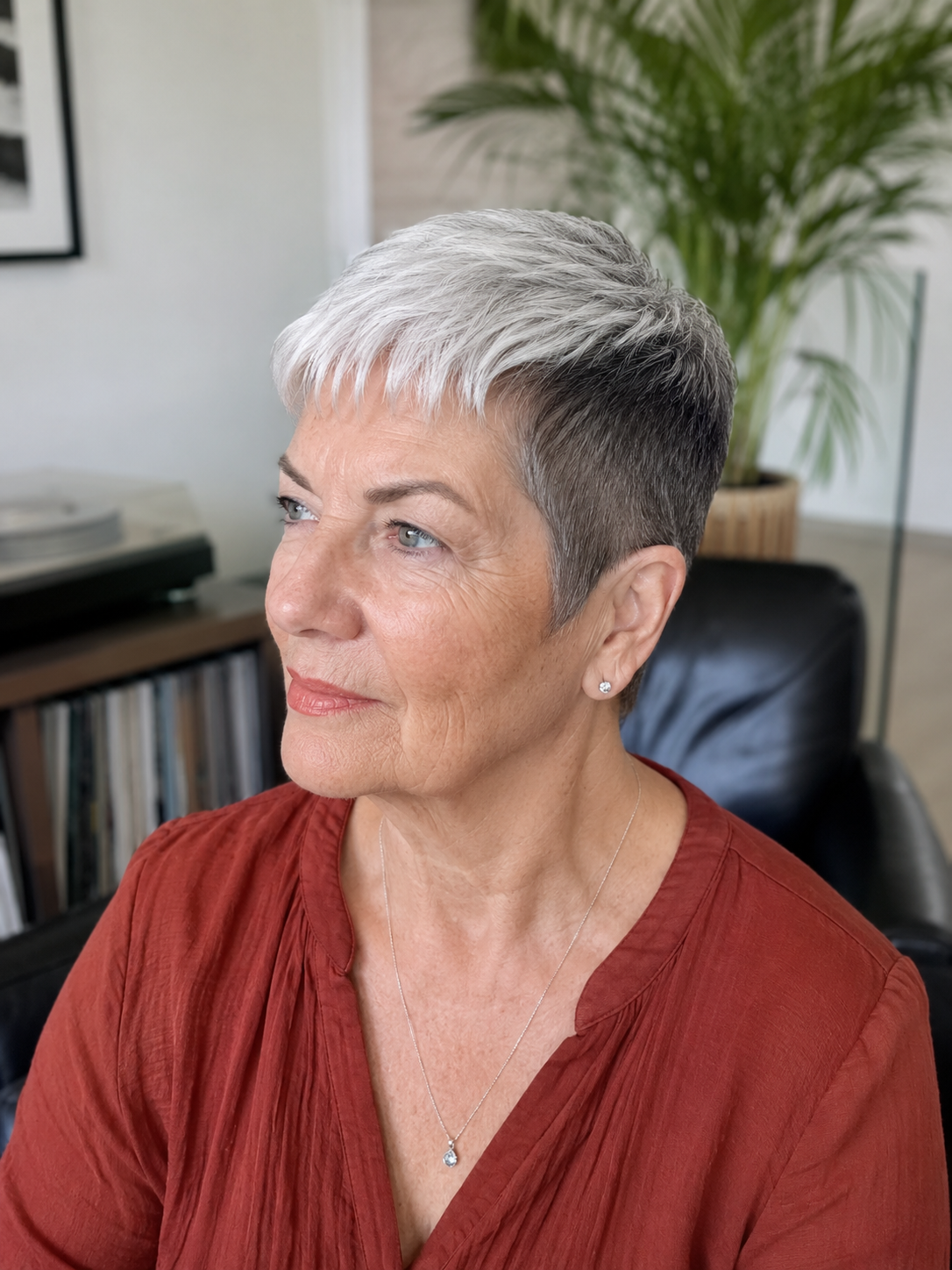
Rather than hiding the contrast between dark and gray, this uses it. The nape and sides stay deeper, the top and fringe stay silver, and the difference becomes the design. It works best when your natural gray pattern already sits heaviest at the front, which is where most women gray first anyway. The cut has to be sharp for this to land. A blurry version just looks like grown out roots.
Tapered Silver Crop on Gray Coils
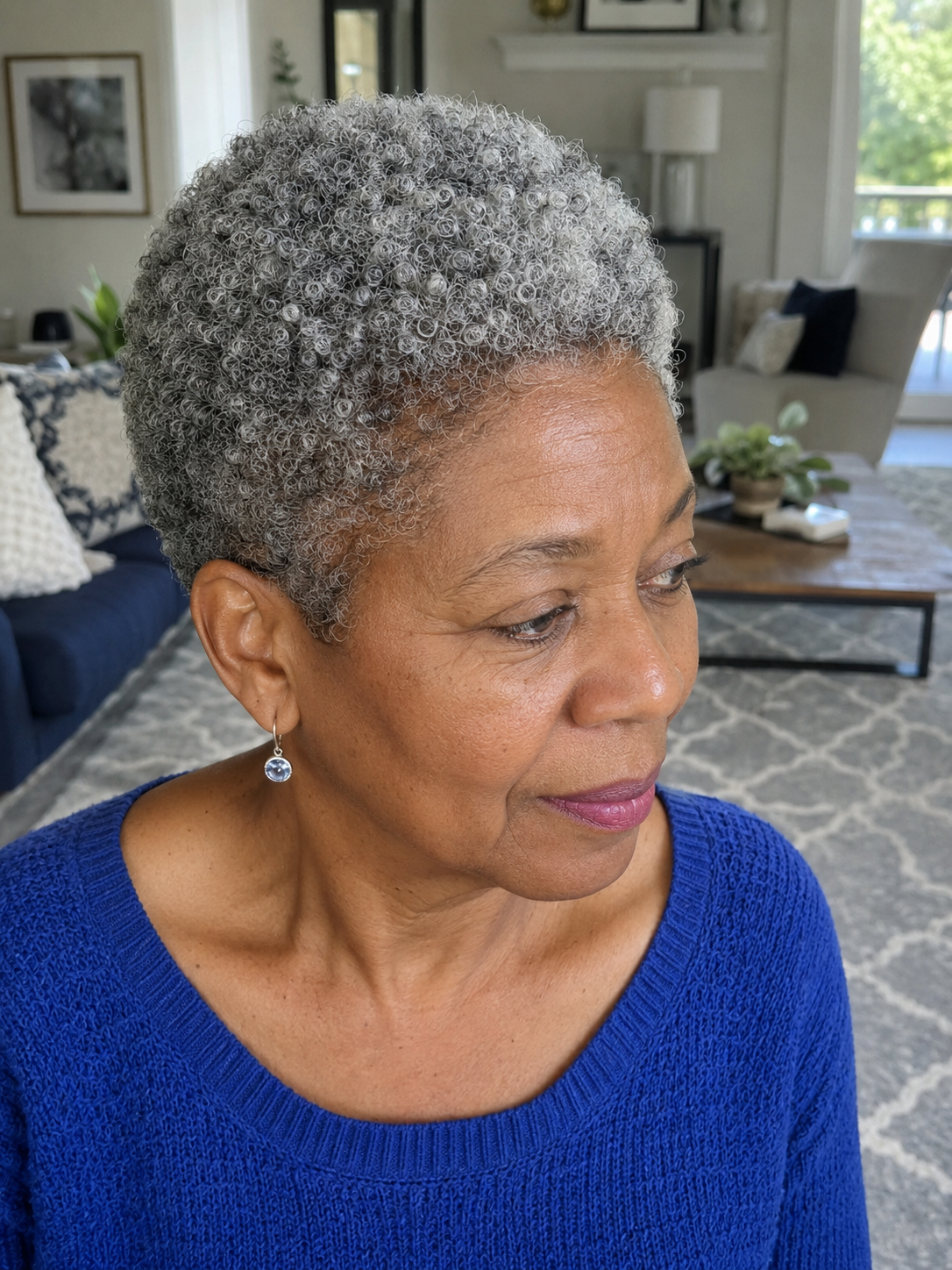
Gray coils need their own approach. The strand is more porous, the cuticle sits tighter, and scalp oils struggle to travel down a coiled shaft, so dryness compounds from both directions. A tapered crop with the coil pattern left full through the top keeps weight off and lets moisture reach everything. Most silver shampoos are formulated for straight, oilier hair, so use them sparingly and lean on deep conditioning instead.
The Transition Chop
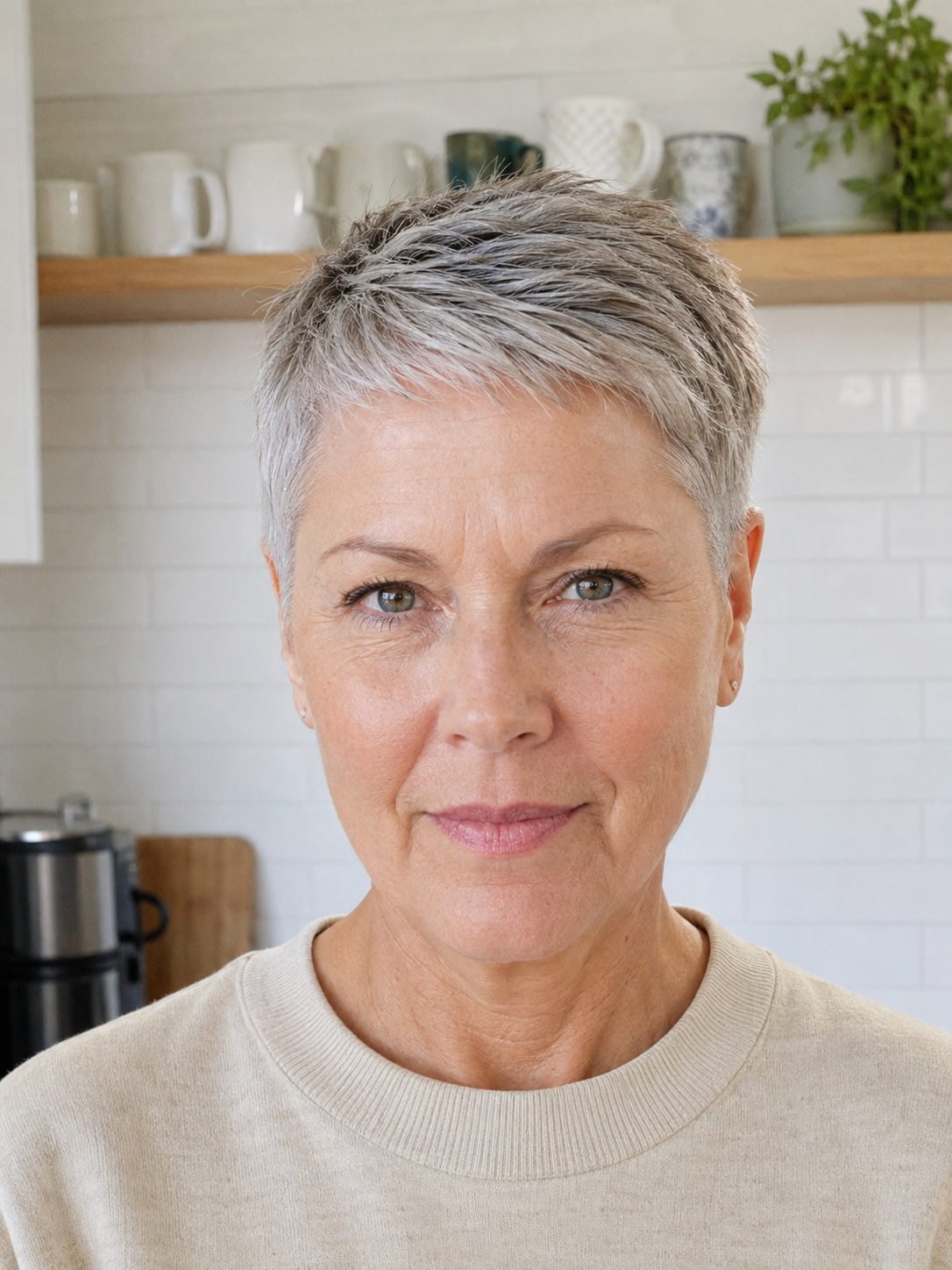
The fastest route to fully gray hair is a pair of scissors. Cutting to a pixie removes most of the dyed length in a single appointment, and what remains grows out in months rather than years. It is the option nobody pushes, because it is not a service anyone can sell you repeatedly. Plenty of women who spent two years blending say afterward that they would have just cut it.
Gray Pixie With Natural Wave
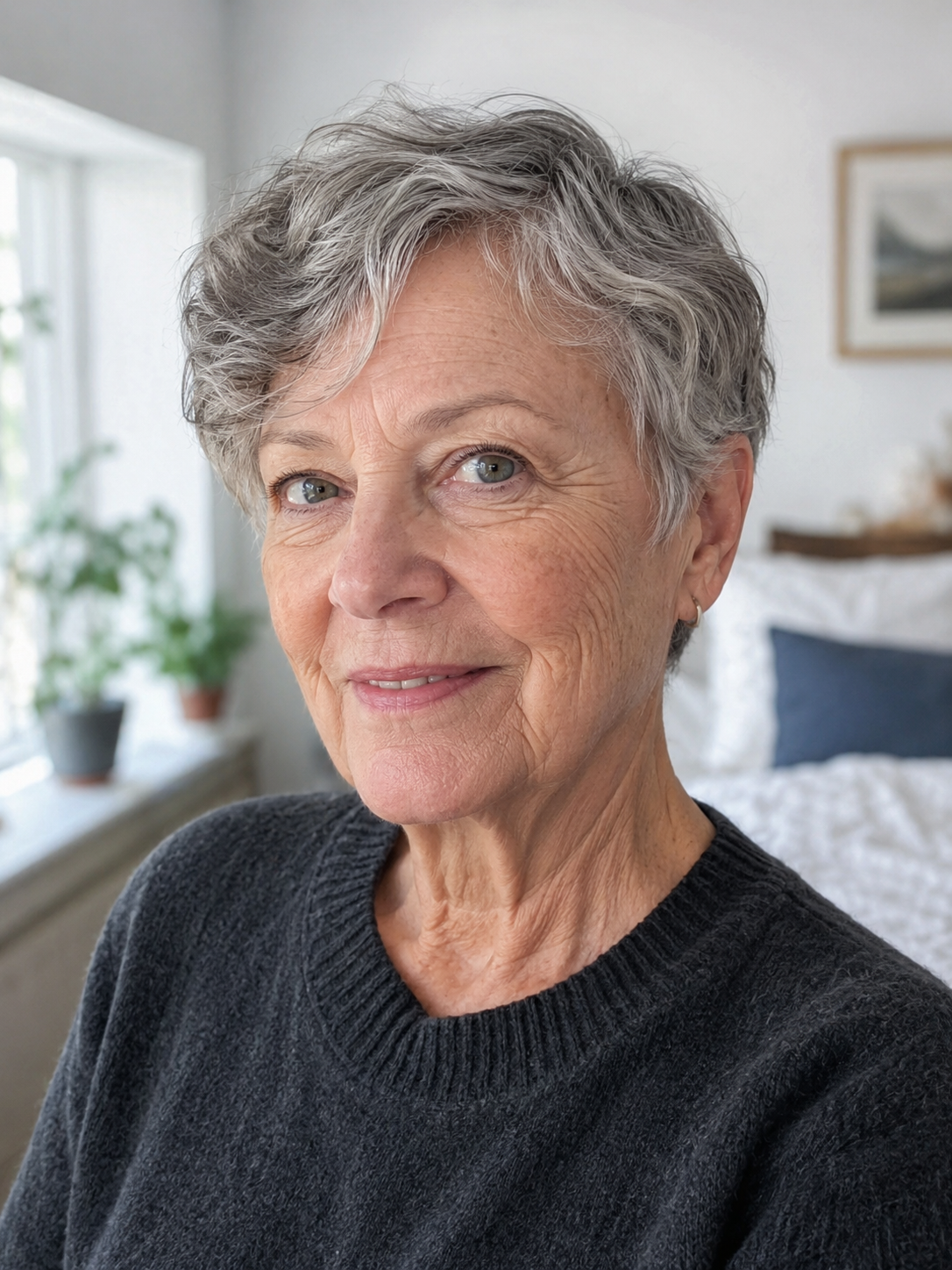
Gray hair often turns up with a wave or a kink that was never there before, because the structure of the strand changes once the pigment goes. Fighting that with a flat iron dries out hair that is already dry. Cutting for it works better. A short cut with a little more length through the top lets the bend show itself, and a light cream is all it needs. The wave adds volume for nothing.