The difference between thin locs and traditional ones isn’t just size. A head of microlocs or Sisterlocks might hold three to five hundred individual locs, each about the width of a pencil or thinner, and that density gives the hair drape, swing, and the ability to curl, braid, and gather in ways chunky locs simply can’t. The trade-off is time: retightening or retwisting hundreds of locs takes hours every four to eight weeks, and thin locs are more prone to thinning at the root if they’re pulled too tight or styled up too often. Handle them gently, alternate tension styles with hair-down days, and they’ll give you more options than almost any other loc size.
Long Microlocs Worn Down with a Middle Part
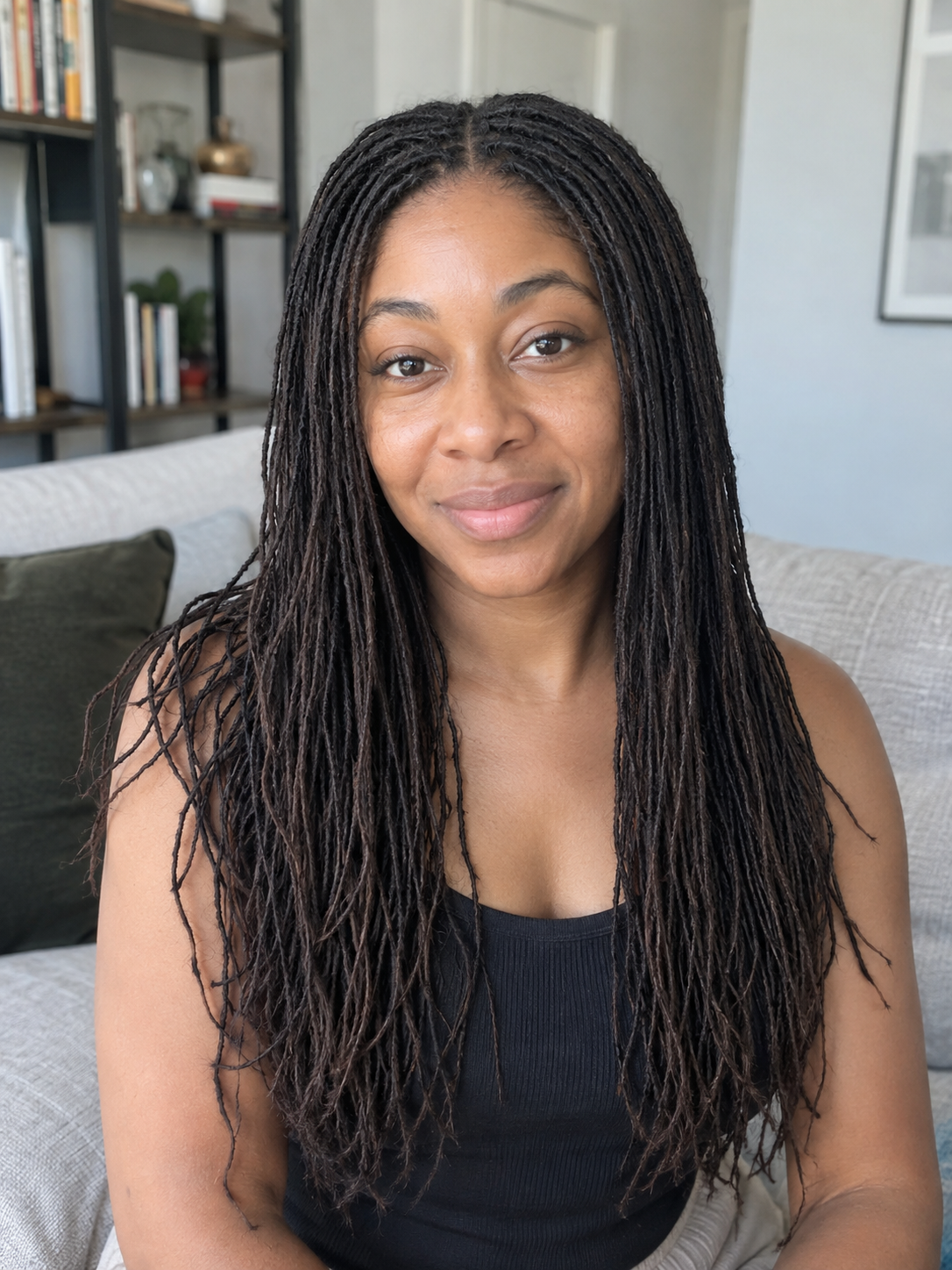
The simplest way to wear thin locs and still the one that shows them off best. Long microlocs parted down the center and left to fall past the shoulders drape almost like loose hair, and the movement when you walk is the whole appeal. A light oil on the length adds shine and a rosewater spray keeps them from drying out. This is also the healthiest way to wear them between styled days, since there’s no tension anywhere.
Microloc Bob
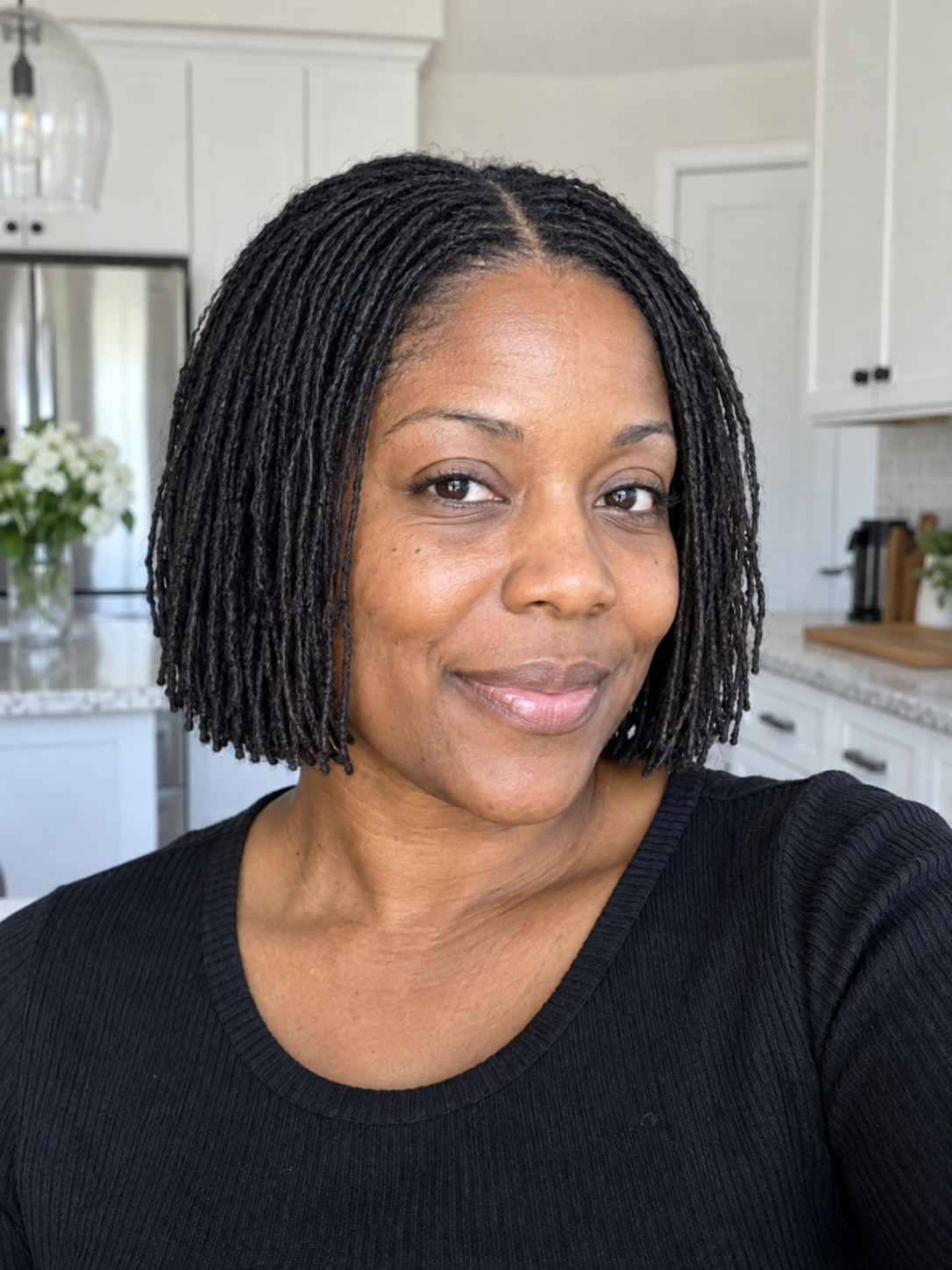
Cutting thin locs to a chin or jaw-length bob gives them the same swing as a loose-hair bob, which is not something traditional locs can do. Mature locs with sealed ends hold the blunt line best. It’s a big decision, since the length took years, but many women find the bob makes the locs feel lighter and easier to manage. A middle part keeps it symmetrical; a deep side part adds weight to one side.
Perm Rod Curls on Sisterlocks
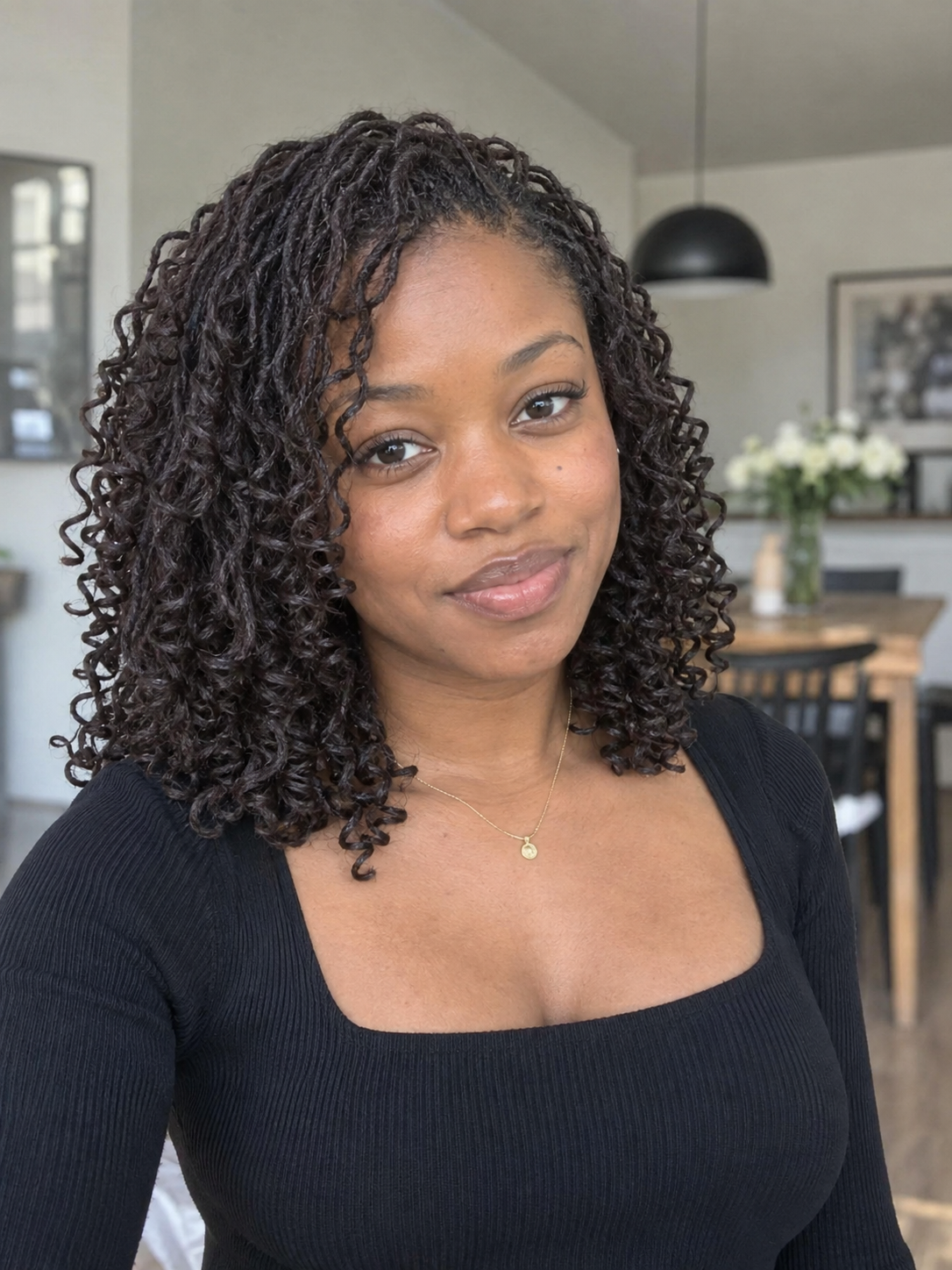
Thin locs curl beautifully. Wrap damp locs around perm rods or flexi rods, add a little setting mousse, and dry completely under a hood or overnight. The result is a full head of bouncy spirals that lasts a week or more. Smaller rods give tight ringlets, larger ones give loose waves. Don’t take the rods out until the locs are fully dry, or the set drops within a day.
Braid-Out on Thin Locs
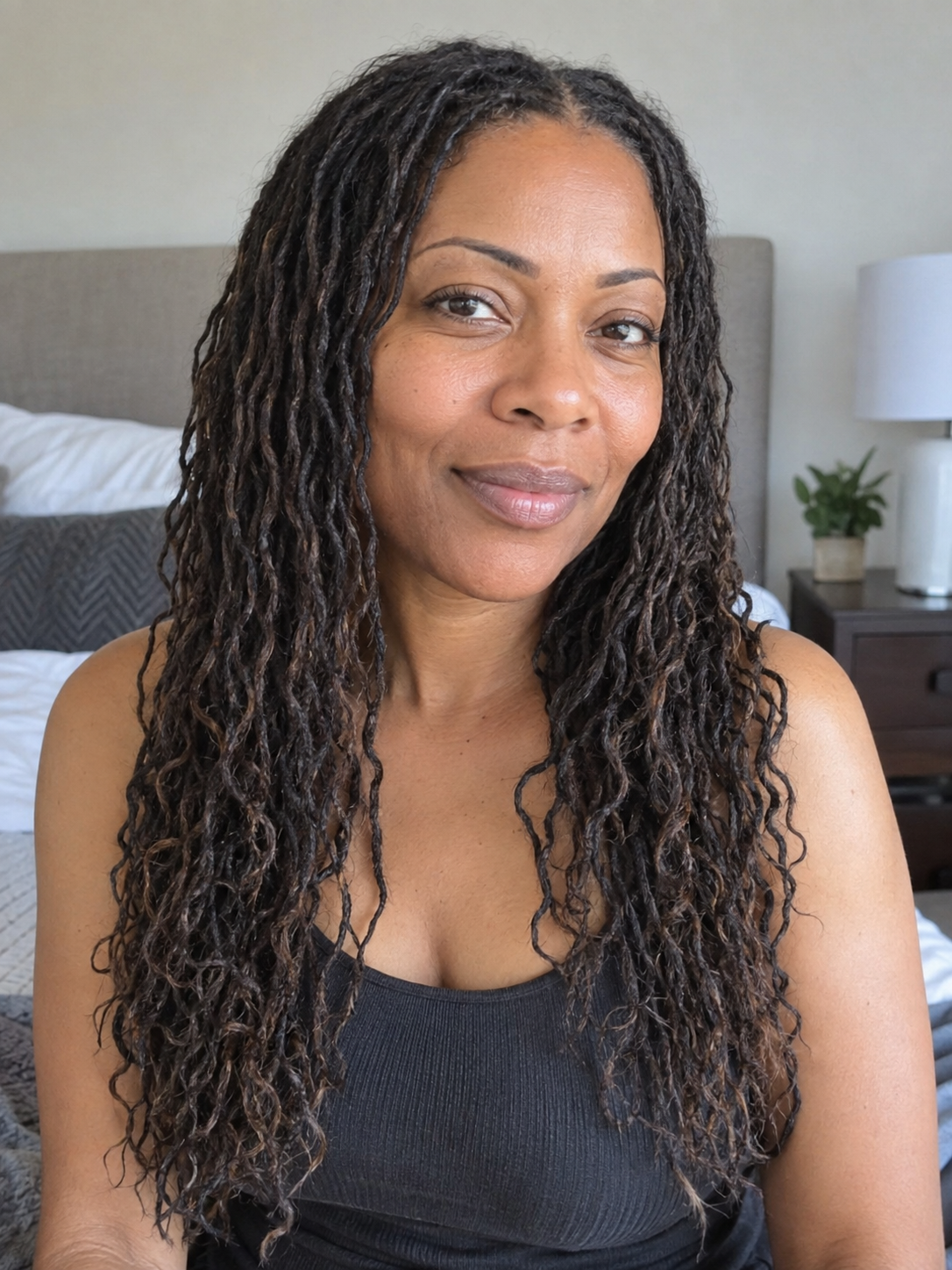
Braid sections of damp locs into six to eight large plaits, let them dry, and unravel for soft crimped waves through the whole length. The texture is looser and more lived-in than a rod set and lasts four or five days with pineappling at night. It’s the easiest set to do at home and works on thin locs from shoulder length up. Separate the waves gently with your fingers, never a comb.
High Bun with Thin Locs
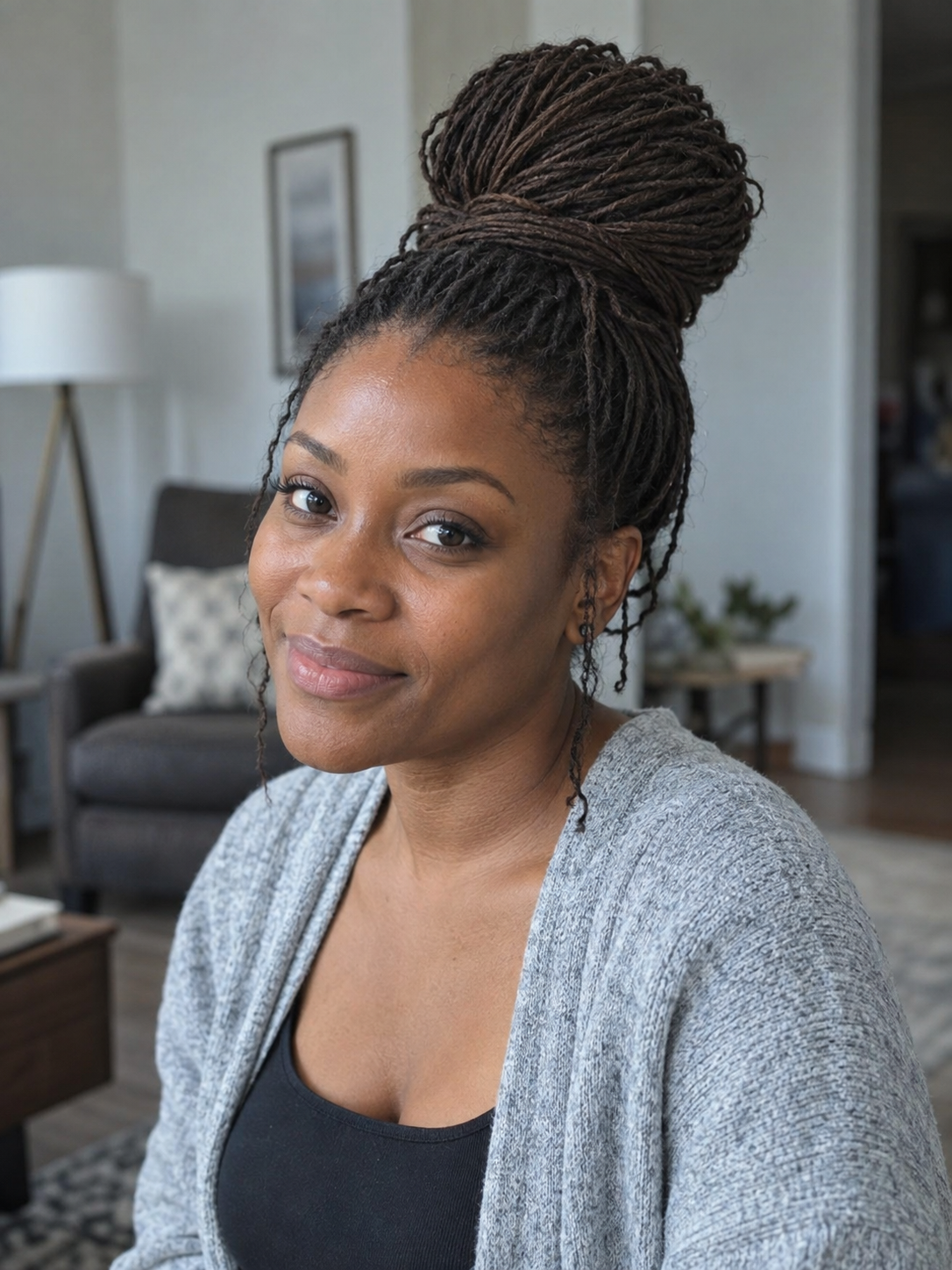
Gather all the locs into a high bun on the crown and wrap a few around the base to hide the band. Thin locs make a smooth, dense bun rather than a chunky one, and the shape shows off the neck and face. Use a loc-safe band or satin scrunchie, and don’t wear it every day, since the pull at the hairline adds up on fine locs. A few pieces left loose at the temples soften it.
Half-Up Thin Locs
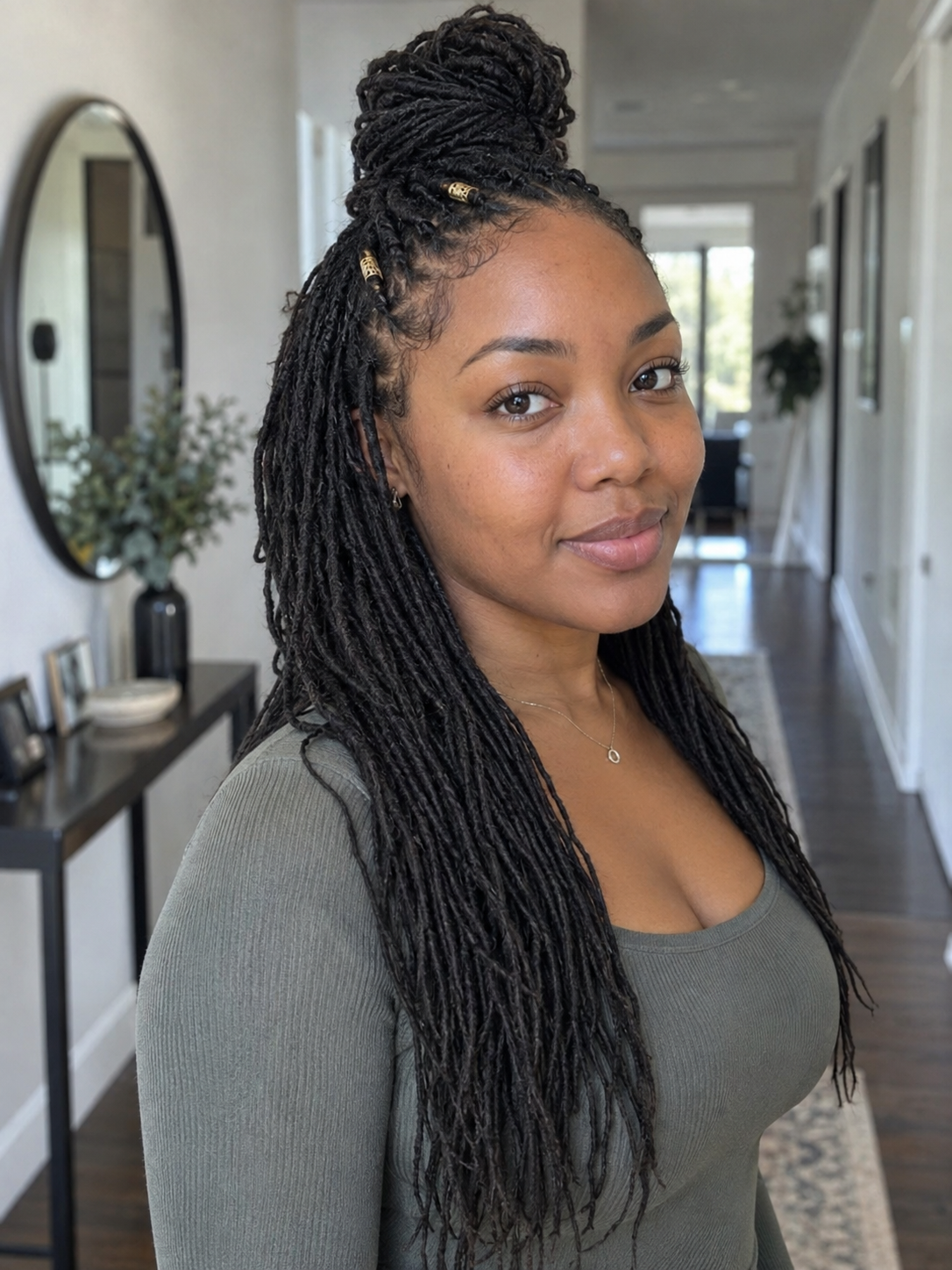
The front and crown locs gathered into a small bun or ponytail on top while the rest hangs down. It keeps hair off the face while showing the length. Thin locs make the half-up look sleek from the front, and the down section still has all its swing. Add one or two small gold cuffs on the front locs for detail. It’s a five-minute style that works on wash day or day five.
Thin Locs with Bangs
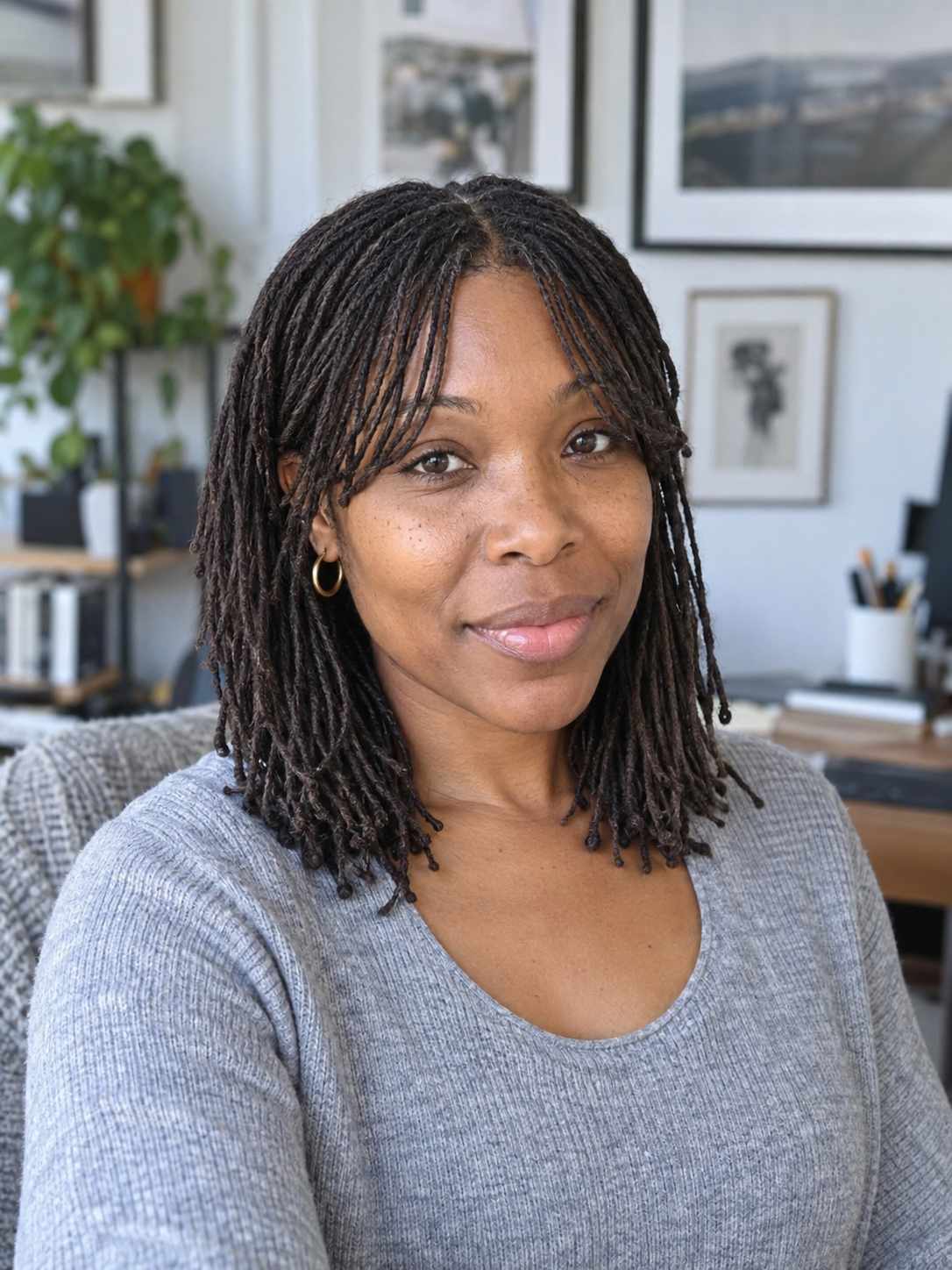
Cutting a fringe into thin locs is possible because the individual locs are fine enough to sit in a line across the forehead. Curtain bangs parted in the center or a soft side-swept fringe are the most wearable. The bangs need trimming every four to six weeks, and they should be cut on mature locs with sealed ends. They change the whole face frame and pair especially well with a bob or a bun.
Layered Thin Locs
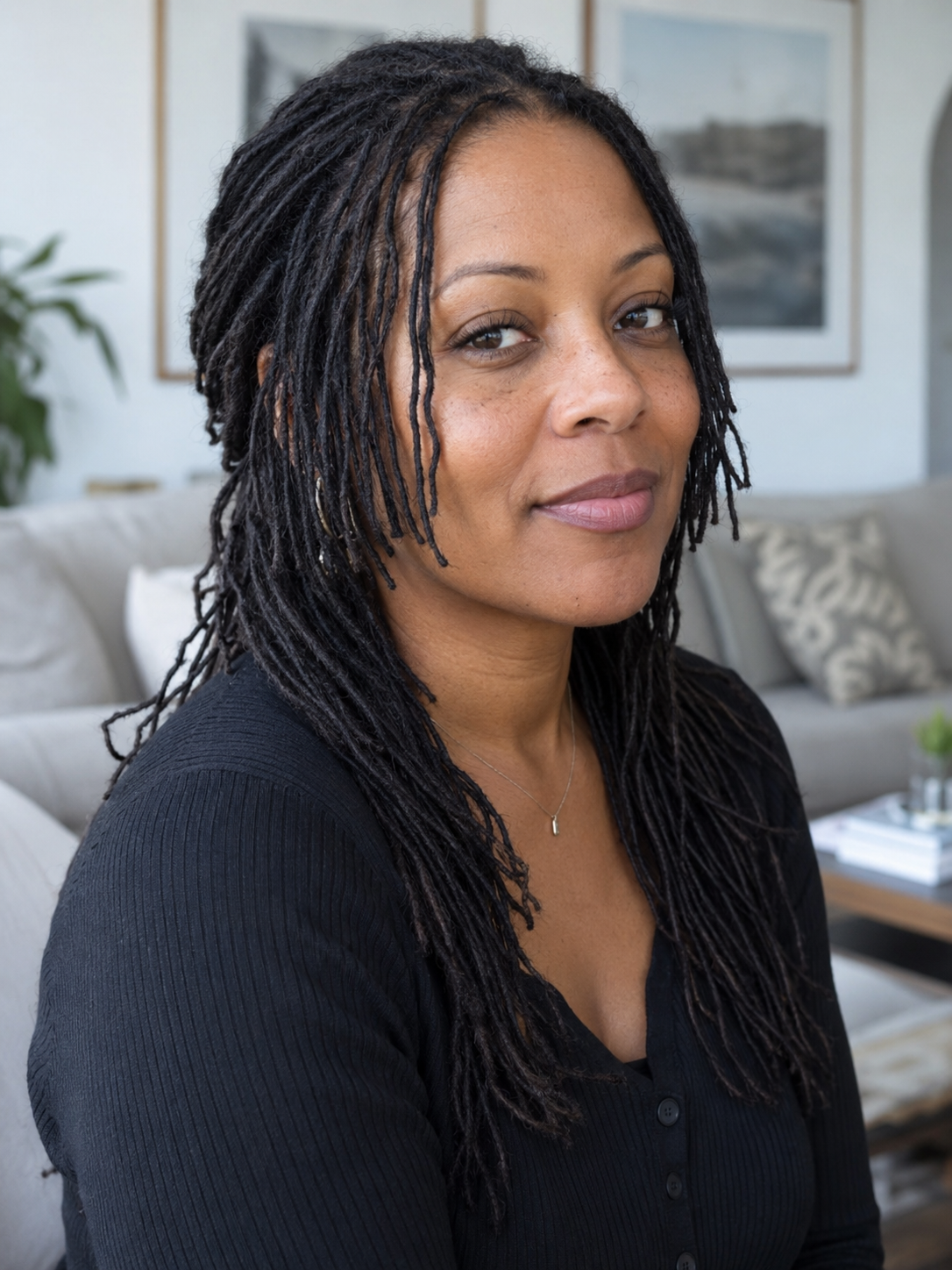
Layers are another thing thin locs can carry that traditional locs can’t. Shorter face-framing locs around the cheekbone blending into longer ones at the back give the hair shape and movement instead of one straight hem. It also thins out the weight at the ends. Ask for the layers to be cut on dry, mature locs so the loctician can see how they fall. Long layers grow out gracefully.
Sleek Low Ponytail with Thin Locs
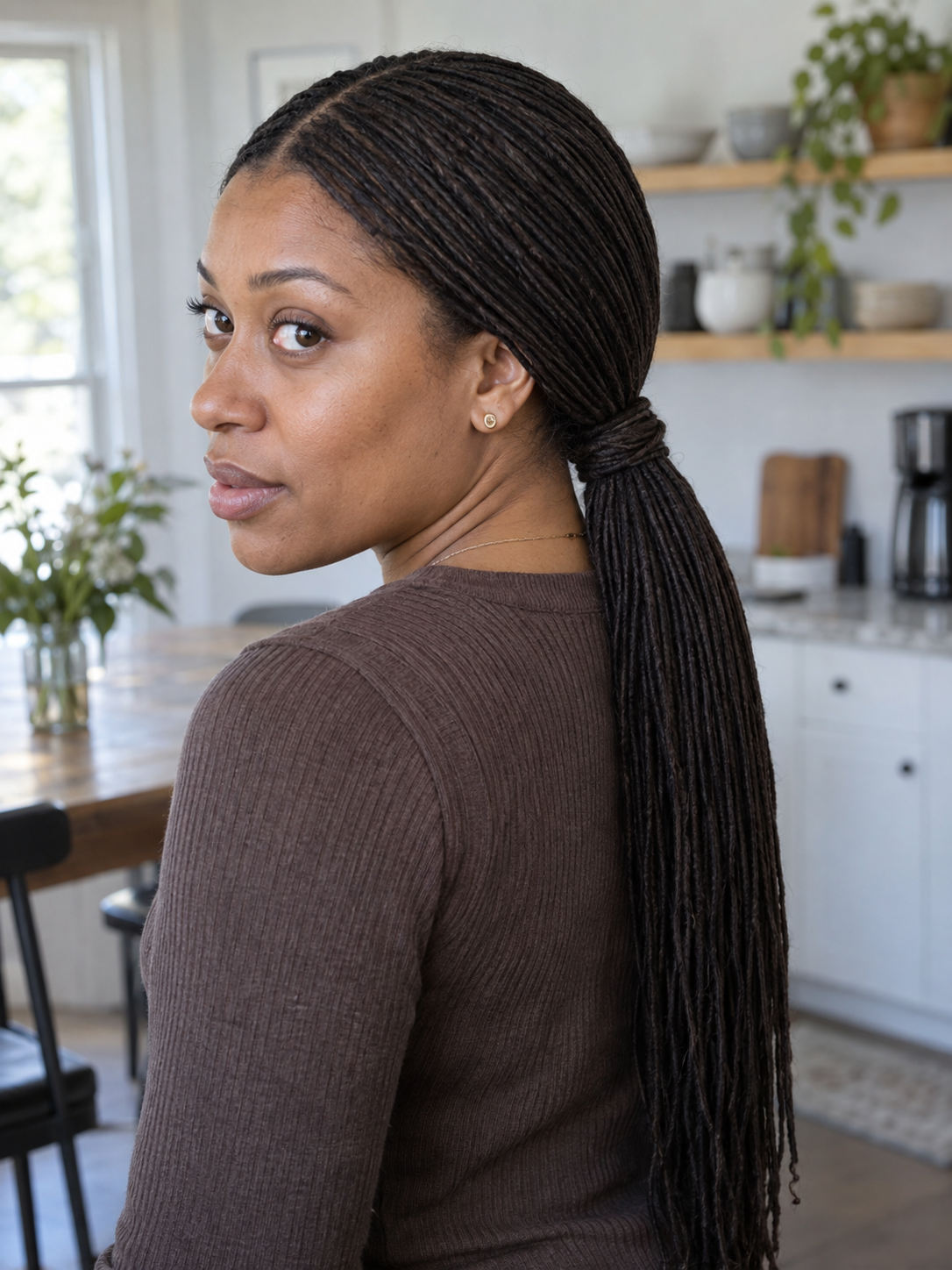
Smooth the locs back from a center or side part into a low ponytail at the nape, and wrap a loc around the base. Thin locs lie flatter than thick ones, so the ponytail looks clean and the tail hangs with weight down the back. A light gel or loc butter along the hairline keeps flyaways down. It’s a work-ready style that takes two minutes and looks finished from every angle.
Crown Braid with Thin Locs
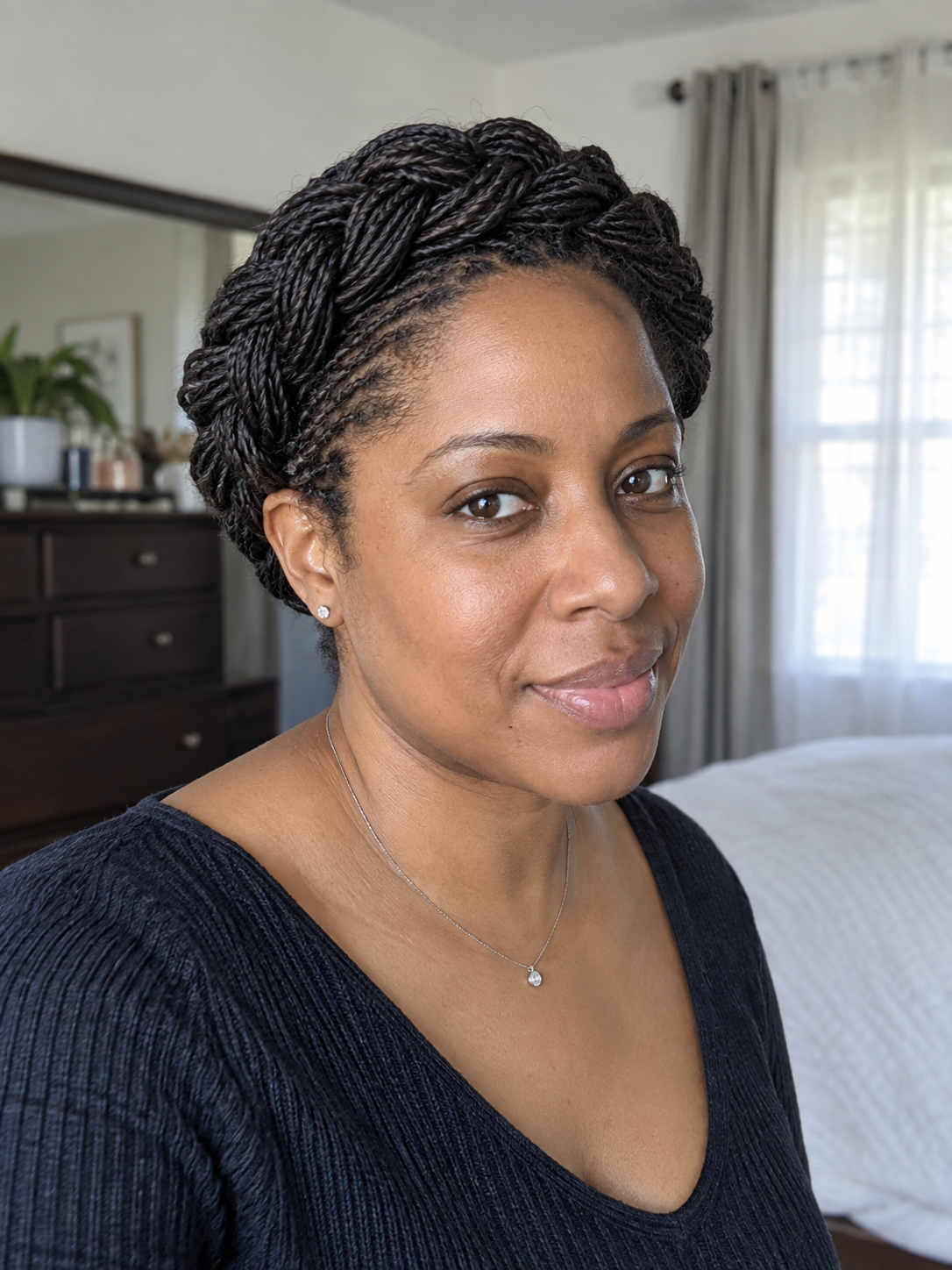
Thin locs braid easily, so gathering them into one or two large braids and wrapping them around the head into a crown works far better than it would on chunky locs. Pin the ends underneath at the back. It’s a wedding and event style that also holds up for a few days. Keep the braid loose enough that the roots aren’t pulled, and take it down at night.
Two Big Braids with Thin Locs
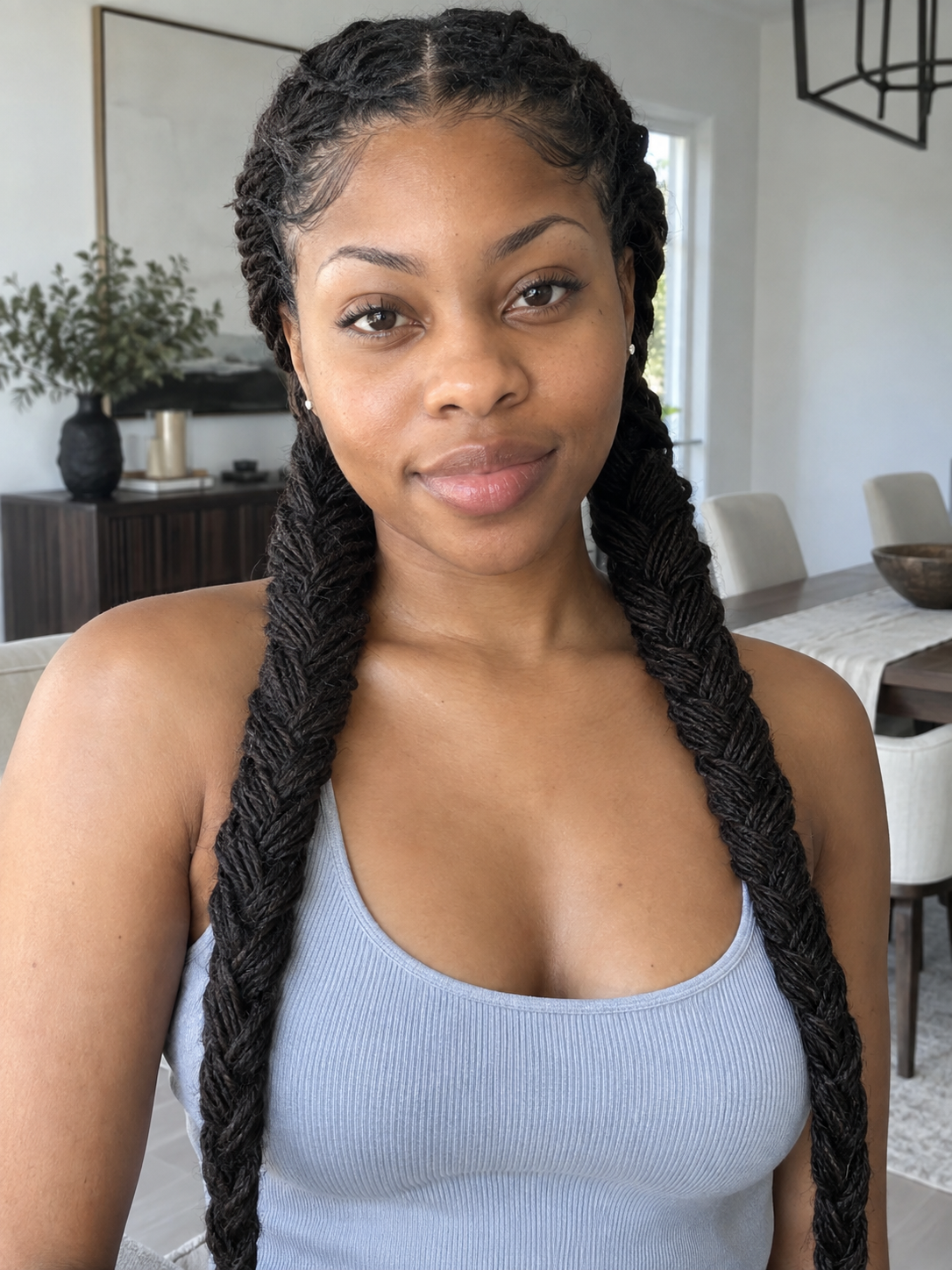
Part down the middle and braid each half of the locs into one large plait, either French-braided from the hairline or simply braided from the nape. Thin locs make smooth, even braids that hang with real weight. It keeps the length contained for the gym or a long day and unravels into a soft braid-out the next morning, so you get two styles from one.
Space Buns on Microlocs
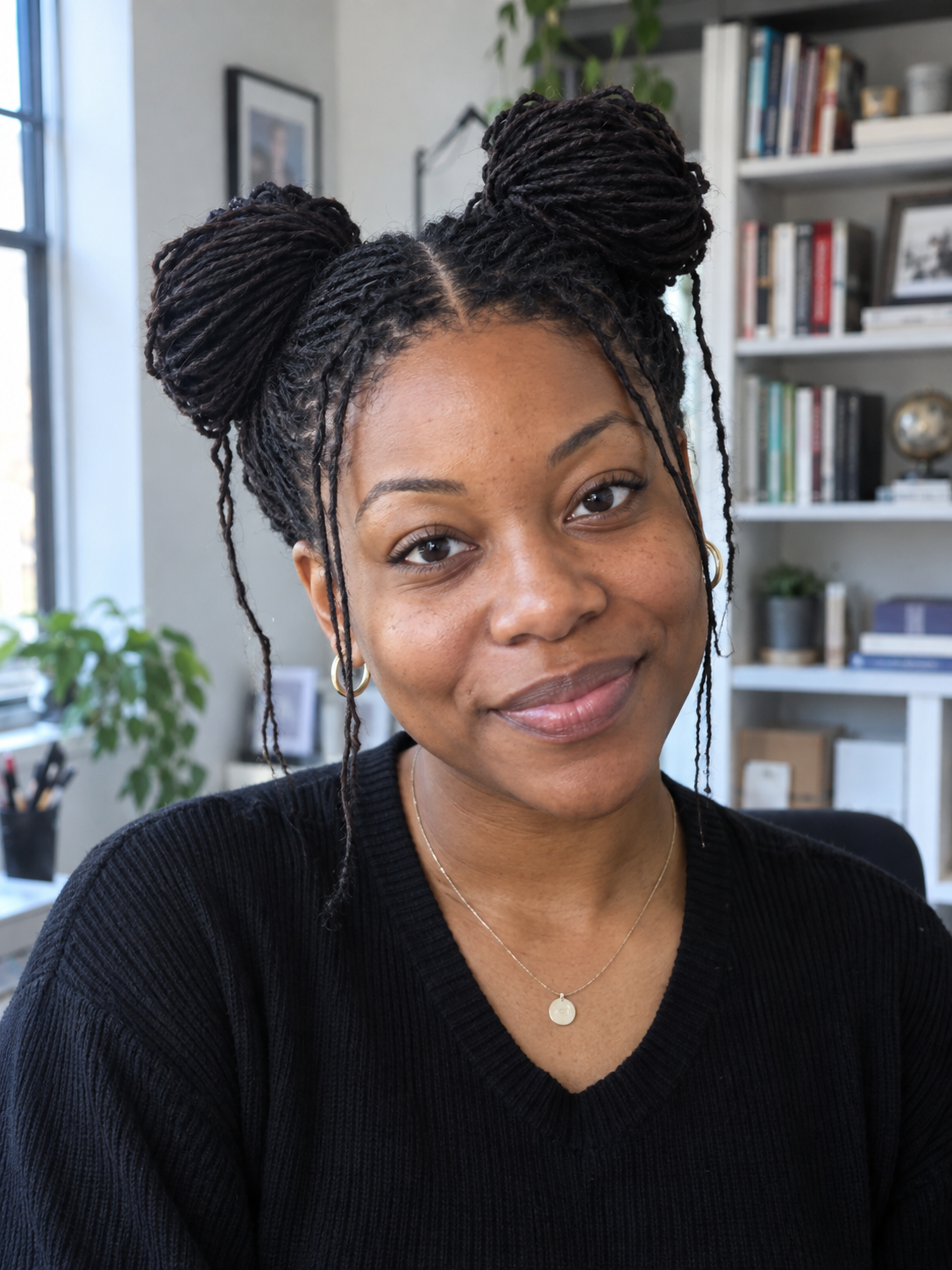
Part down the middle and twist each side into a bun high on the crown, or lower behind the ears for a softer version. Thin locs form neat, rounded buns without bulk. Leave a few locs loose at the front. It’s playful without being childish when the buns sit close to the head, and it takes the weight off the neck on hot days. Use satin scrunchies to protect the locs.
Burgundy Thin Locs
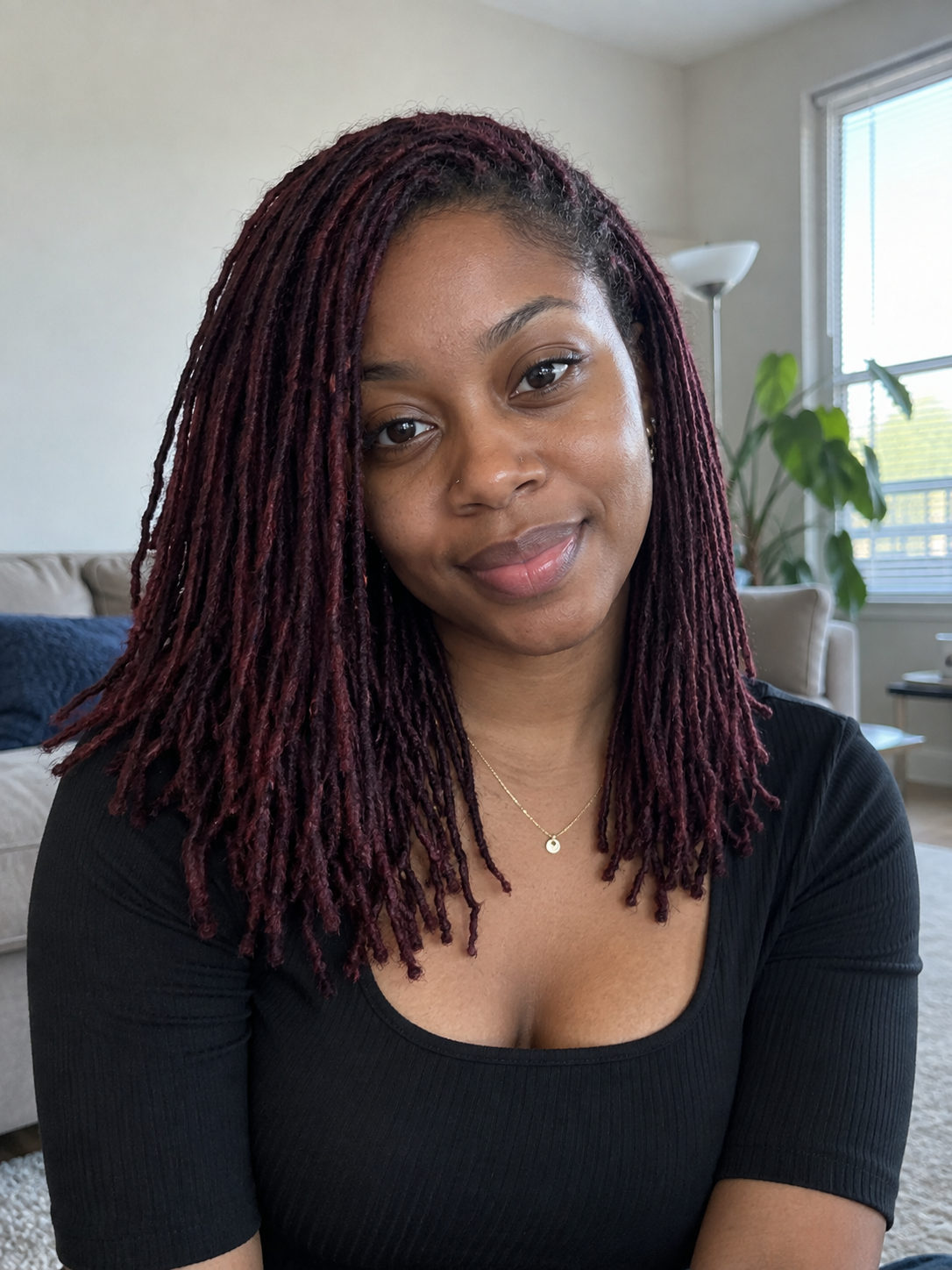
Deep wine and burgundy shades sit richly on dark thin locs, and because there are so many fine locs the color shows in every direction. It can be done with a semi-permanent color that shows mostly in daylight or a permanent dye for full depth. Reds fade faster than most colors, so plan on a refresh every month or two, and use a loc spray to counter the dryness color brings.
Honey Blonde Highlights on Microlocs
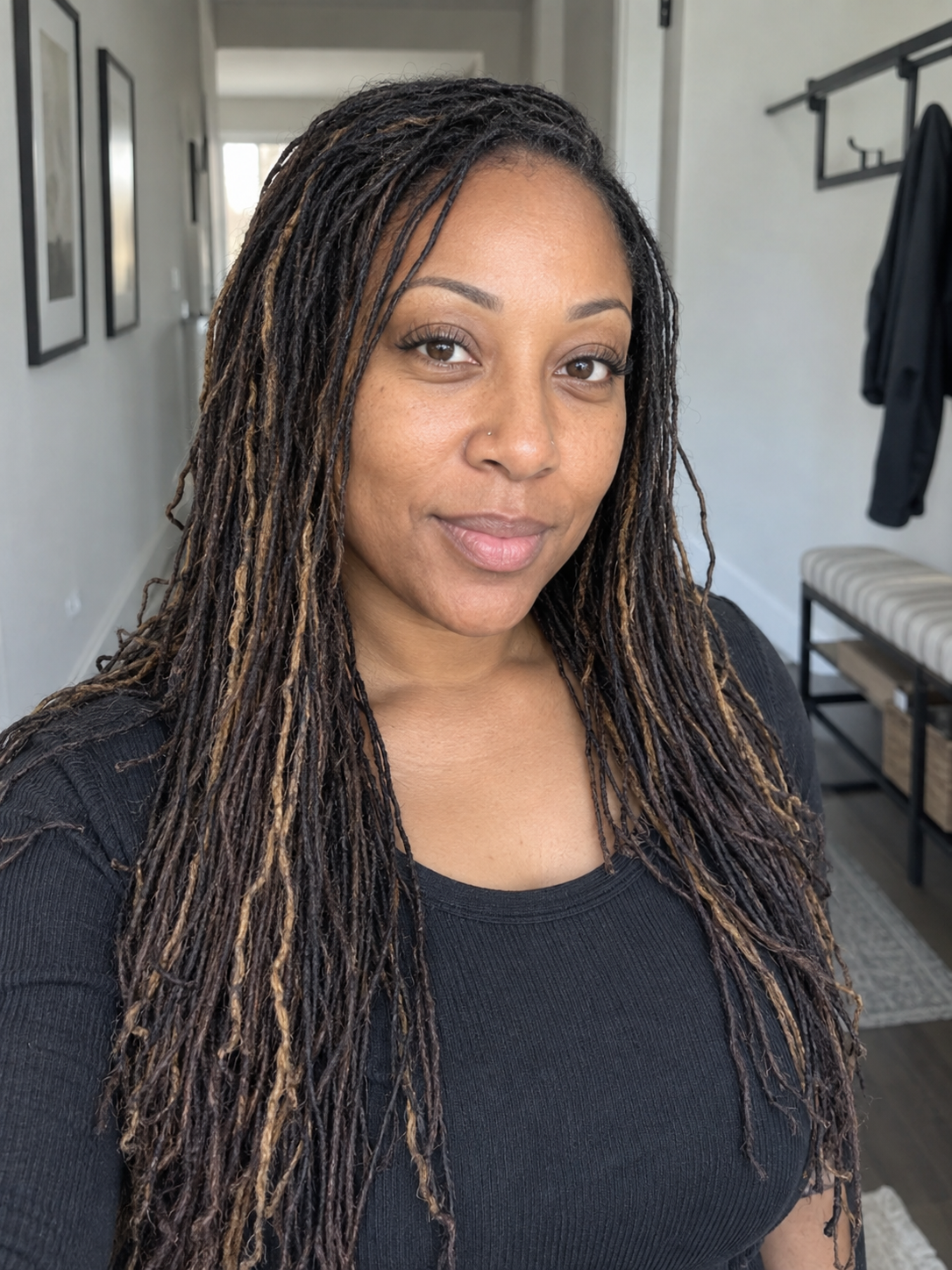
Rather than lightening the whole head, a loctician can lift a scattering of individual thin locs to a warm honey blonde, leaving the rest dark. The effect is dimension without the commitment of full blonde. Honest upkeep: lifting locs involves bleach, and thin locs are more fragile than thick ones, so it belongs with a colorist who knows locs, and the lightened locs need deep moisture weekly.
Thin Locs with Loose Curly Ends
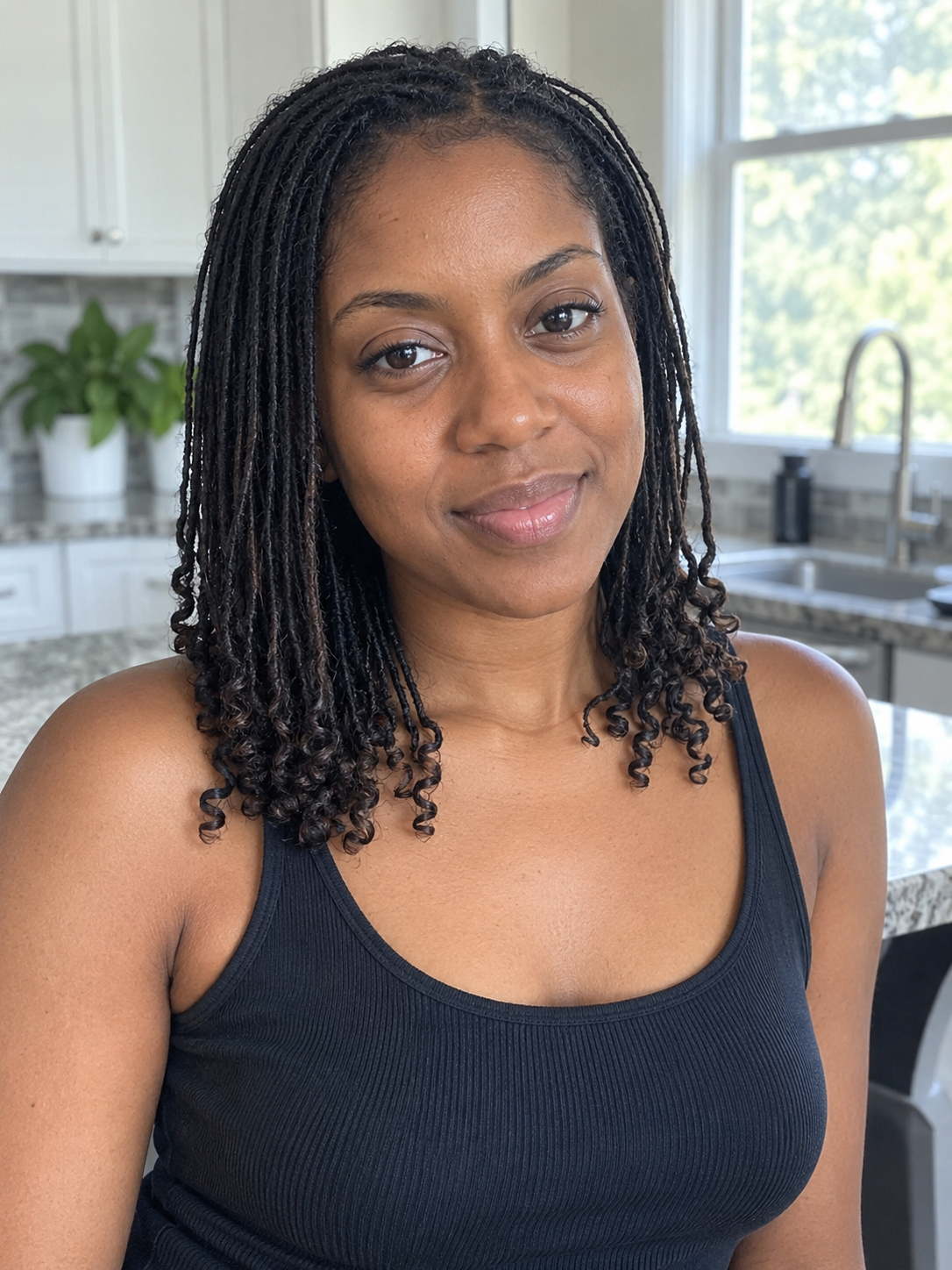
Some women keep the last inch or two of each loc unlocked, so the ends form soft, loose curls beneath the locked length. On thin locs the effect is delicate and moves beautifully. The ends need a curl cream to stay defined and will loc up on their own over time unless they’re detangled regularly. It’s a choice that takes upkeep, but it gives thin locs a softness nothing else does.
Side-Swept Thin Locs with a Deep Part
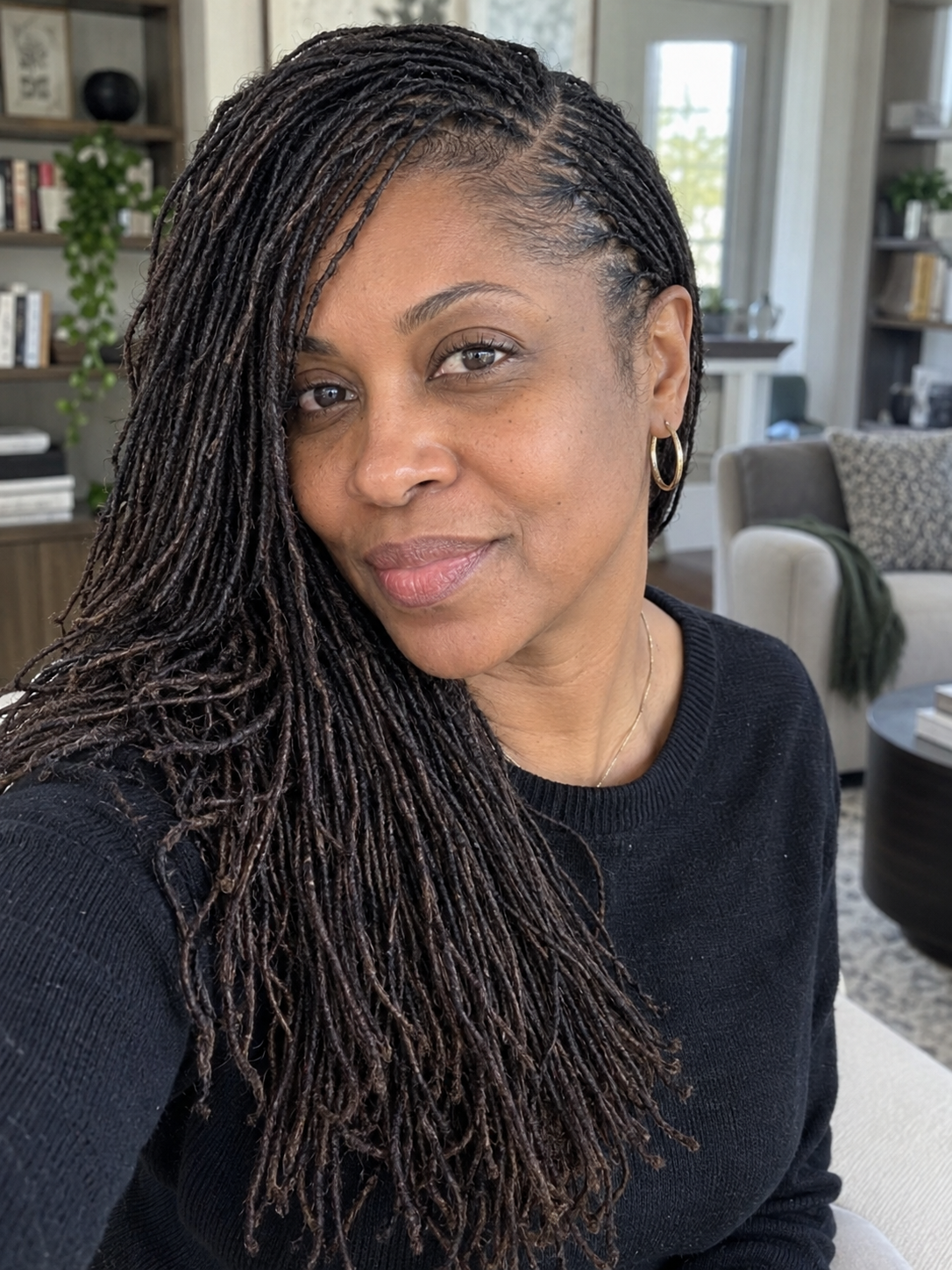
Part the locs far to one side and sweep everything over, letting the heavy side fall across the cheek while the light side is tucked behind the ear. On thin locs the sweep has real volume, and the deep part shows off a clean, fresh retightening. It suits square and round faces and takes no product. Switch the part side every few weeks so the tension stays even.
Thin Locs with a Silk Headwrap
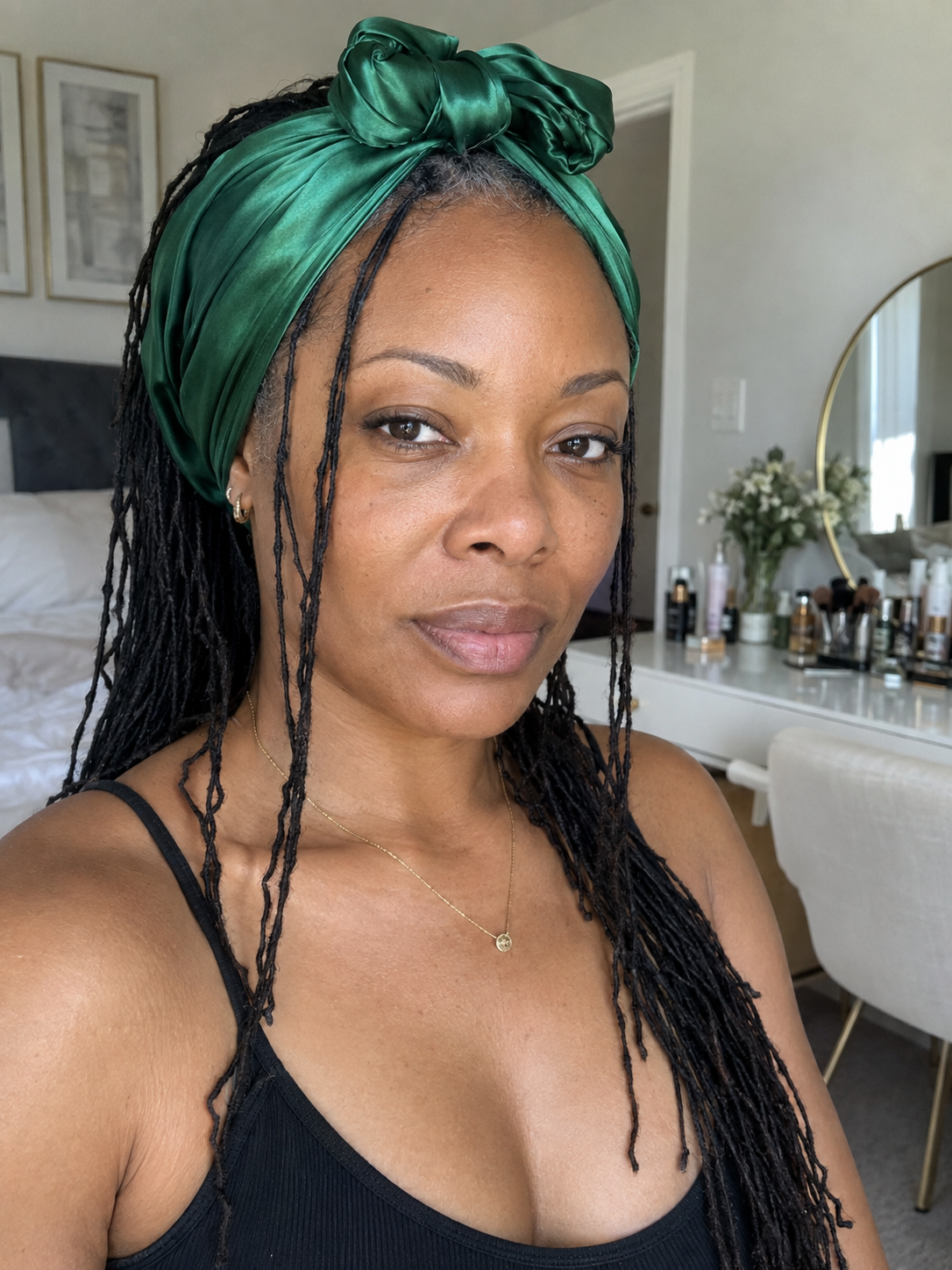
A silk or satin scarf tied at the hairline with the locs gathered up inside or left to spill out the back keeps thin locs protected while still looking finished. Wrap styles rest the roots on days between styles and add color to a simple look. Tie the knot on top or at the side, and let a few locs frame the face. It works on any loc length and any day of the week.