Most advice about pixie cuts for fine hair opens with the word texture, and that advice quietly backfires. Texturizing shears can remove a large share of the hair in a single pass, and on hair that is already fine, the result looks sparser instead of fuller. What actually creates the impression of density is shape. A clean perimeter, weight left where you want the eye to go, and lift built at the crown rather than carved out of it. Every cut below works on that principle. There are a few notes on color too, because on hair this short, tone does about half the work.
The Rounded Crown Pixie
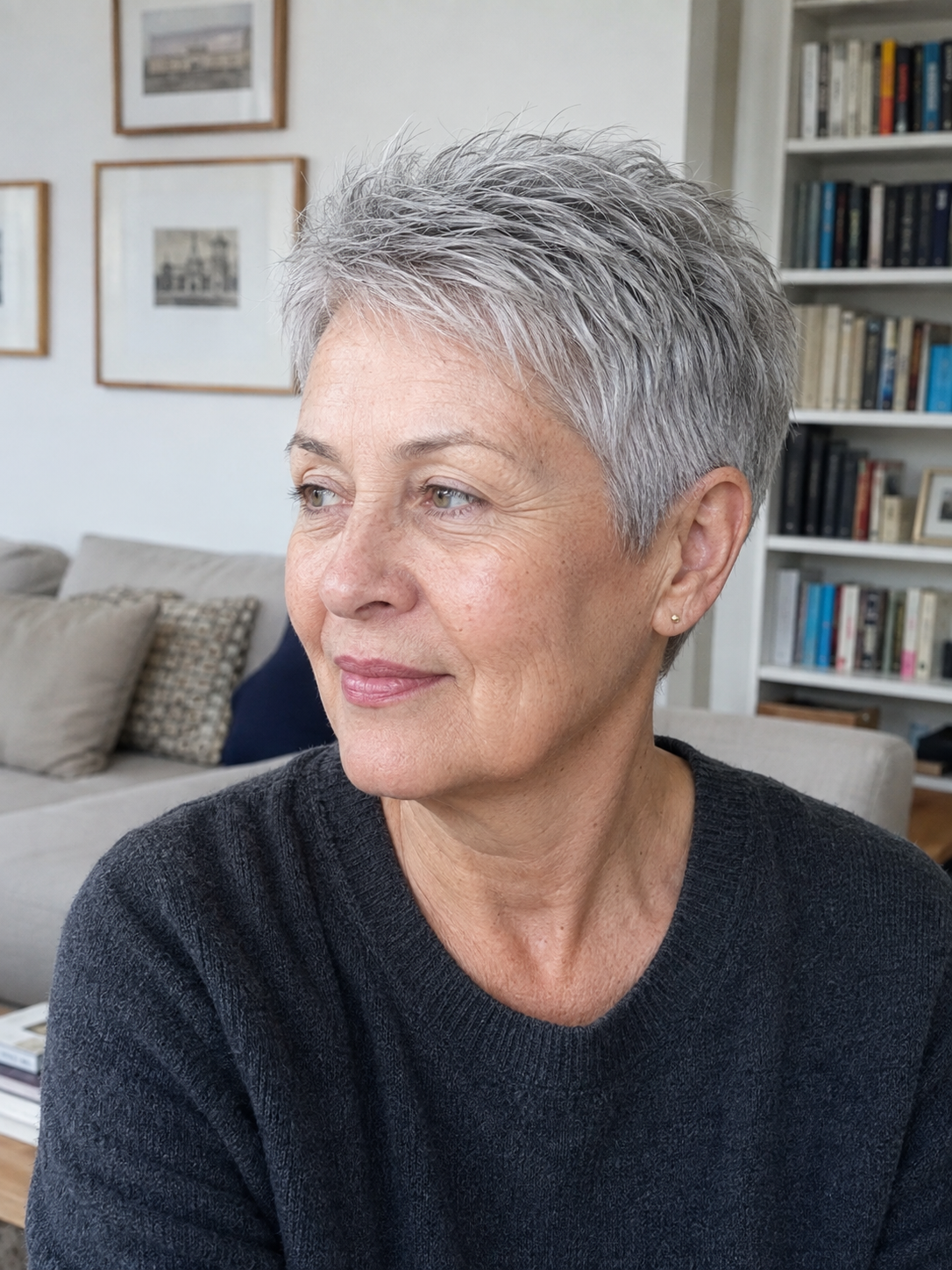
Volume at the crown does more for fine hair than volume anywhere else, because the crown is where the scalp tends to show first. This cut keeps the top layers short enough to stand up on their own instead of collapsing under their own weight. The sides stay close to the head. The shape is soft and rounded rather than flat. A root lifting mousse worked into the crown before blow drying is the entire styling routine.
Blunt Perimeter Crop
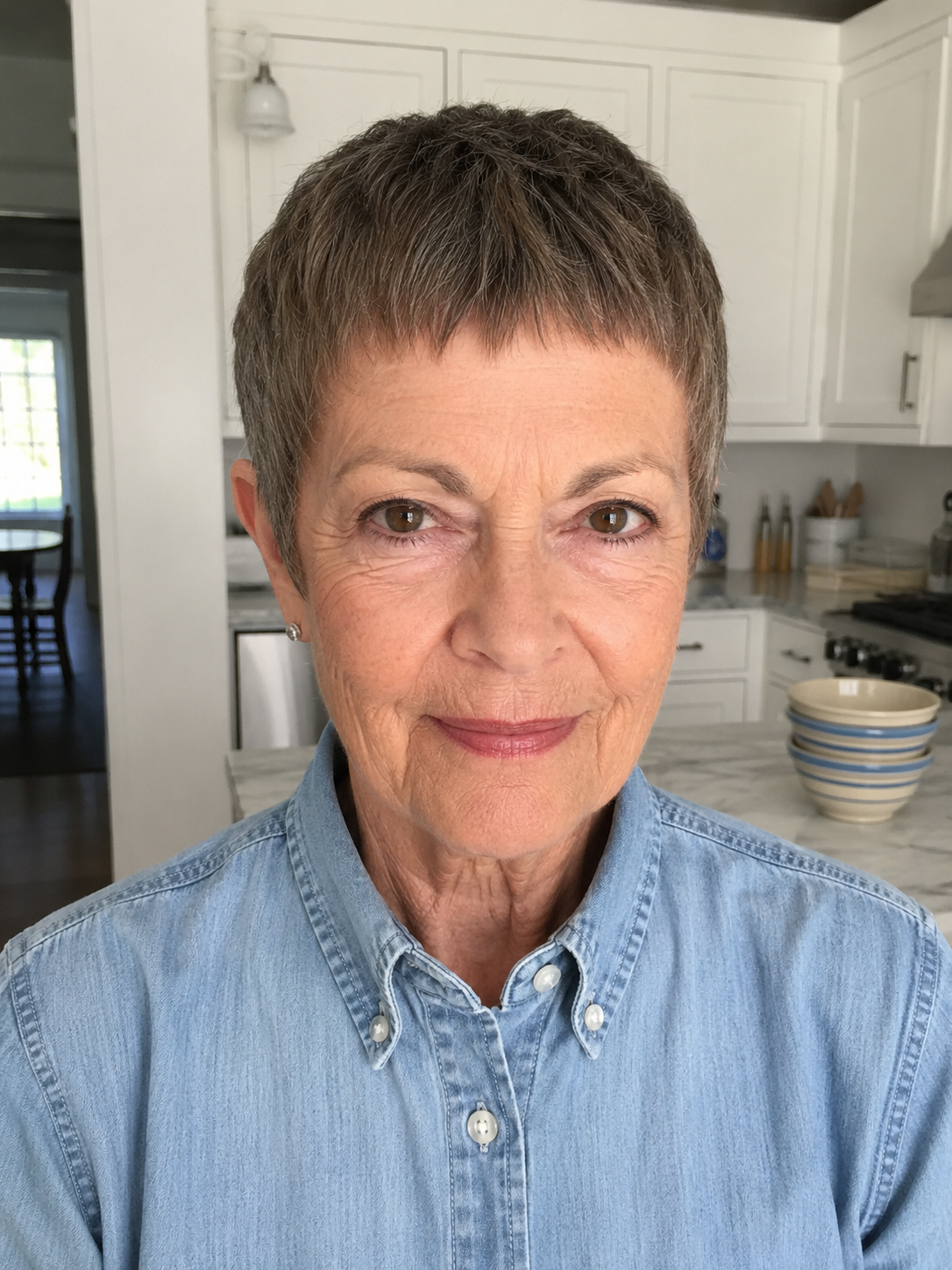
Ask for the outline to be cut clean. A blunt edge along the fringe and around the ears leaves every strand ending at the same point, and that solid line looks like more hair than a feathered edge does. It is the opposite of what most stylists suggest for fine hair, and it works. Keep the interior only lightly layered so the shape still moves. The finish is soft, not severe.
Tapered Nape Pixie
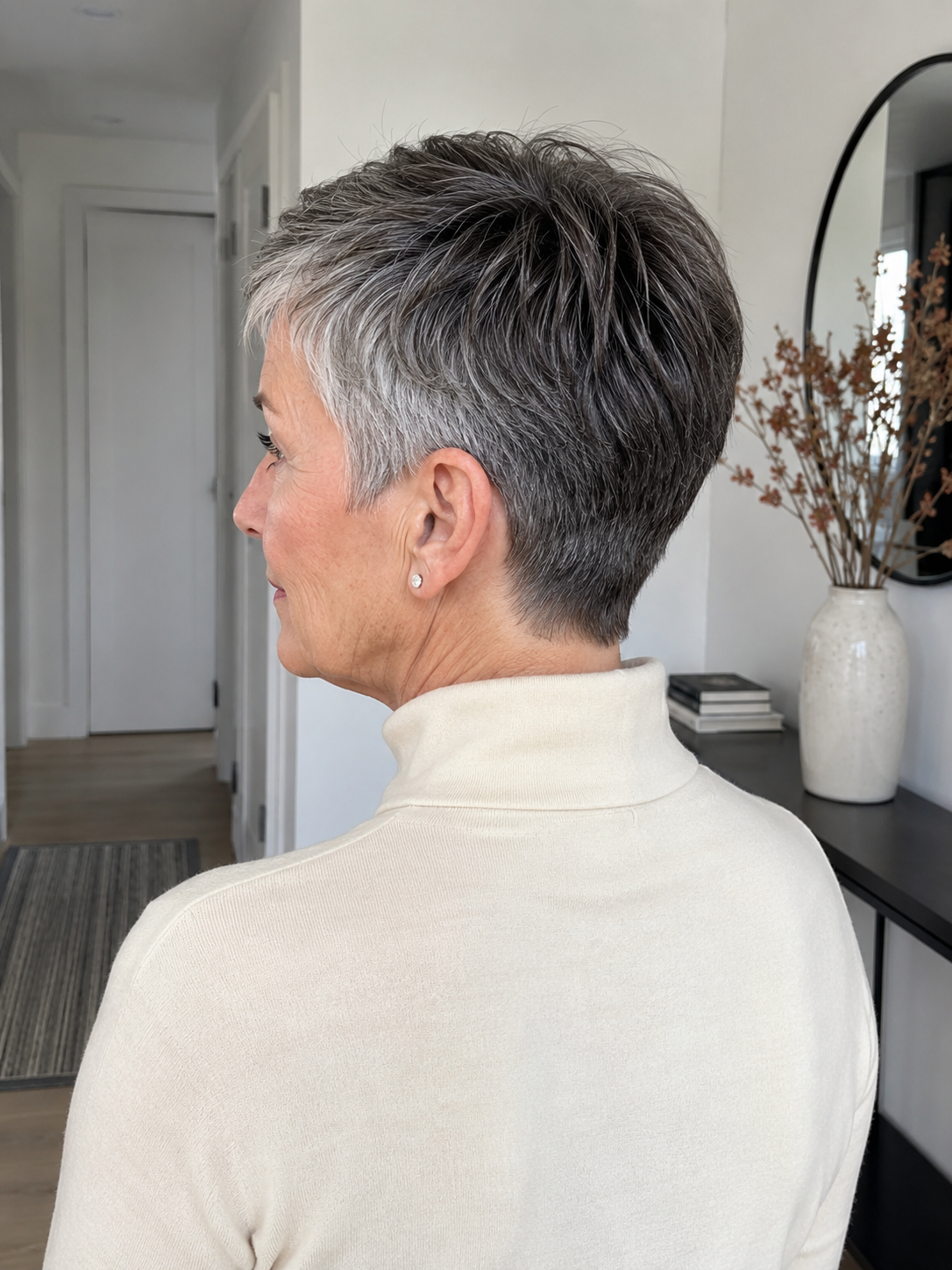
The back is where a pixie either looks sharp or looks overgrown. A close taper at the nape, blended up into slightly longer layers, keeps the neckline clean for weeks. On fine hair the taper also creates contrast, so the fuller top half looks fuller by comparison. Expect to book a trim every five weeks or so. Tapers grow out faster than the rest of the cut, and a boxy neckline is what gives an old haircut away.
Side-Swept Fringe Pixie
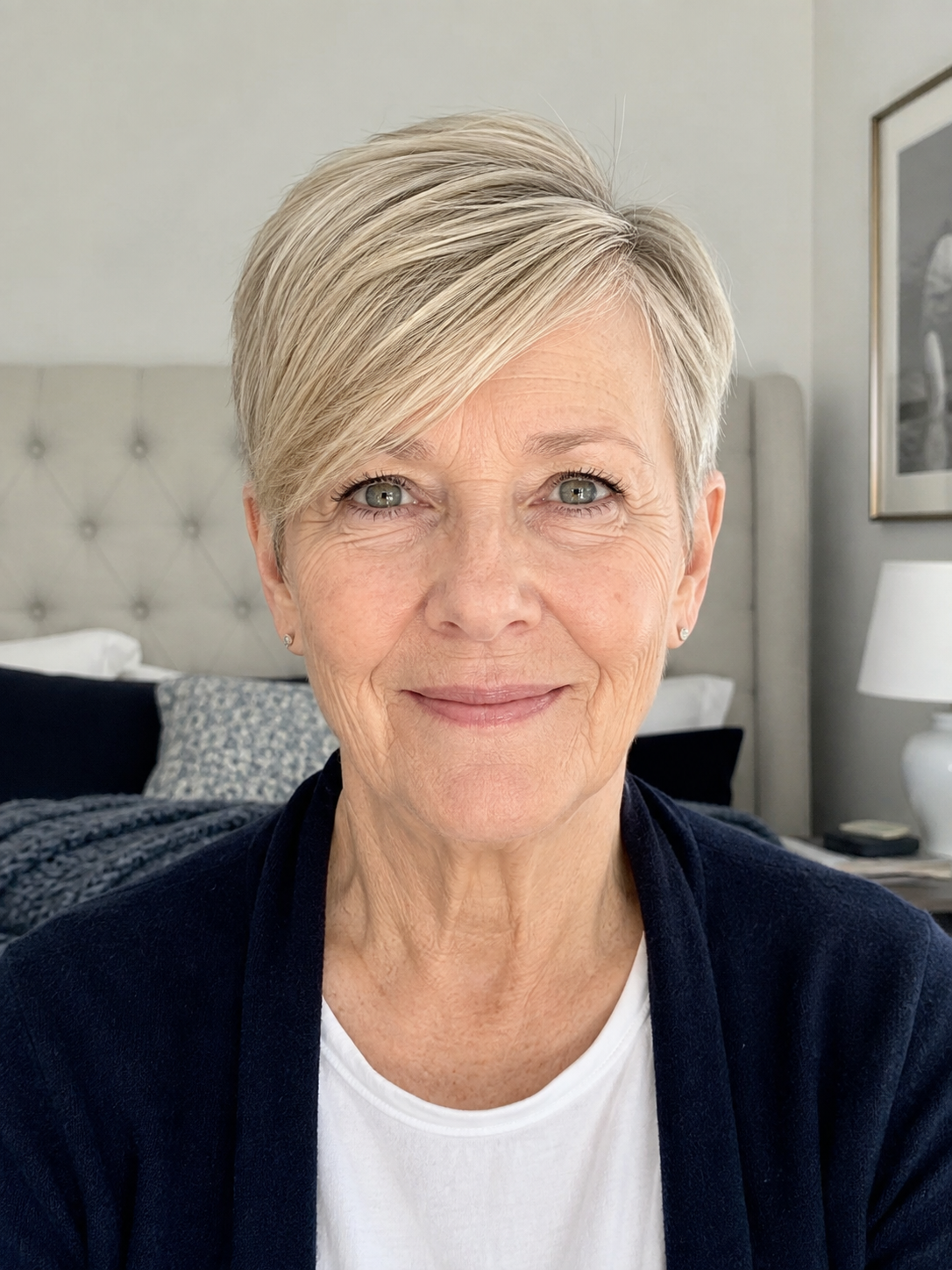
Sweeping the front across the forehead is one of the oldest tricks for fine hair, and it still holds up. Pushing hair to one side stacks strands over each other, which builds visible thickness through the front. Ask for the fringe long enough to reach the outer corner of the brow. A deep part on the opposite side lifts the root without any effort. Two minutes with a small round brush finishes it.
Micro Fringe Crop
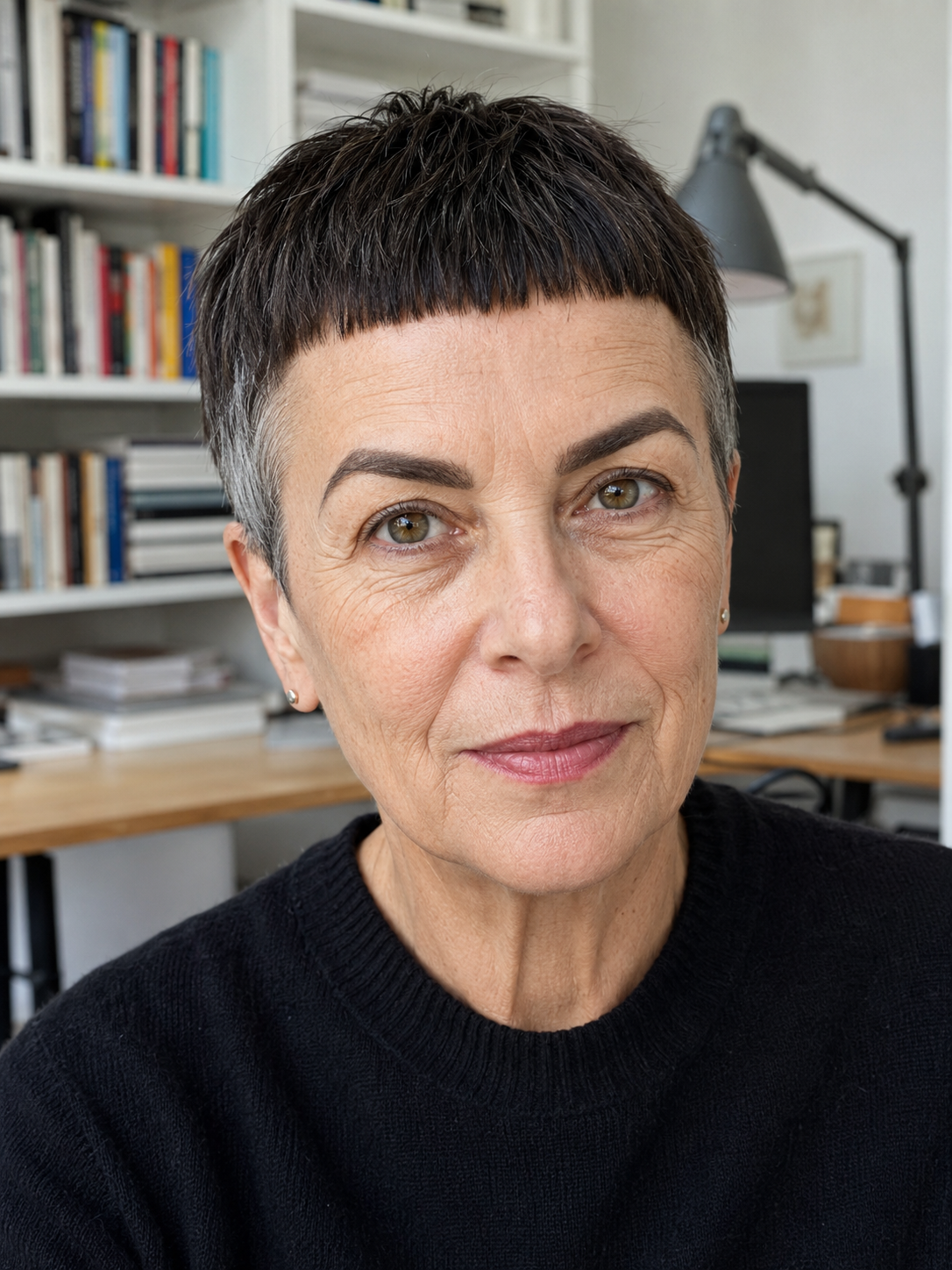
Baby bangs are having a real moment in salons right now, and they are quietly useful on thinning hair. A fringe that sits high on the forehead needs very little hair to look deliberate, so a sparse front hairline stops being the obstacle it is with heavier bangs. Cut it blunt for a graphic version, or slightly broken up for something softer. It suits strong brows and good bone structure.
Curtain Fringe Pixie
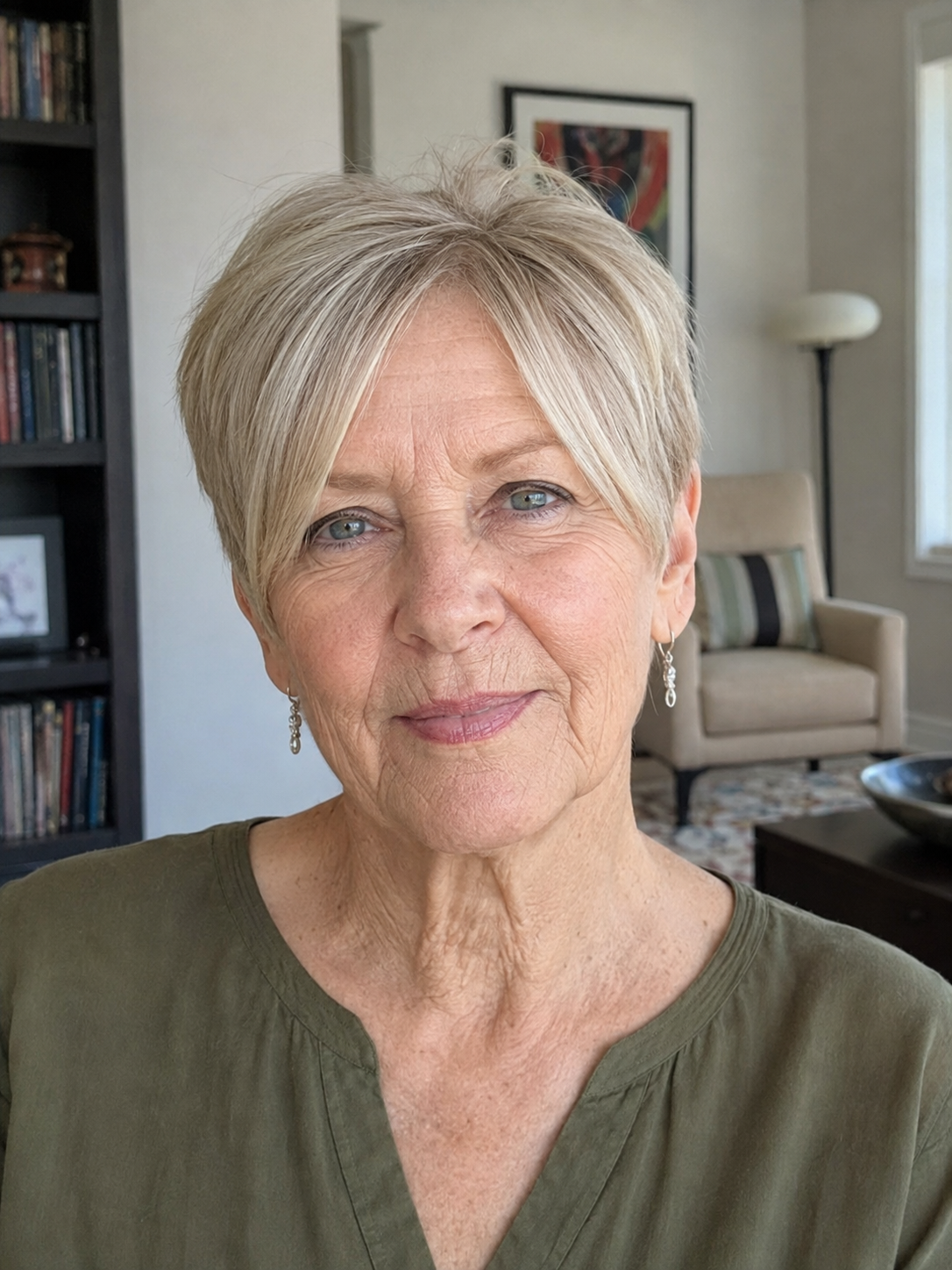
Not everyone wants hair sitting on their forehead. A curtain fringe splits the difference, parting softly just off center and falling to either side of the face. It covers the front hairline without committing to full bangs. On fine hair, keep those pieces slightly longer at the cheekbone so the ends do not look wispy. Air dry with a light cream and separate them with your fingers.
Cropped Cut With a Longer Nape
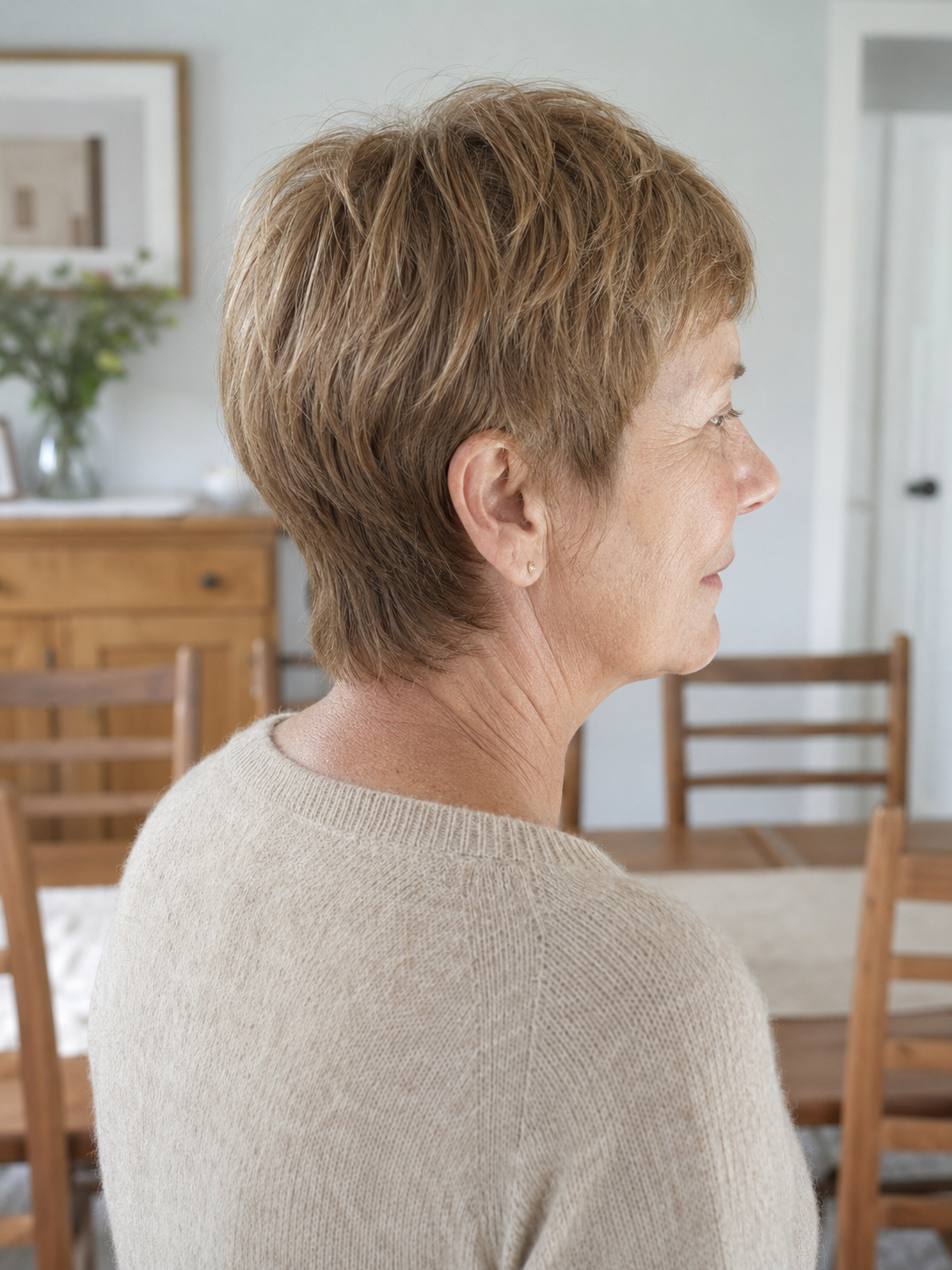
There is a version of this cut that sits between a crop and a bob, and it is still genuinely short. The top and sides stay pixie length. The nape is left a little longer, just brushing the top of the neck. That small amount of extra weight in the back gives the shape somewhere to travel and makes the whole cut look less severe. It also makes growing out a pixie far less awkward.
Asymmetrical Pixie
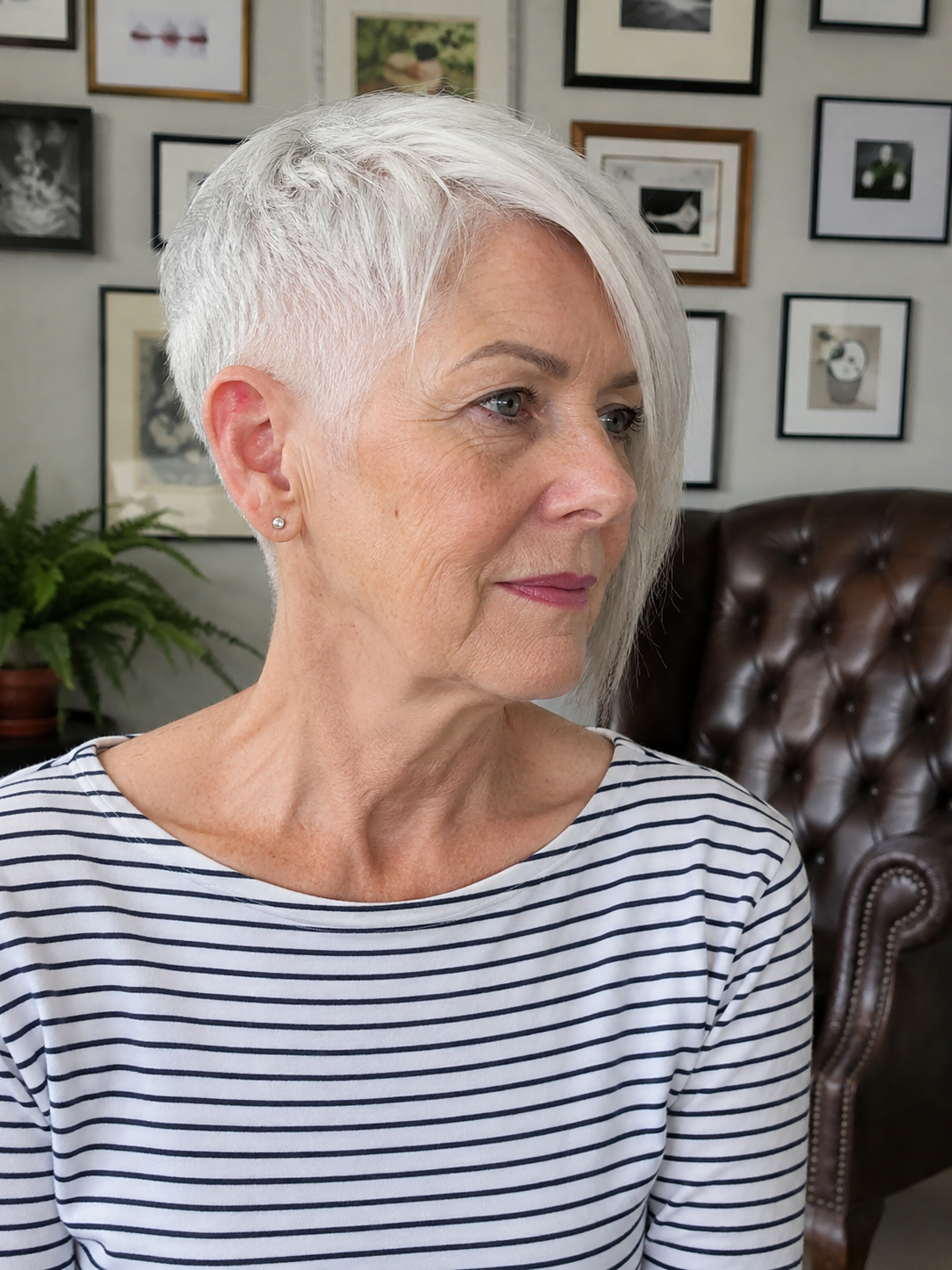
One side longer than the other creates a diagonal line across the face, and diagonal lines pull the eye sideways rather than down. Keep the shorter side tucked close behind the ear and let the longer side fall past the cheekbone. This works well if your hair is thinner on one side of the part, which is more common than most people expect. Ask for the difference to be obvious, not subtle.
Stacked Back Pixie
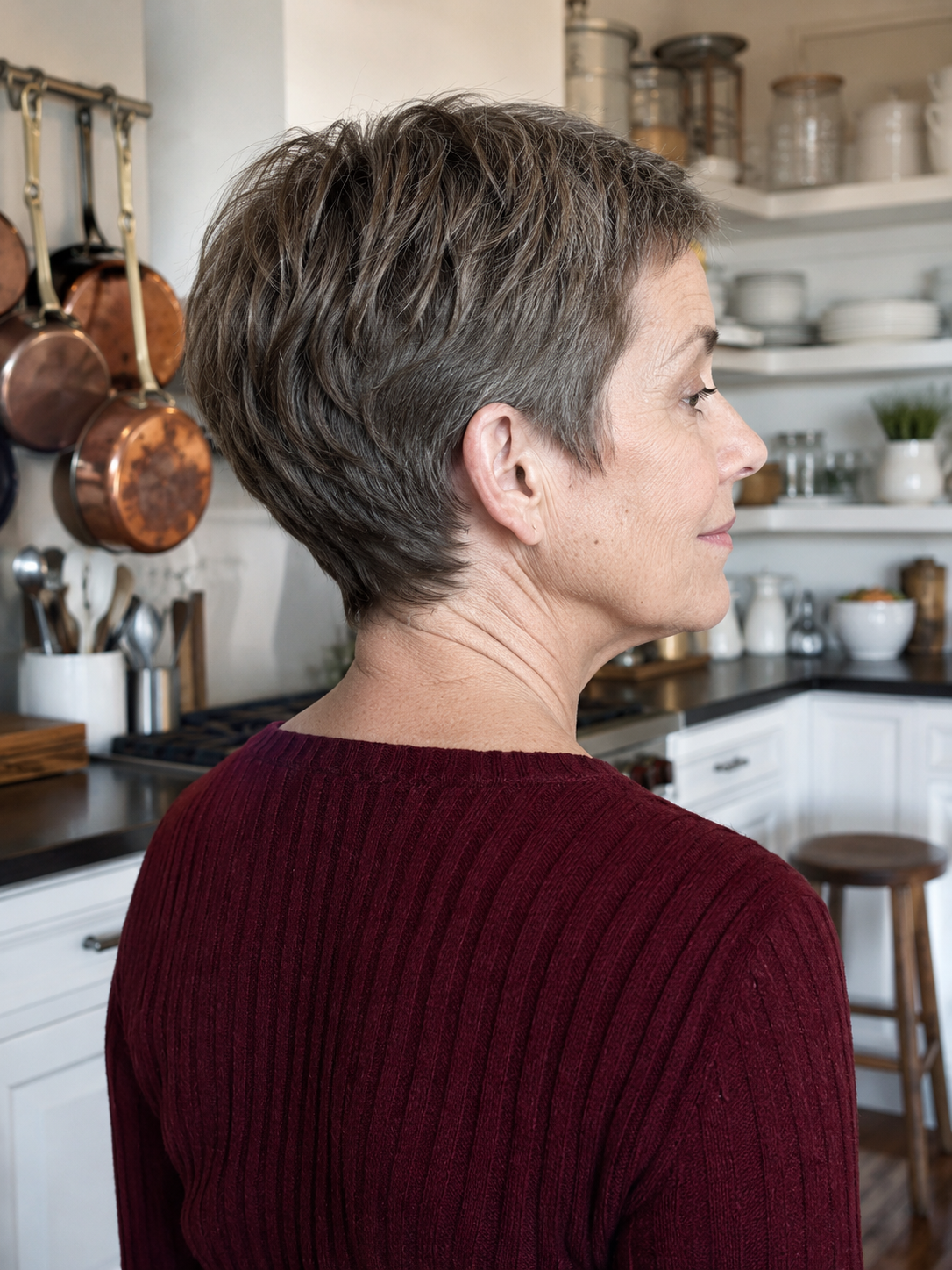
Stacking is a cutting technique where layers at the back are graduated so they build on top of each other. On fine hair, that stacked section over the occipital bone creates a small shelf of volume that lasts all day without product. The front stays soft. Seen from the side, the head shape looks fuller through the middle. Ask specifically for graduation in the back rather than uniform layers throughout.
Soft Weightless Crop
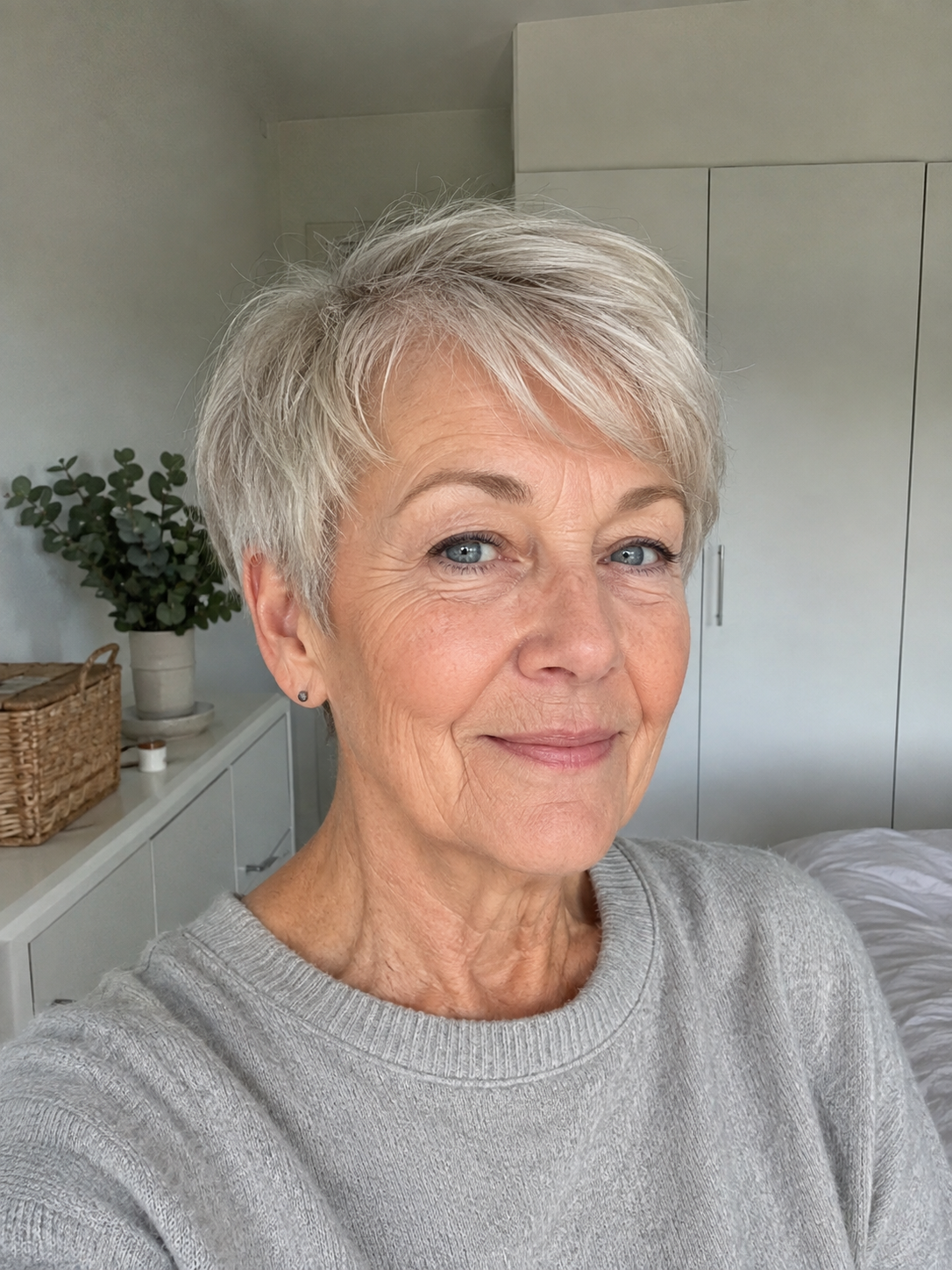
Salons are leaning toward crops with diffused edges this year, and the version for fine hair leaves the interior almost untouched. The shape comes from the outline, not from layering. Edges get softened with the very tips of the shears, on the last half inch only. Nothing is removed from the mid lengths at all. The result has natural lift at the front and takes about a minute to style.
Pixie With Longer Sides
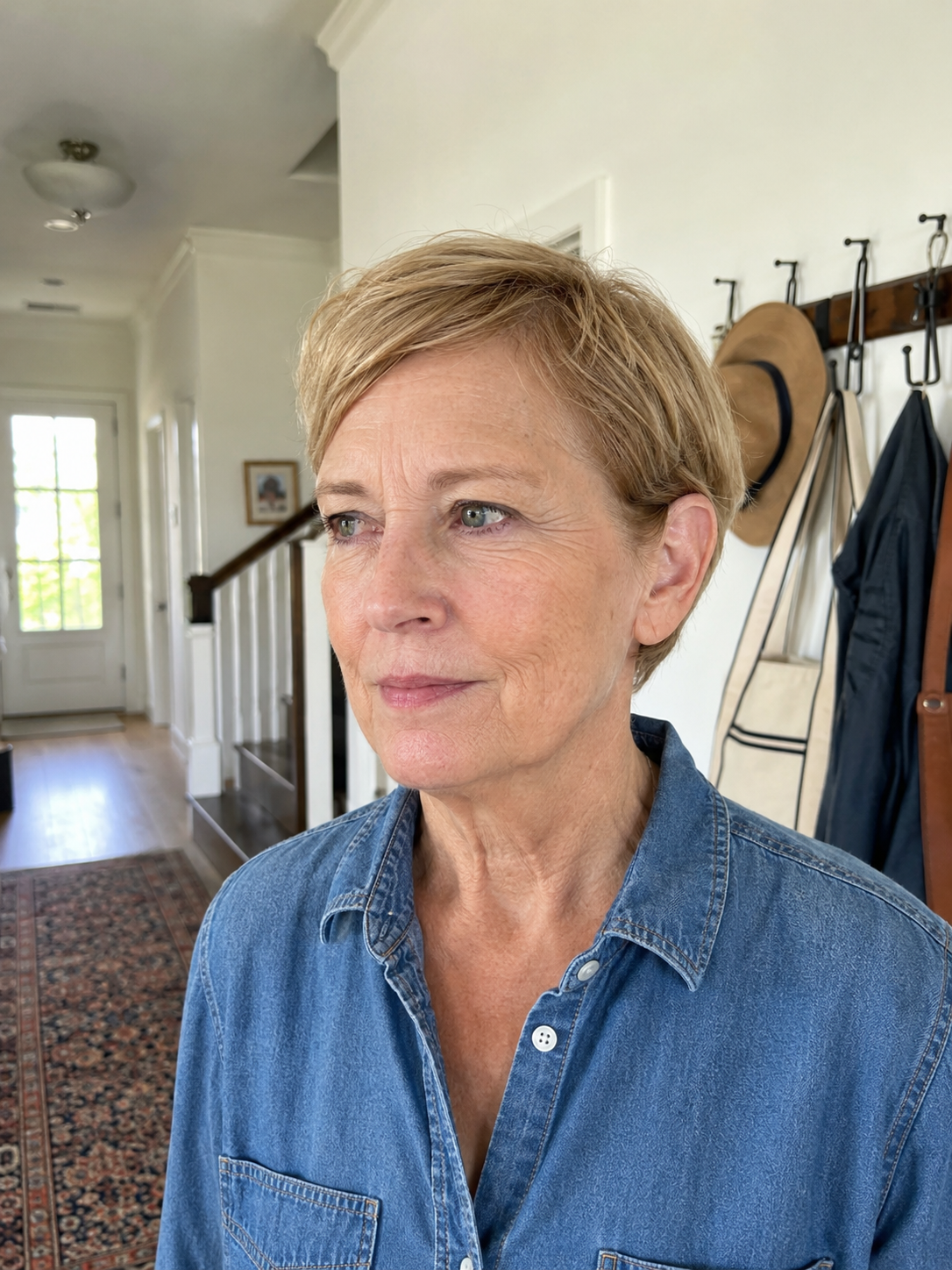
This one keeps the sides just long enough to tuck behind the ears and no longer. The back stays cropped and tapered, so the cut is still short overall, but the front gives you more to work with. It is a sensible entry point if you have never gone this short before. It also gives you two looks, tucked back for a cleaner shape or brought forward around the face.
Tapered Crop for Fine Coils
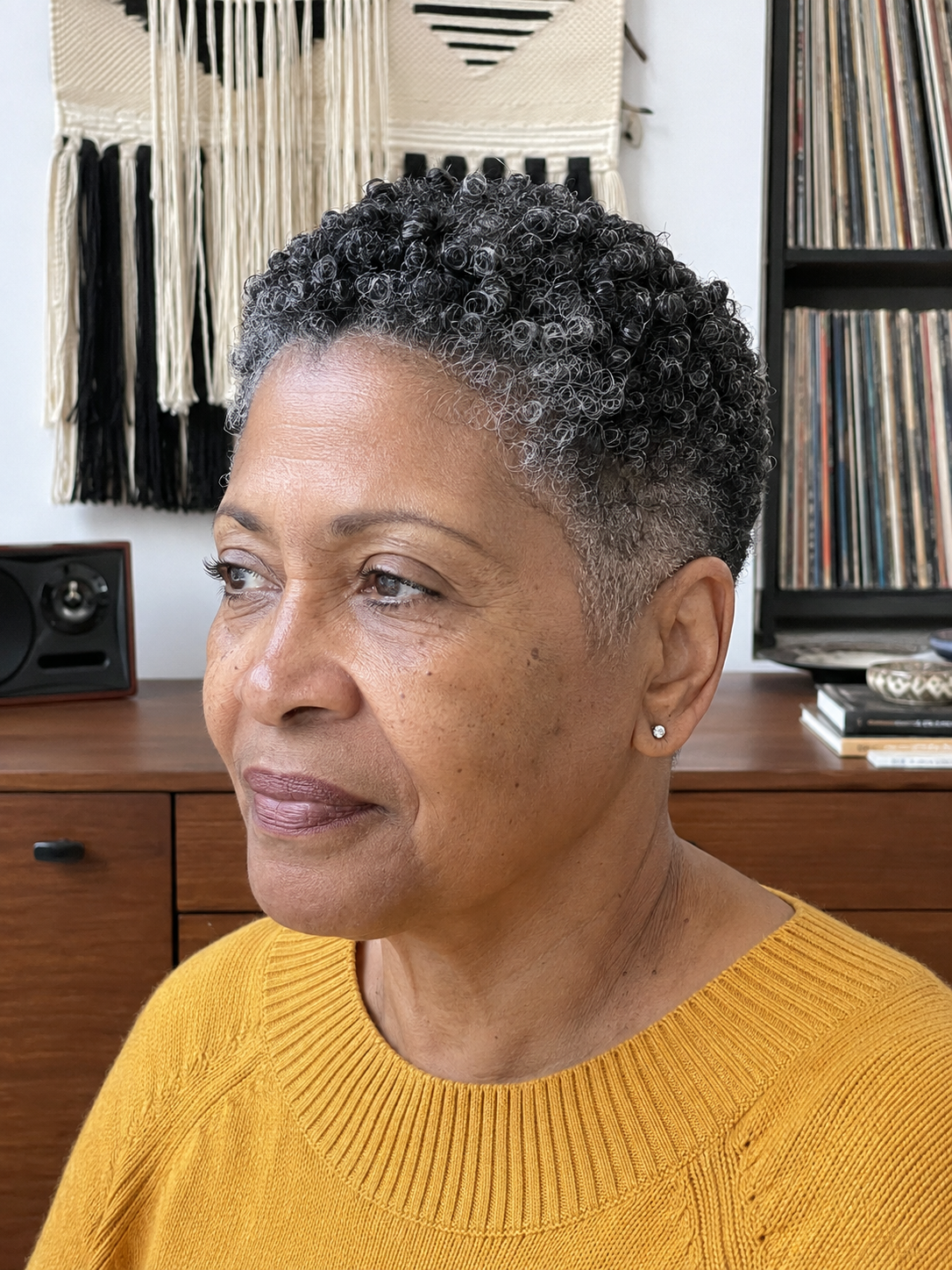
Fine hair is not always straight, and fine coily hair benefits from going short more than almost any other texture. A tapered crop with a rounded shape through the top lets the coil pattern sit up instead of stretching down under its own weight. Keep the sides and nape tapered close. Use a light curl cream rather than a heavy butter, since weight is the problem here. Shrinkage works in your favor for once.
Feathered Pixie Brushed Forward
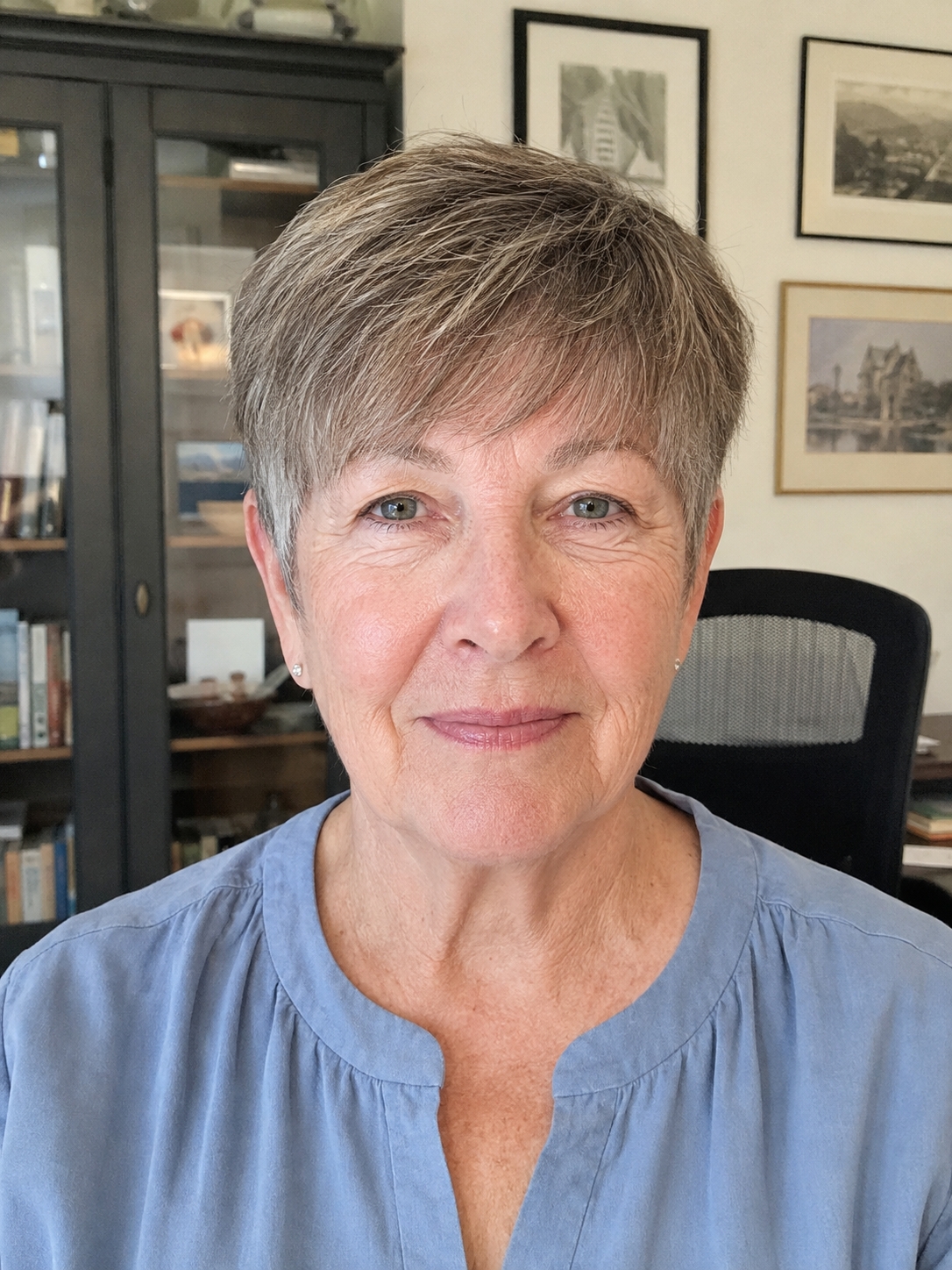
Brushing everything toward the face instead of back changes the whole cut. The layers overlap as they travel forward, which builds depth through the top, and the ends land softly around the temples. It is a flattering direction if your hairline has receded slightly at the corners, which happens to a lot of women and gets talked about far too rarely. A little pomade warmed between the palms keeps the pieces separated without stiffness.
Deep Side Part Pixie
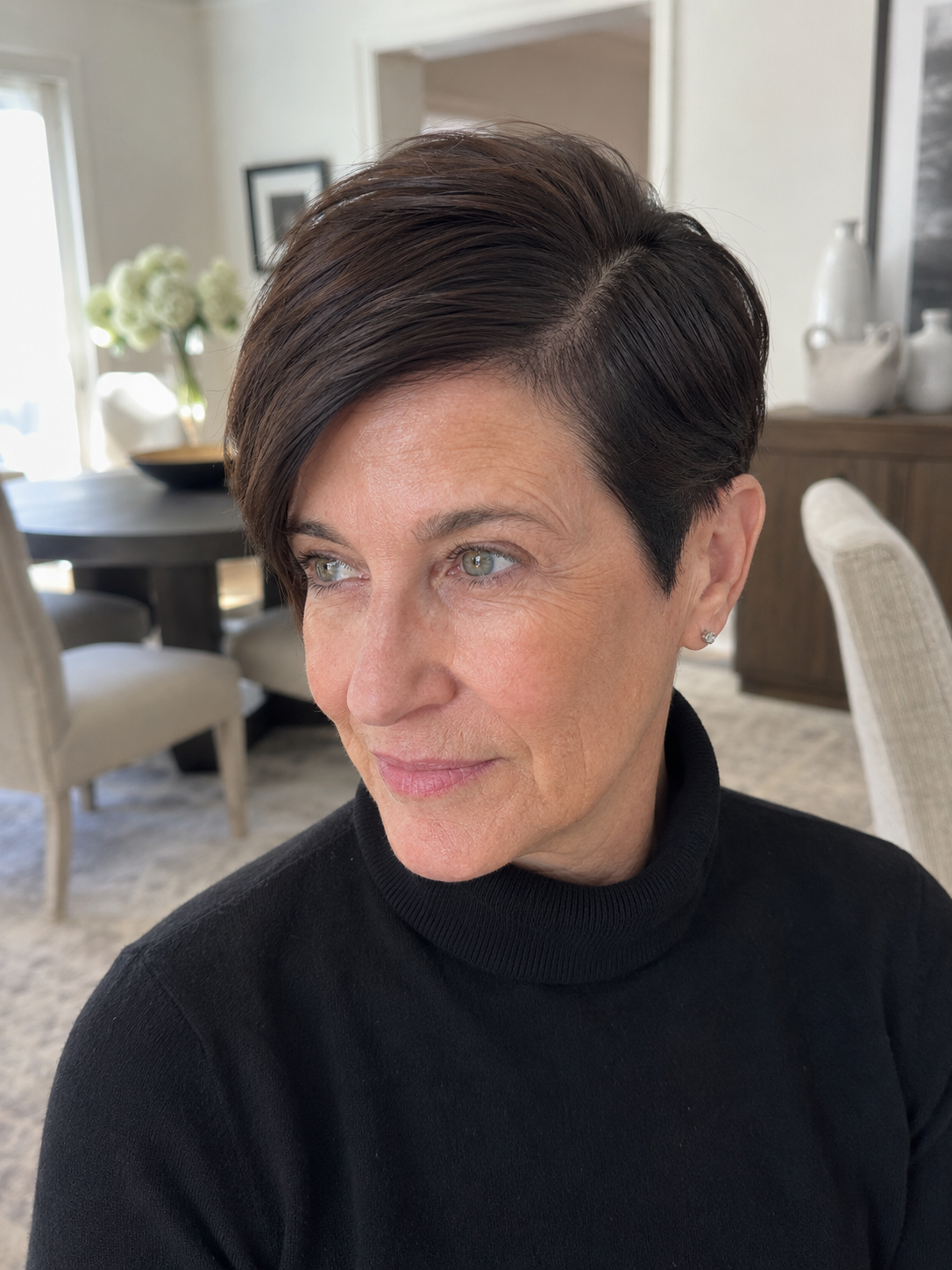
Where the part sits matters more than most people realize on thin hair. Moving it further over pushes a larger section across the top of the head, so the fuller side covers the sparser one. It also lifts the root on the heavier side automatically. If you have parted your hair in the same place for forty years, that line is almost certainly your thinnest spot. Move it two inches and see what happens.
Silver Blended Pixie
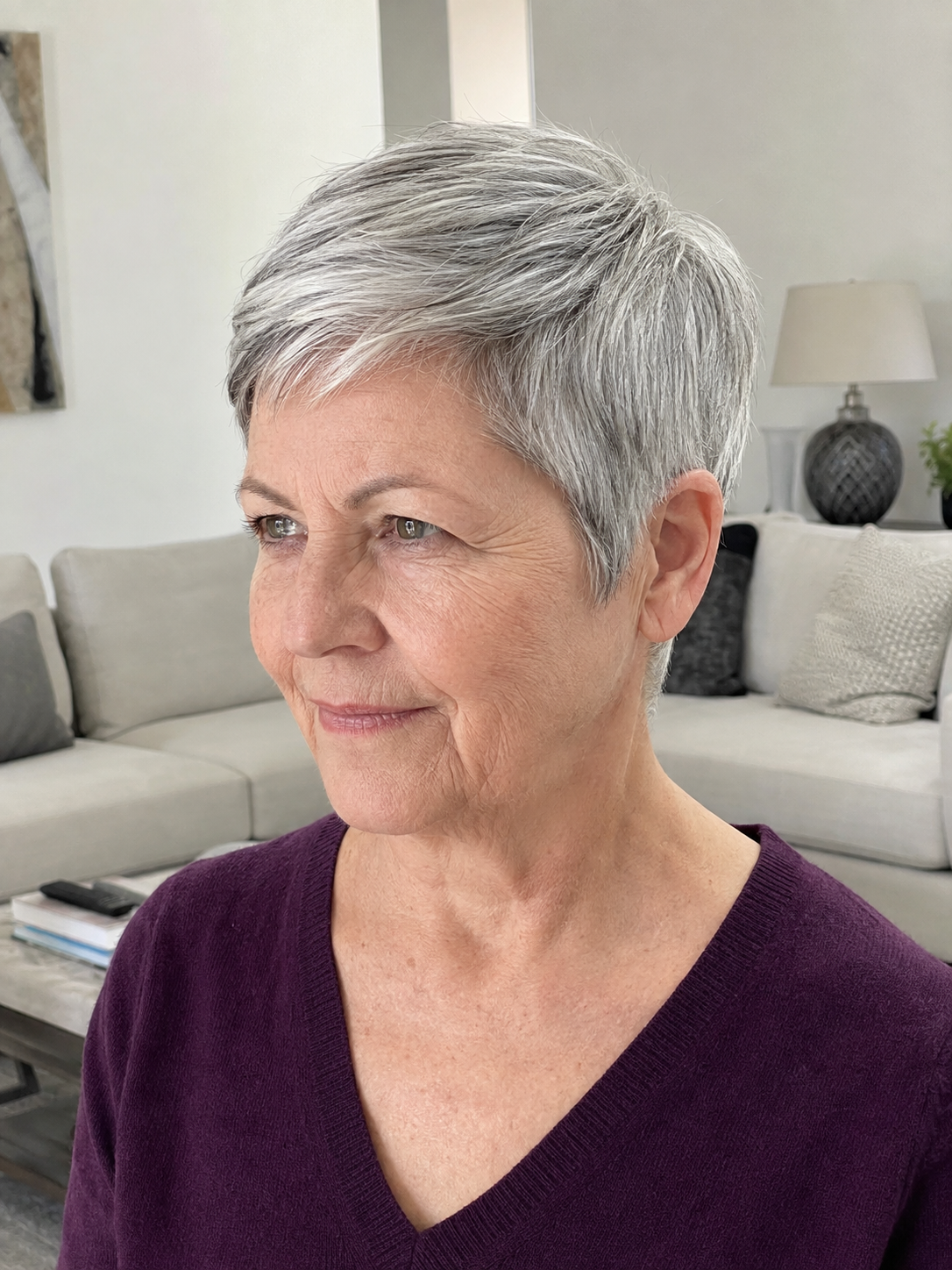
Going fully natural gray on a short cut is the lowest maintenance color decision available, though flat silver can look a little one dimensional. A few softer and slightly deeper pieces woven around the part and crown break up the uniformity and add depth. A clear or lightly toned gloss every couple of months restores shine, which gray hair loses as the scalp produces less oil with age. Best of all, no regrowth line to manage.
Root Shadowed Pixie
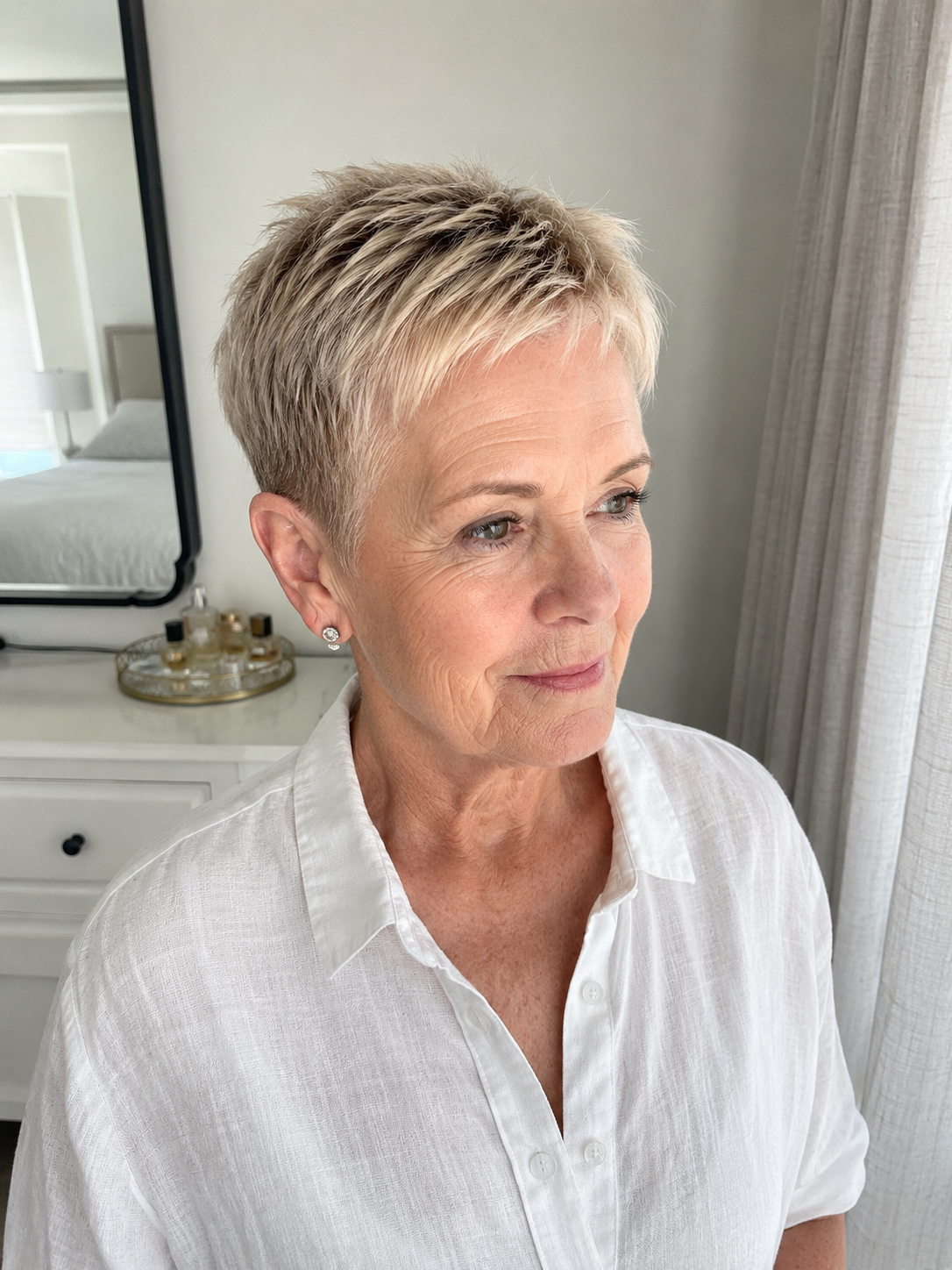
A shadow at the root is a colorist’s answer to scalp visibility. Depositing a slightly deeper tone at the base makes the scalp less noticeable through fine hair, and the darker root pushes the lighter lengths forward visually. On a pixie the effect is strong, simply because there is so little hair to work with. It also softens the regrowth line, which buys you a few extra weeks between color appointments.
Babylight Blended Pixie
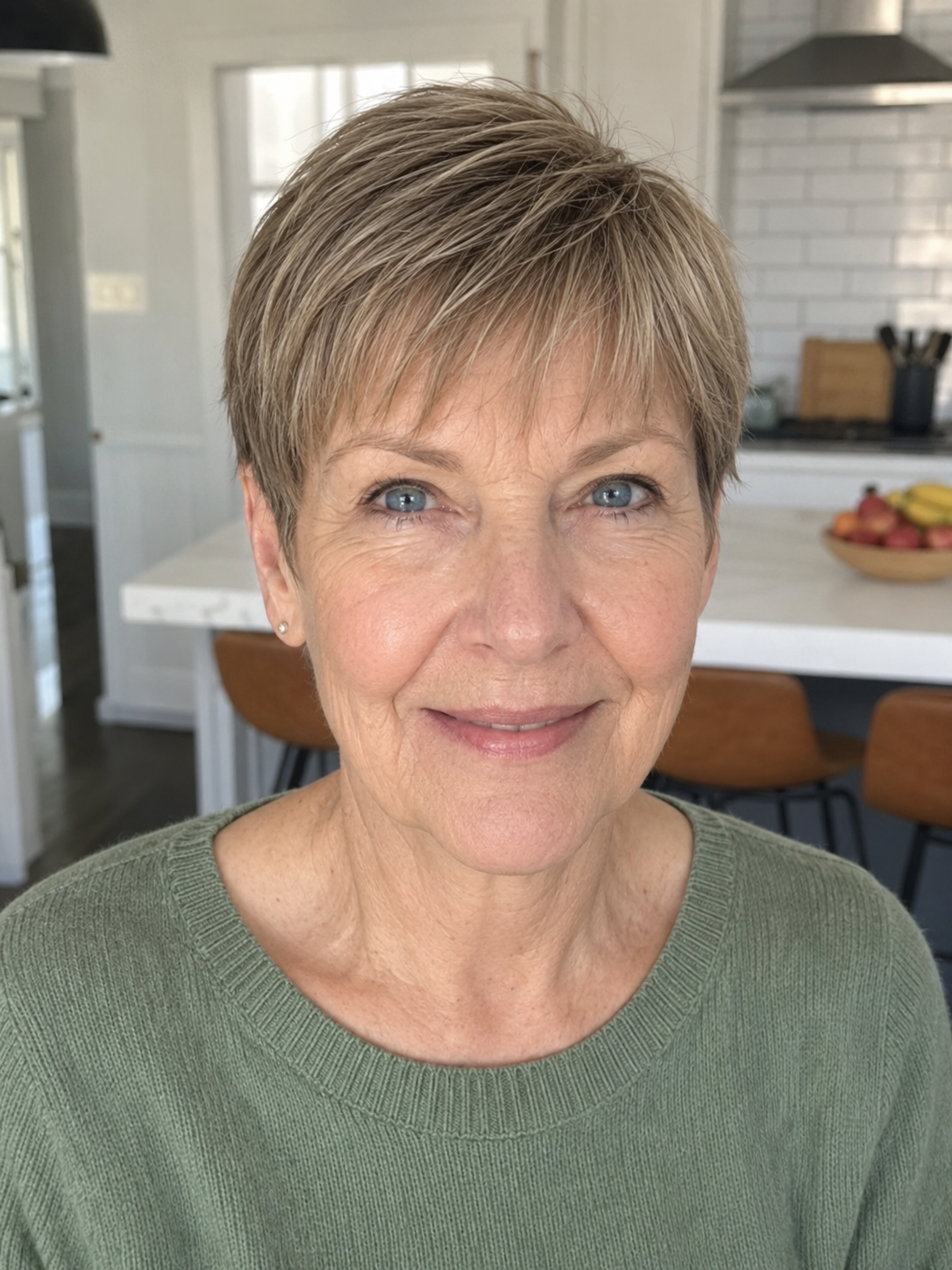
Very fine highlights placed close together do something specific for thin hair. Each pale strand catches light against a slightly deeper base, and the eye counts that contrast as density. Keep them micro fine. Chunky highlights do the opposite and create visible gaps. Ask for a demi permanent toner rather than a strong lift, since fine hair in your sixties is more fragile than it looks and breakage on a crop has nowhere to hide.
Icy Platinum Crop
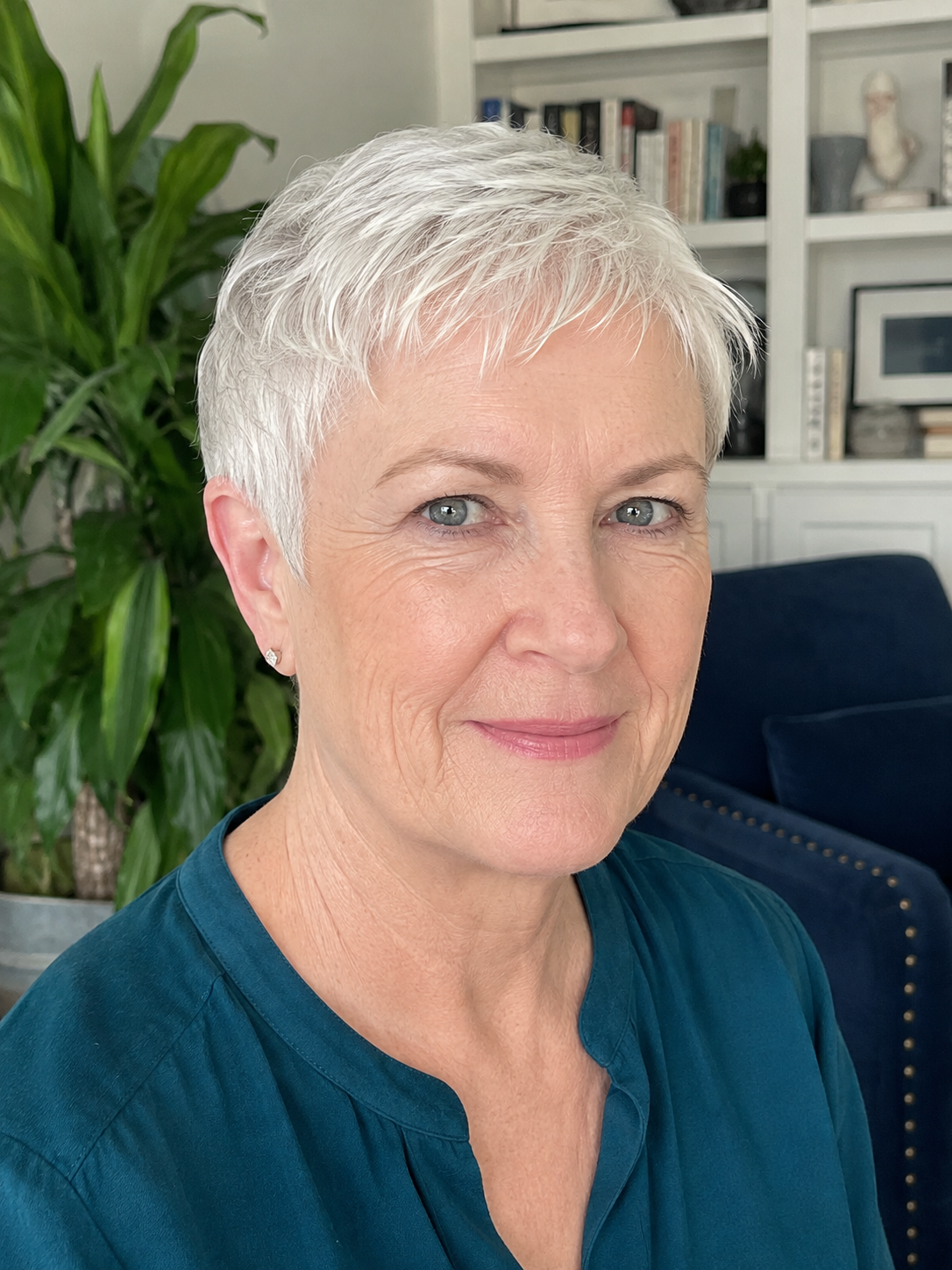
Full platinum on a crop is striking, and it is a genuine commitment. Fine hair lifts quickly, which helps, but it also breaks more easily, and going that light means toning every four to six weeks to keep yellow tones at bay. On hair this short there is nowhere for regrowth to disappear. If your natural color is already mostly white, though, you are most of the way there and the upkeep drops considerably.
One last thing worth saying. If your hair has thinned noticeably in the past year, or it is coming out in patches rather than evenly, mention it to your doctor before you book the appointment. Gradual thinning after menopause is ordinary and expected. A sudden change usually has a cause worth finding.