The quickest tell of thin hair is see-through ends, where the hair tapers to wispy points that let light through. A blunt or softly point-cut edge fixes that fast, giving every strand a defined stopping point so the ends look solid. Short cuts do this better than long ones, since a shorter length carries less weight and holds lift at the roots. The other half of the trick is building height at the crown, where fine hair sits flattest. Get those two things right and you need barely any product. Every cut here is chosen for one job, making fine hair look like there is more of it.
Blunt Chin-Length Bob
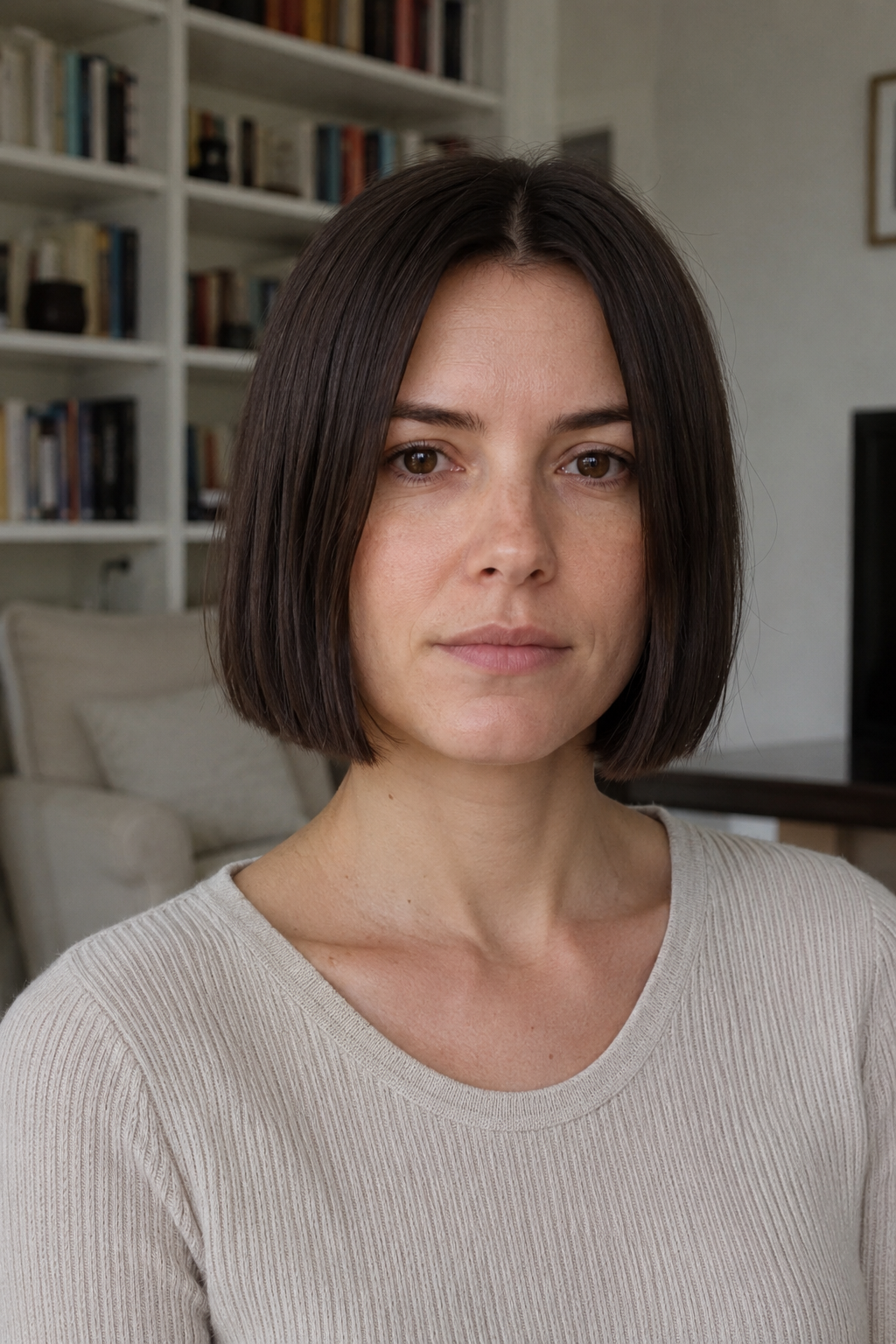
Cut to one length at the chin, this bob puts every strand at the same stopping point, so the bottom edge looks solid and dense. Fine hair looks fullest with a strong, blunt perimeter and no thinning inside. Tell your stylist to leave the weight in and skip the texturizing shears. Round-brush the ends under with a cool shot to seal them. Since blunt lines show grow-out, trim every five to six weeks.
Stacked Bob

Volume at the crown is where fine hair struggles most, and a stacked bob builds it in with graduated layers at the back. The stacking lifts the back while the front stays clean and sharp. Ask to keep the graduation below the occipital bone so the height lands where you need it. Dry the back roots up and out over a round brush. A quick mist of root spray sets the lift for the day.
A-Line Bob
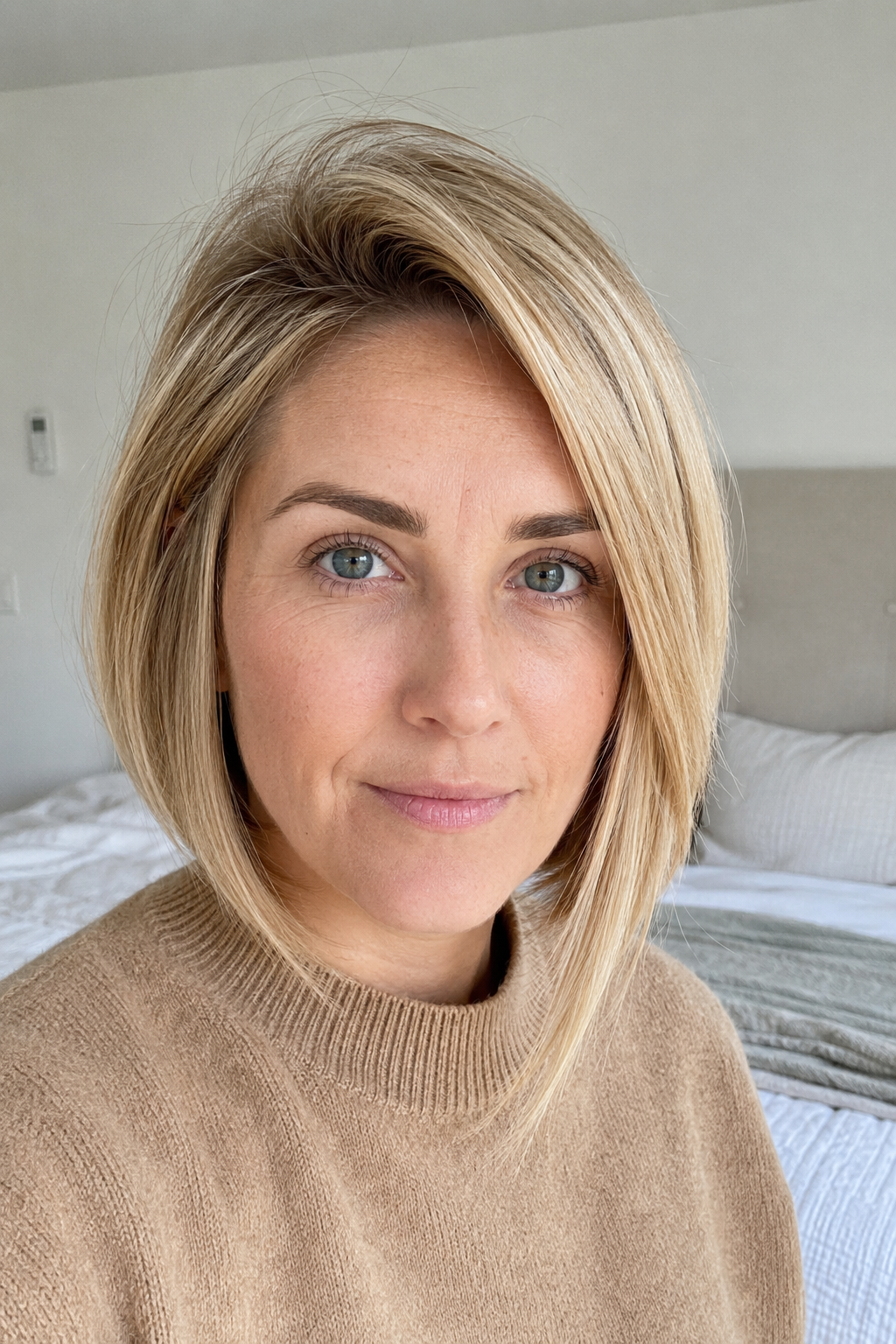
Angled longer at the front and shorter at the back, an A-line keeps a firm forward edge while the back stays light. That front length draws a clean line along the jaw. Part your hair deep on one side to push extra height at the roots. Dry with your head tipped down to build lift before you flip it back. The gentle angle grows out softly, so you can wait seven to eight weeks between trims.
Inverted Bob

For stronger back volume, the inverted bob stacks the nape tight and leaves longer pieces at the front. The tight graduation forces lift through the crown while the front falls smooth and straight. Aim the dryer up at the back roots as you style to lock the height. Keep the front pieces sleek with a flat iron for contrast. The sharp stacked shape softens as it grows, so book a reshape around six weeks.
French Bob

Short and rounded, the French bob sits between the cheekbone and chin with softly point-cut ends. At that length, fine hair holds its shape all day without dropping flat by afternoon. Scrunch a small amount of light mousse into damp hair and nothing more. A little fringe across the brows pulls the eye upward and frames the face. The rounded ends give a fuller look from the side, where thin hair often shows.
Textured Point-Cut Bob
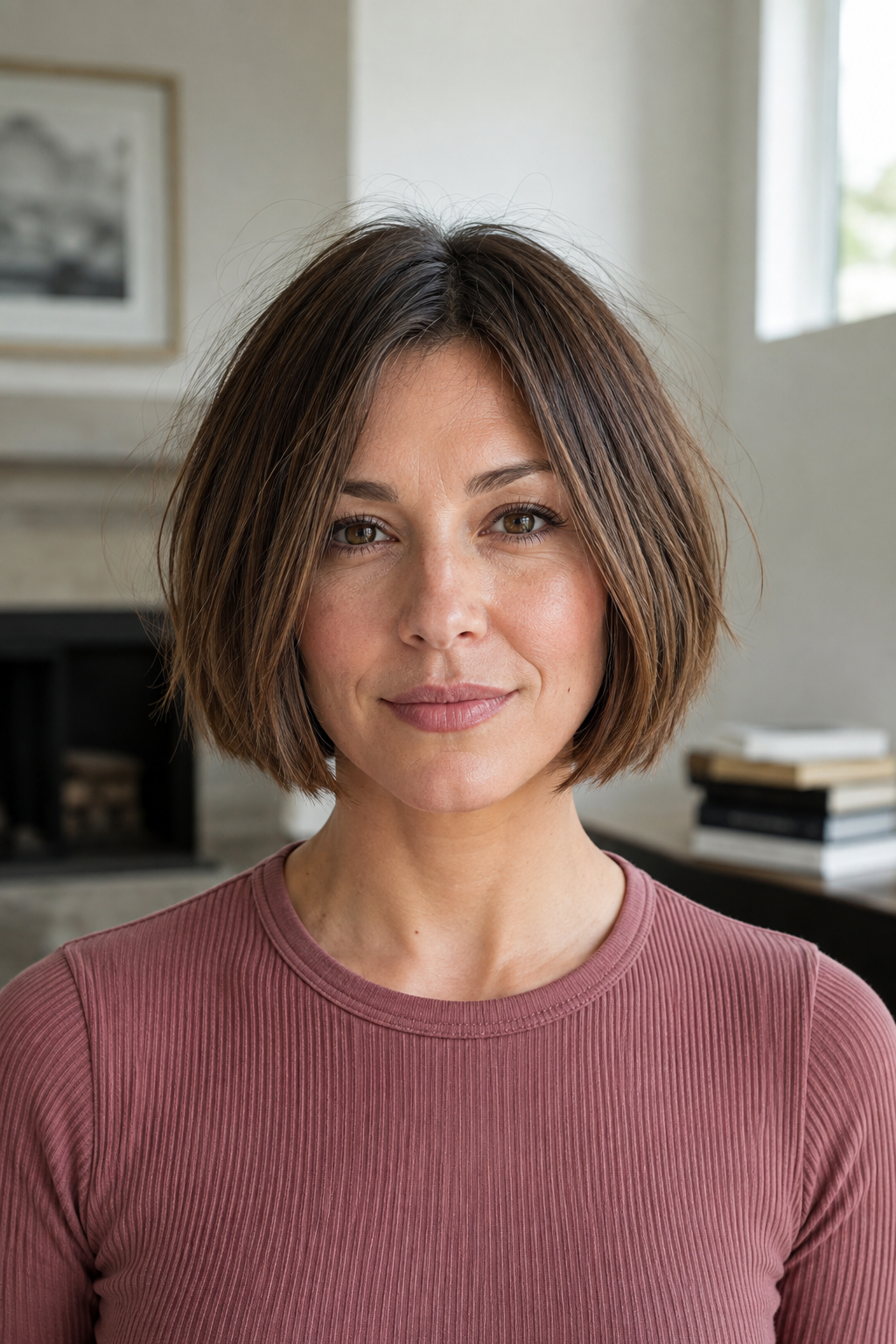
Point-cut ends add gentle movement to a chin bob without stripping density the way razoring does. The soft, piece-y tips keep the shape from looking blunt or heavy while staying full. Ask for point-cutting only, not heavy internal layers that thin fine hair out. Work a dry texture spray through the middle and scrunch with your hands. Between washes, lift the roots with a little dry shampoo to keep it from falling flat.
Wavy Bob
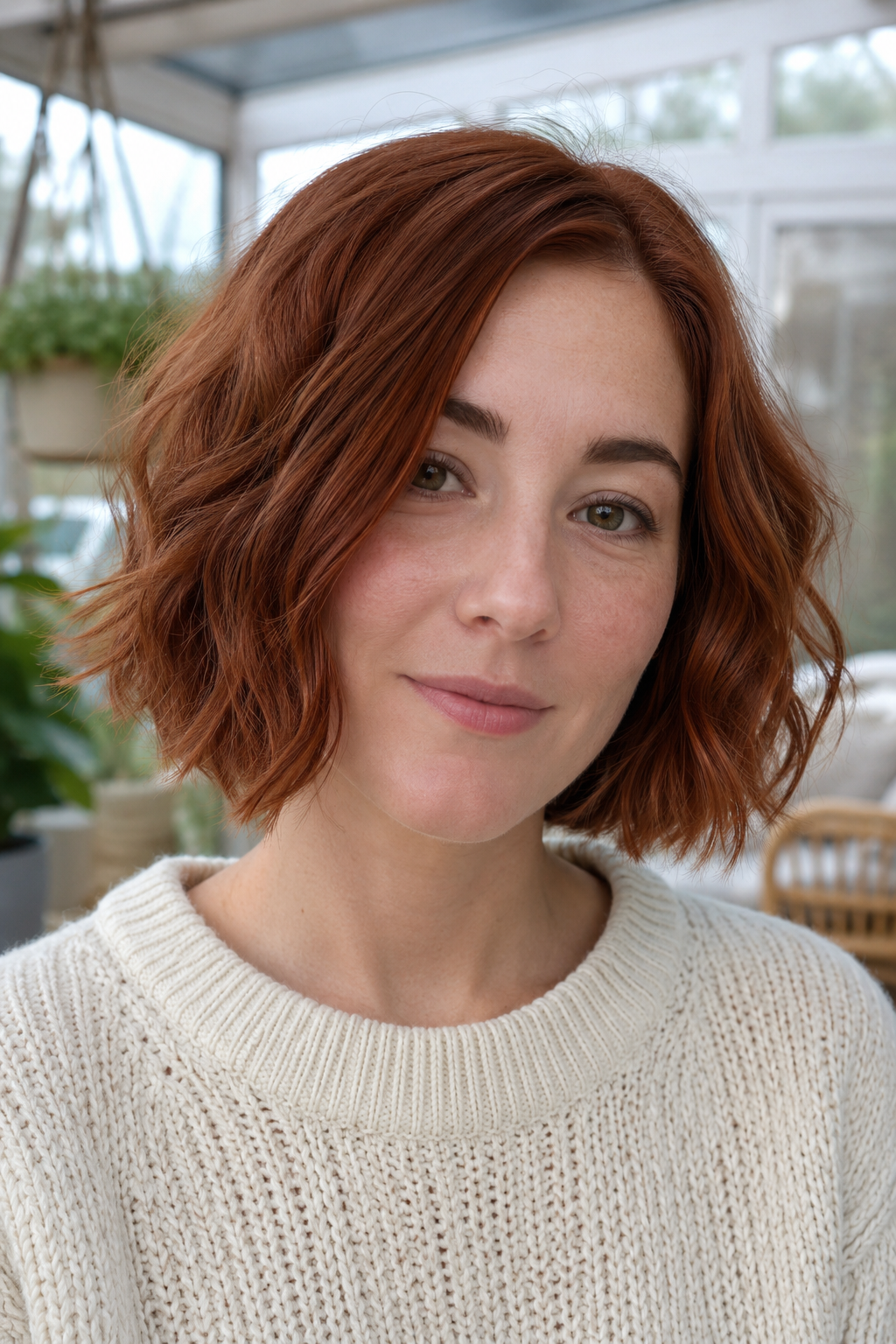
Bending a chin bob into soft waves puffs the shape wider and fills in any flat spots. Waves give fine straight hair the body it lacks on its own. Use a one-inch iron and switch the wave direction each section for a natural fall. Rake the waves apart with your fingers so they stay loose, never stiff. A light salt mist holds the texture, while heavy creams only drag it down.
Bob with Blunt Bangs

A heavy, straight-across fringe gives fine hair a second dense edge at the top of the face, pulling attention up and off a flat crown. Paired with a blunt bob, it stacks fullness where it counts most. Blow the bangs side to side while damp so they sit flat and full. Trim them every couple of weeks, since a fringe grows into your eyes fast. A drop of light oil smooths any flyaways.
Bob with Curtain Bangs

Split down the middle and swept back in a soft C-shape, curtain bangs blend into the length and give the front real body. They frame the face without the hard line of a blunt fringe, which suits fine hair. Dry them first, before the rest of your hair flattens. Round-brush each side away from the center for lift. Keep them long enough to tuck behind your ears on the days you want them out of the way.
Classic Short Pixie

Sharp lines make sparse hair look structured instead of limp, which is why the pixie stays a fine-hair staple. Close-cropped sides and a slightly longer top give shape with no bulk. Ask your stylist to leave enough length up top to sweep and lift. Massage root-lift spray into the crown and tousle with your fingers as it dries. A matte paste adds separation without any weight. Trims every four weeks keep the edges crisp.
Long Pixie
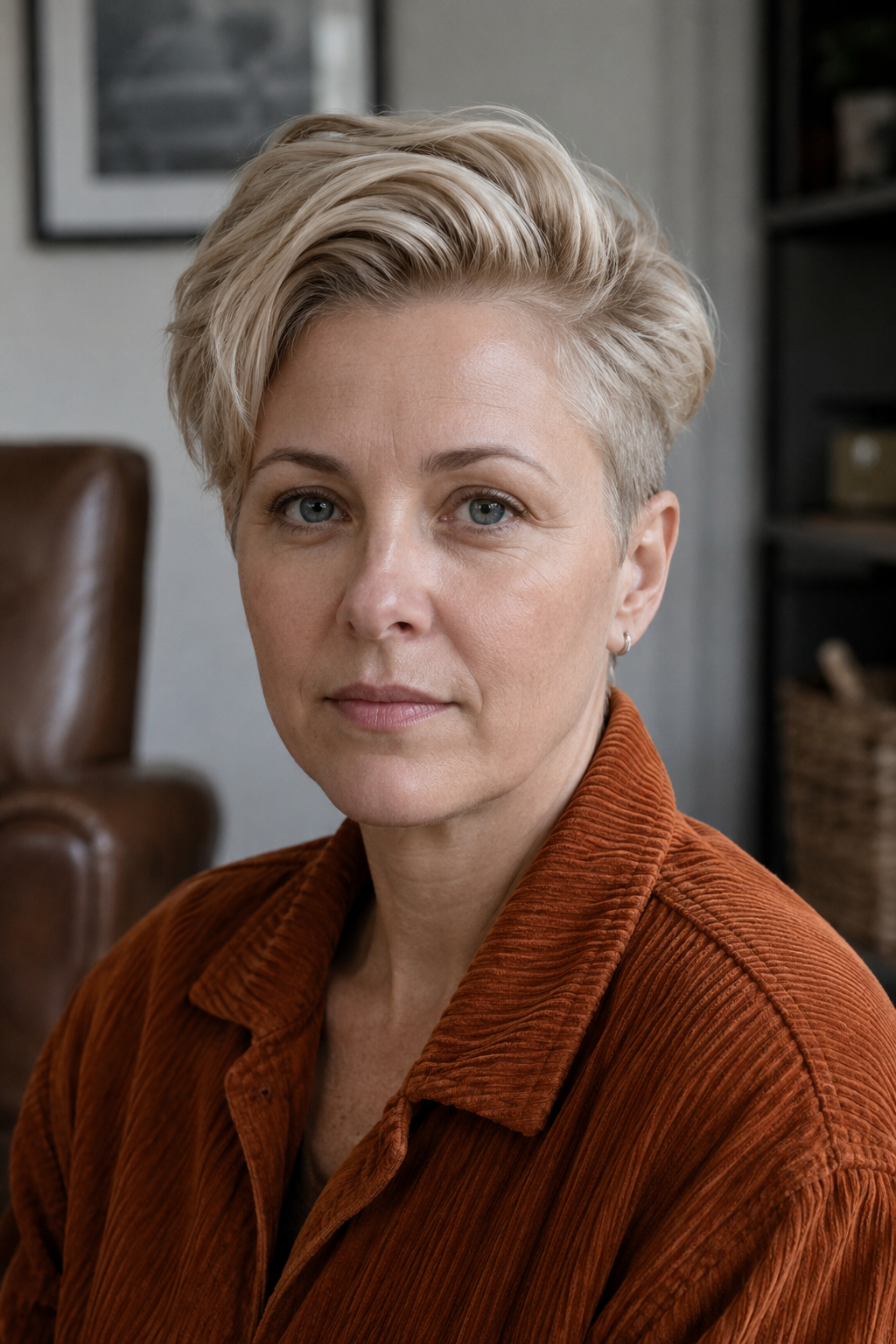
Want a pixie with more to work with? The long pixie leaves extra length on top to sweep, spike, or smooth however you like. Those longer crown pieces give you height that fine hair cannot hold on its own. Push the top up and forward with a little clay on dry hair. Keep the sides tapered close so the top looks fuller beside them. It grows out gently, so trims stay forgiving.
Piecey Textured Pixie
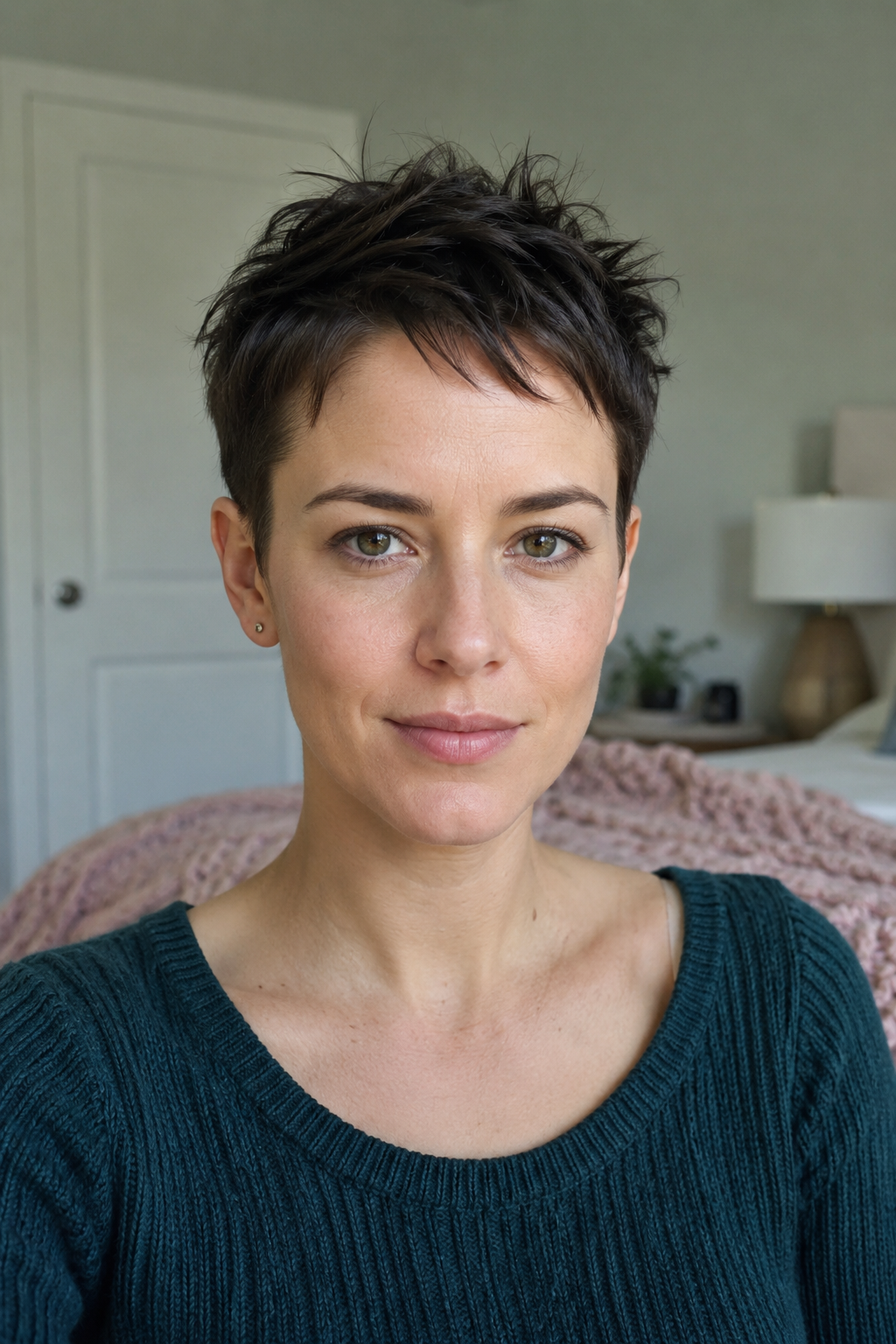
Choppy, separated pieces on top catch the light and look far fuller than a smooth crop. That broken texture is the whole trick for fine hair, faking density piece by piece. Rub a matte clay through dry hair and pinch sections upward. Ask for a razored or point-cut top to get the piecey finish. Keep the nape and sides short and neat underneath. You can restyle it in seconds with just your fingers and more clay.
Pixie with Side-Swept Fringe
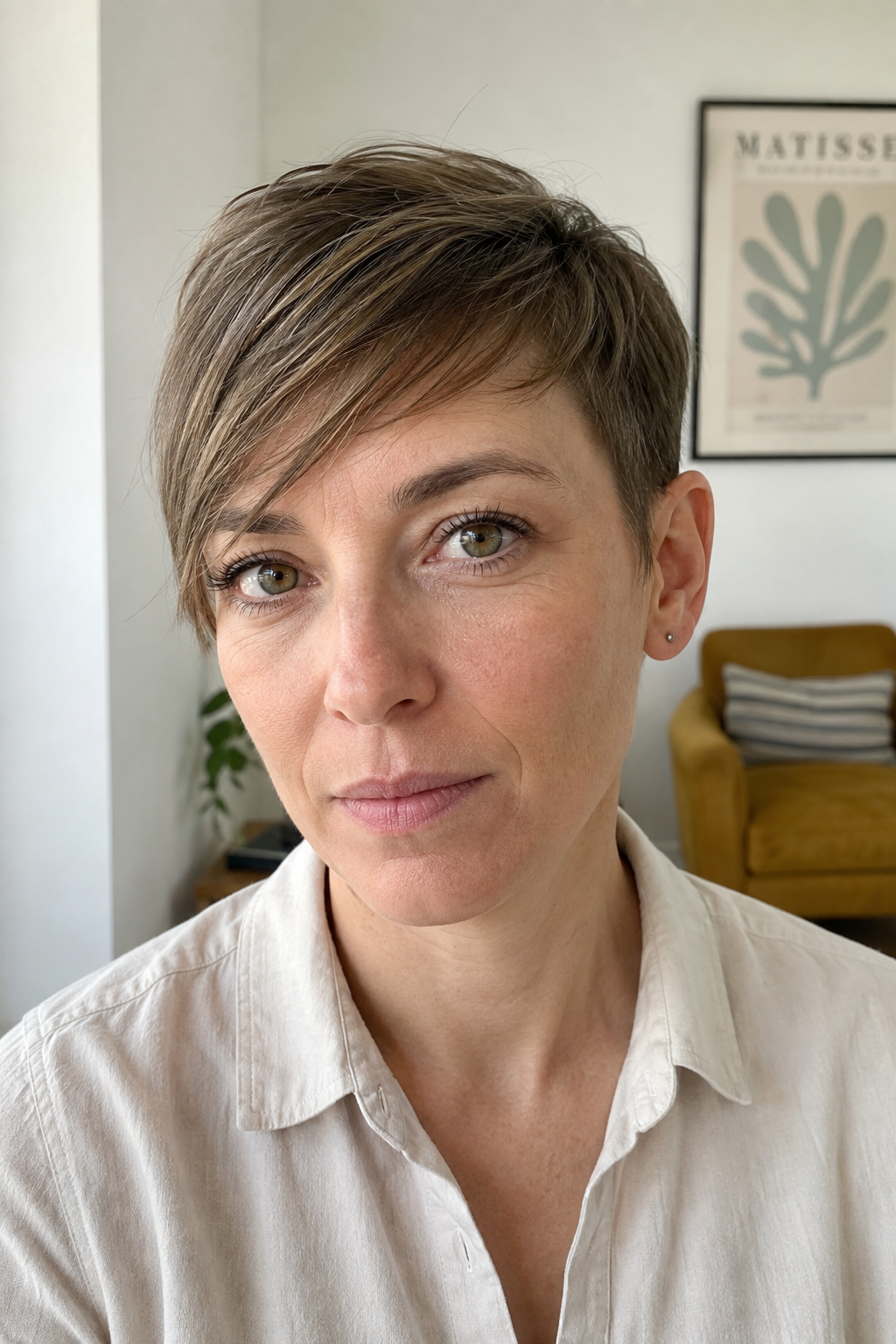
Sweep a long fringe across the forehead and fine hair gains weight and direction right where it counts. The swept piece softens the face and hides a sparse hairline up front. Dry the fringe sideways with a flat brush to set the sweep. Keep the opposite side cropped short and clean for contrast. A dab of pomade holds the sweep without looking greasy. Trim the fringe often so it stays out of your eyes.
Pixie with an Undercut
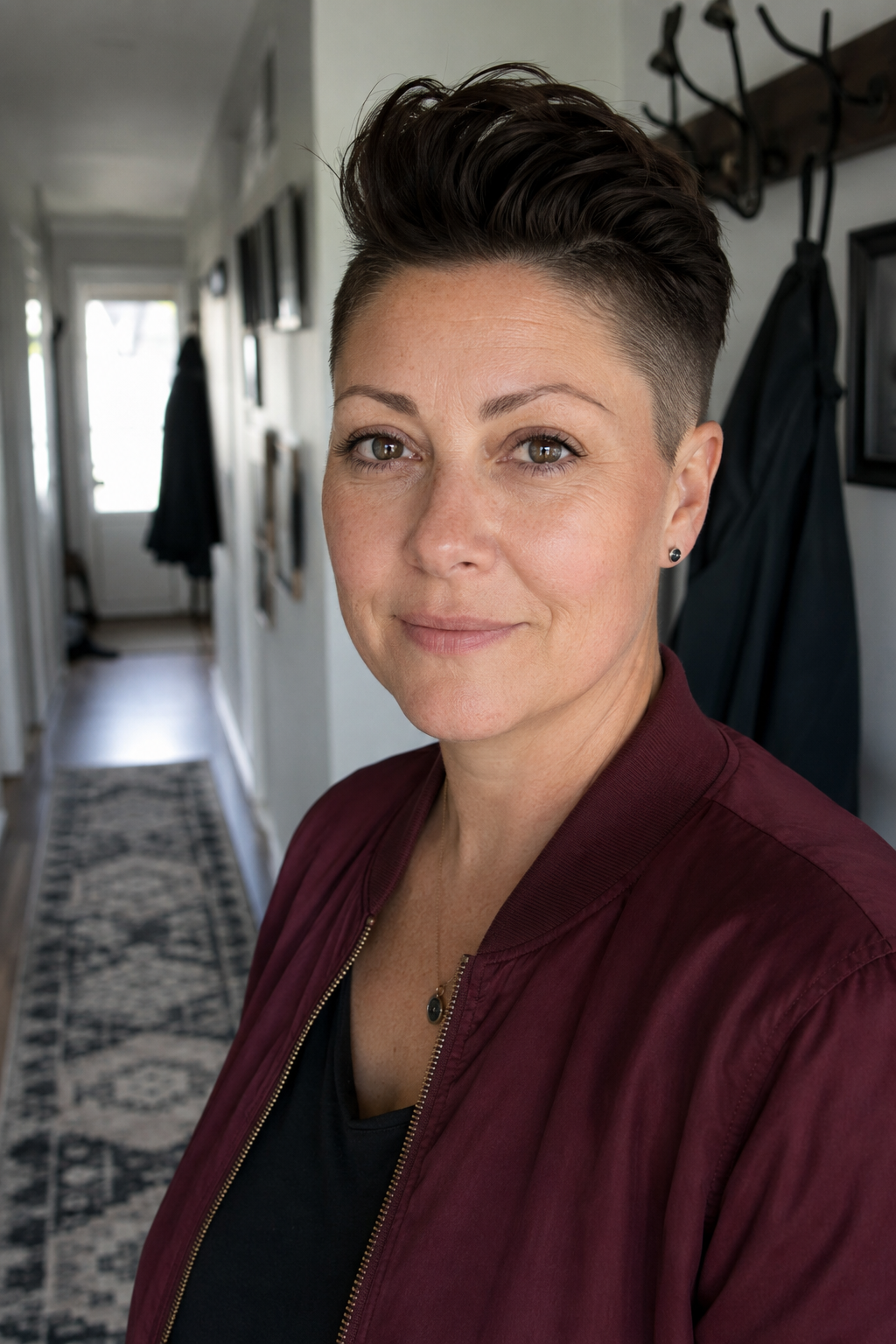
Tapering or shaving the sides strips bulk down low, so the longer top looks fuller by comparison. A darker root shade makes the cropped sections look denser still. Keep real length up top for that contrast to land. Style the top up and back with a firm-hold paste. The undercut stays low-fuss between salon visits, needing only a sides tidy every three weeks. It is a bold pick that hides thinness at the sides well.
Rounded Soft Pixie
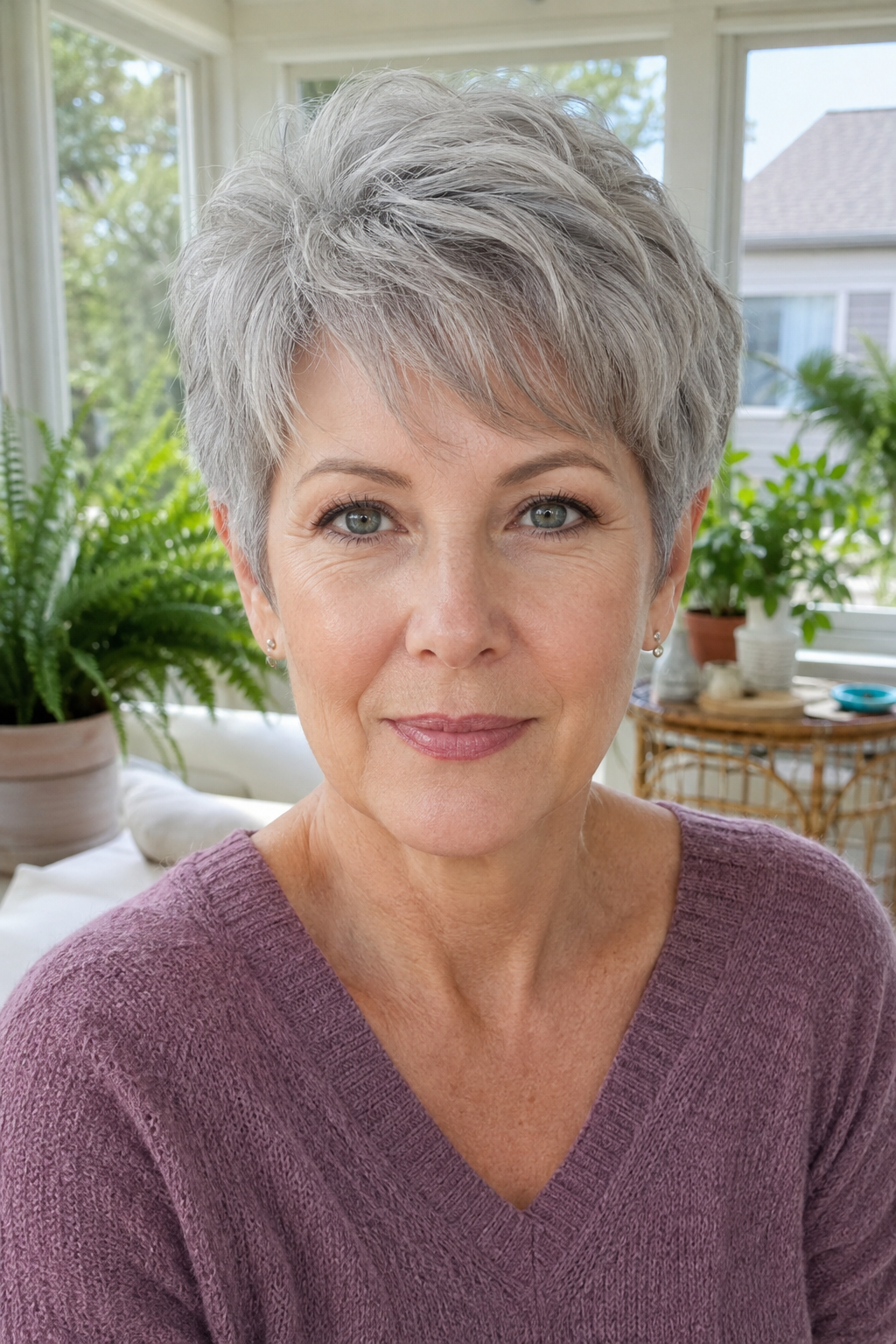
Built with a rounder crown, this pixie adds gentle height for hair that sits flat against the head. Softer edges keep it feminine rather than sharp, with the volume set through the top. Round-brush or diffuse the crown upward as it dries. Ask for a rounded, layered top and lightly tapered sides. A little mousse at the roots supports the lift all day. It suits most face shapes and asks very little of you each morning.
Bixie
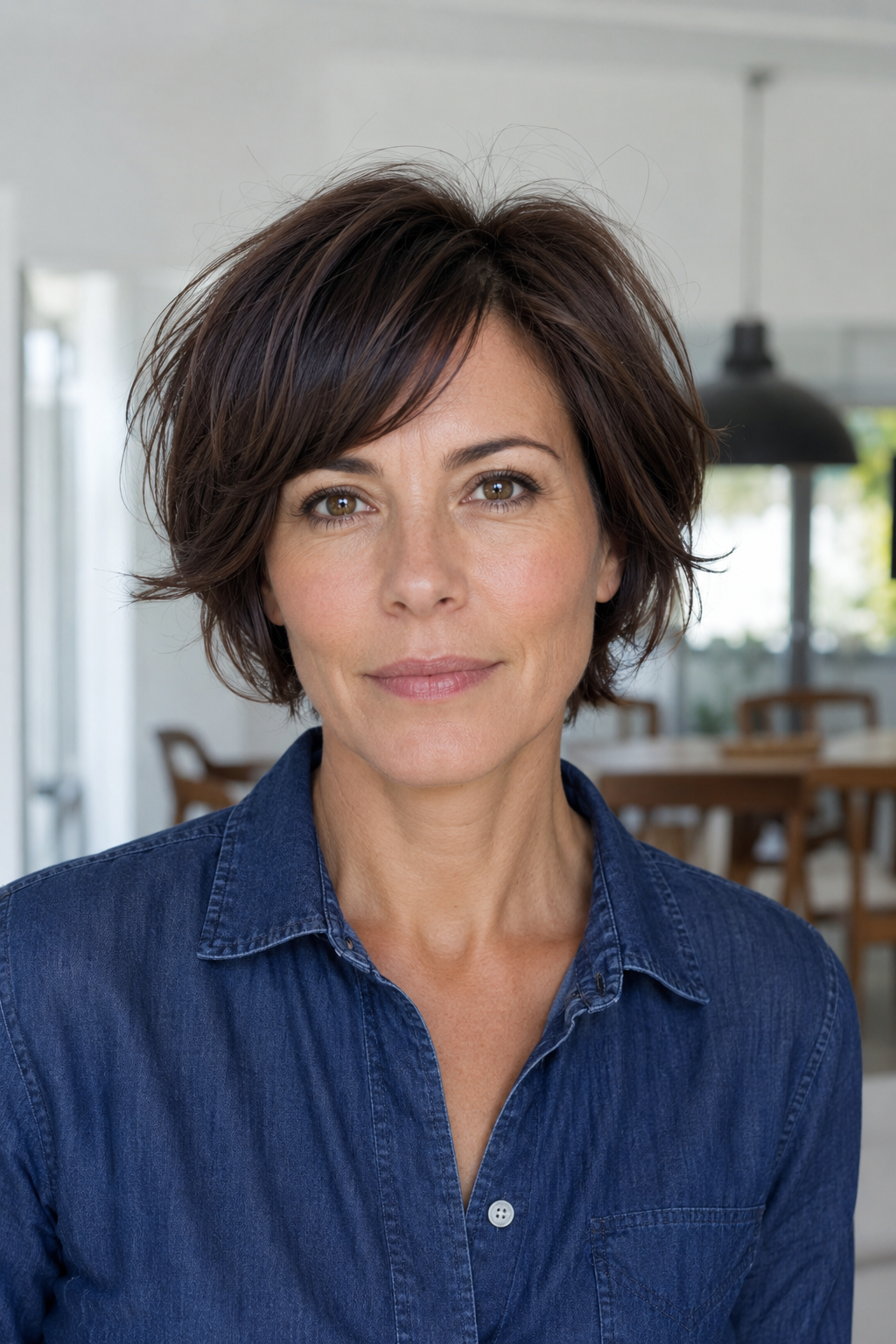
Landing between the chin and jaw, the bixie mixes a bob’s fullness with a pixie’s light, airy feel. Heavy internal layers give fine hair lift and movement while keeping the ends dense. Ask specifically for internal layering, not surface thinning, which flattens thin strands. Finger-tousle a texture cream through as it dries and push the crown up. The in-between length grows out cleanly, making it one of the easier short cuts to maintain.
Stacked Pixie Bob
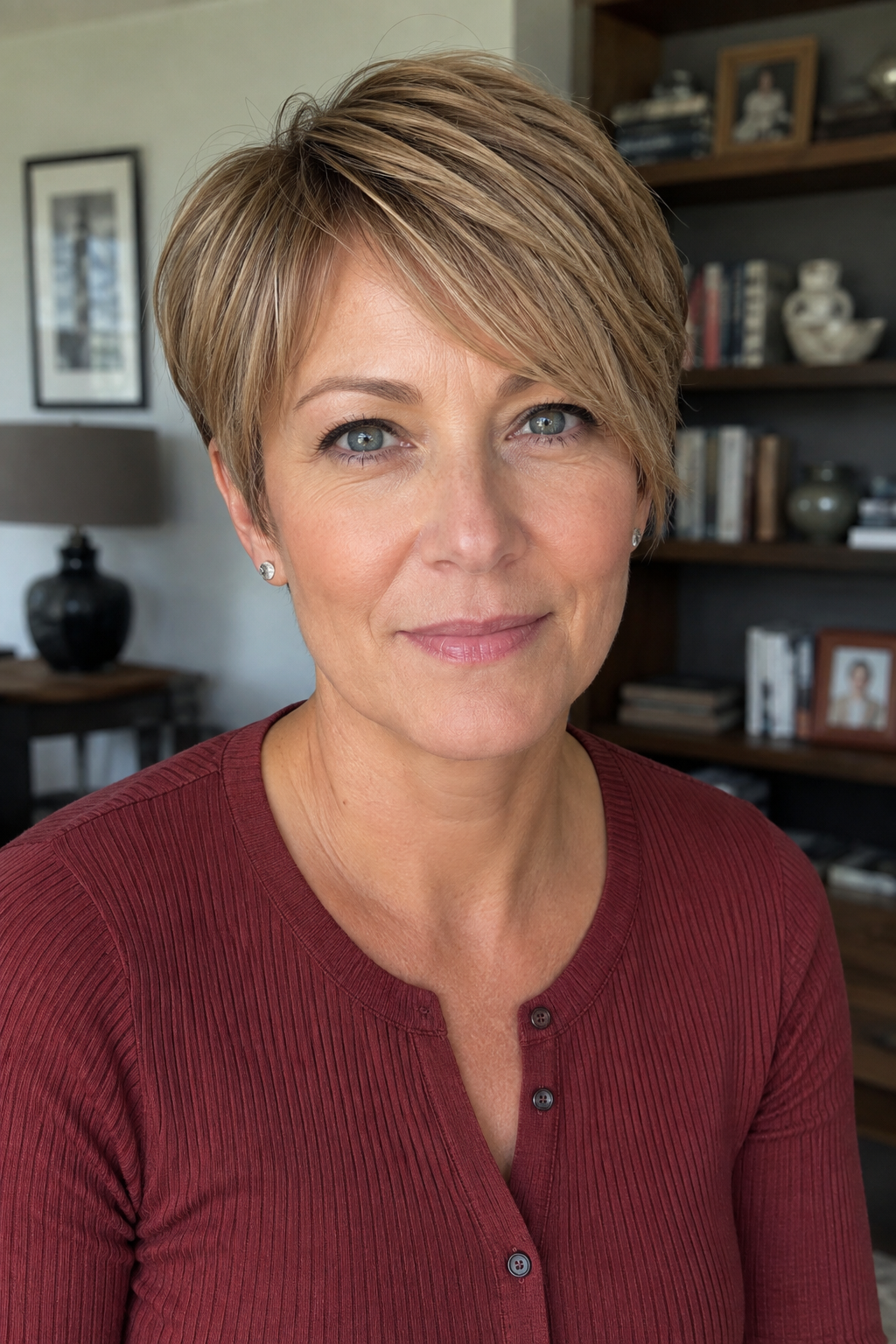
Cropped and stacked at the back with longer layers on top, this shape delivers real crown volume and a tidy nape. The stacked back lifts fine hair exactly where it goes flat. Lift the back roots with a vent brush and a burst of cool air. Keep the top pieces long enough to sweep to one side. A light root spray sets the height before styling. The stacked back needs a reshape every five to six weeks.
Short Shag
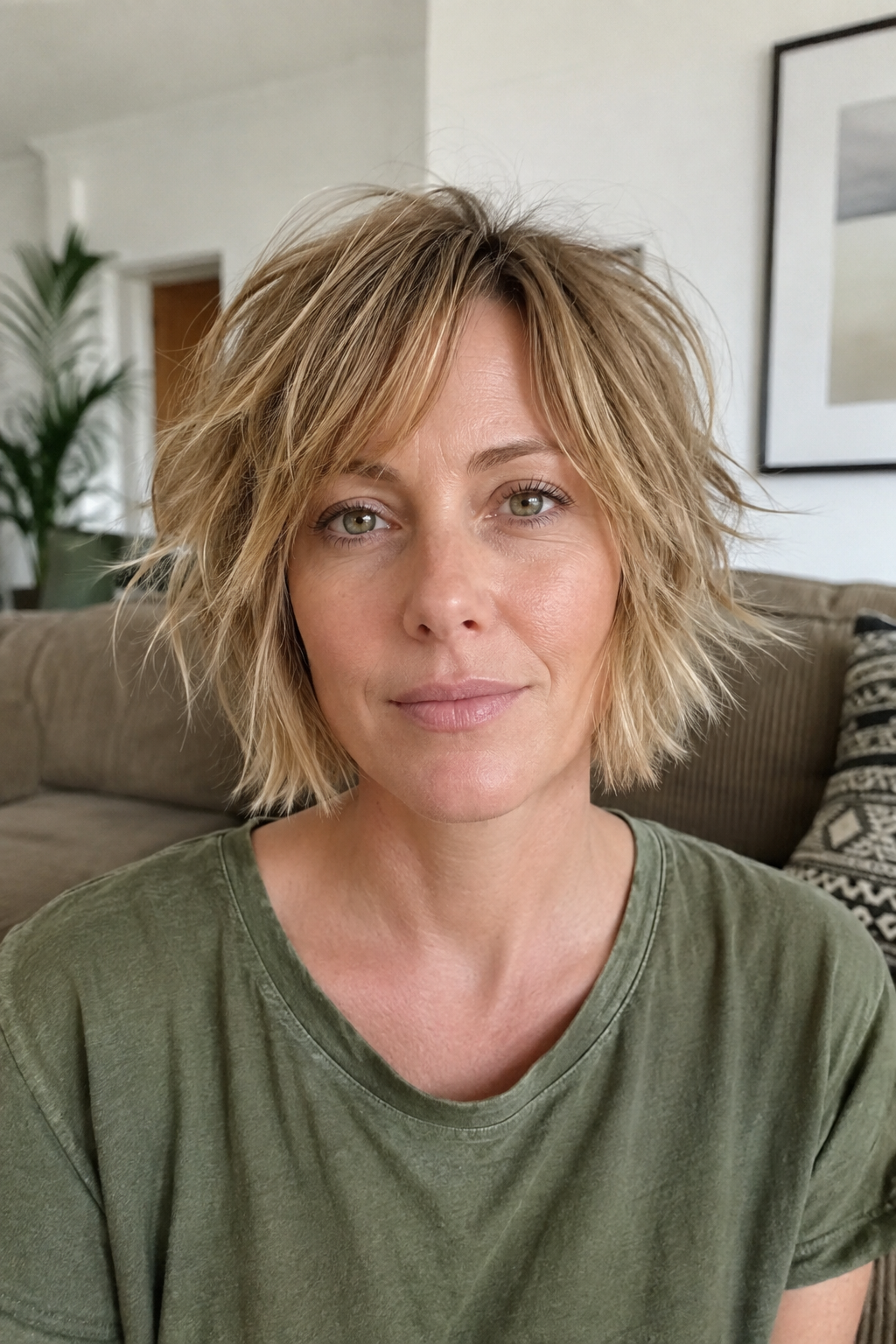
Disconnected, choppy layers give fine hair a lived-in look, so it seems styled on purpose rather than limp. The movement between layers fakes the fullness the eye takes for thickness. Scrunch mousse into damp hair and let it air-dry for the most natural finish. Pull a few pieces out with a little clay for definition. Keep the shag short, at chin length or above, and rough up the roots for extra lift.
Choppy Tousled Crop
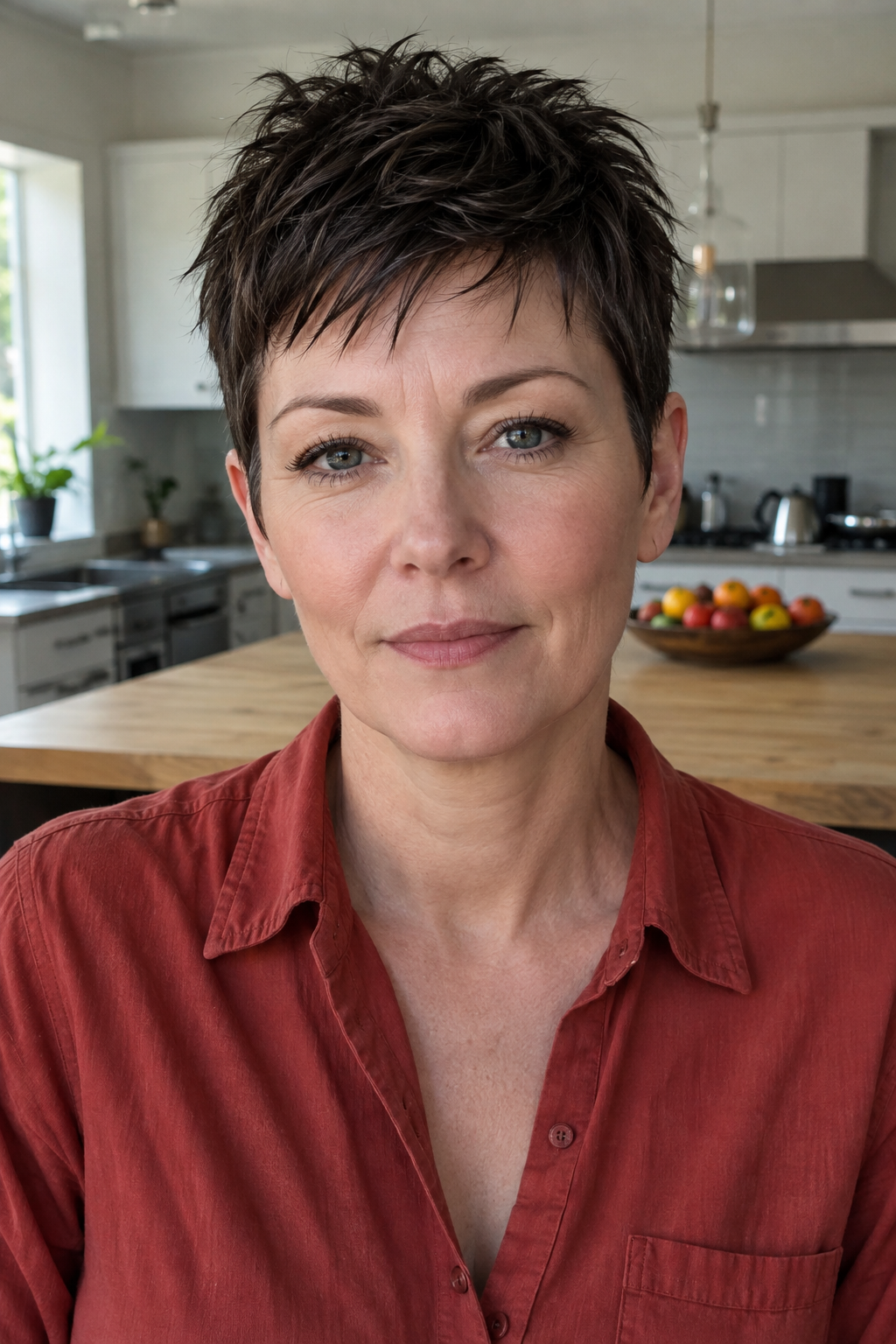
Very short all over with a roughed-up, choppy top, this crop fakes density better than any smooth cut. The messy texture stops fine hair from lying flat and dull against the head. Spritz sea-salt spray at the roots and scrunch it in with your hands. Ask for a choppy, point-cut top with tapered sides for shape. Skip the comb; fingers and a little clay do all the work. It is one of the lowest-effort short cuts for fine hair.